
Open-Source Differential Robot: Integrating Auto-Recharging, Hub Motor Drive, and ROS-Based SLAM Navigation
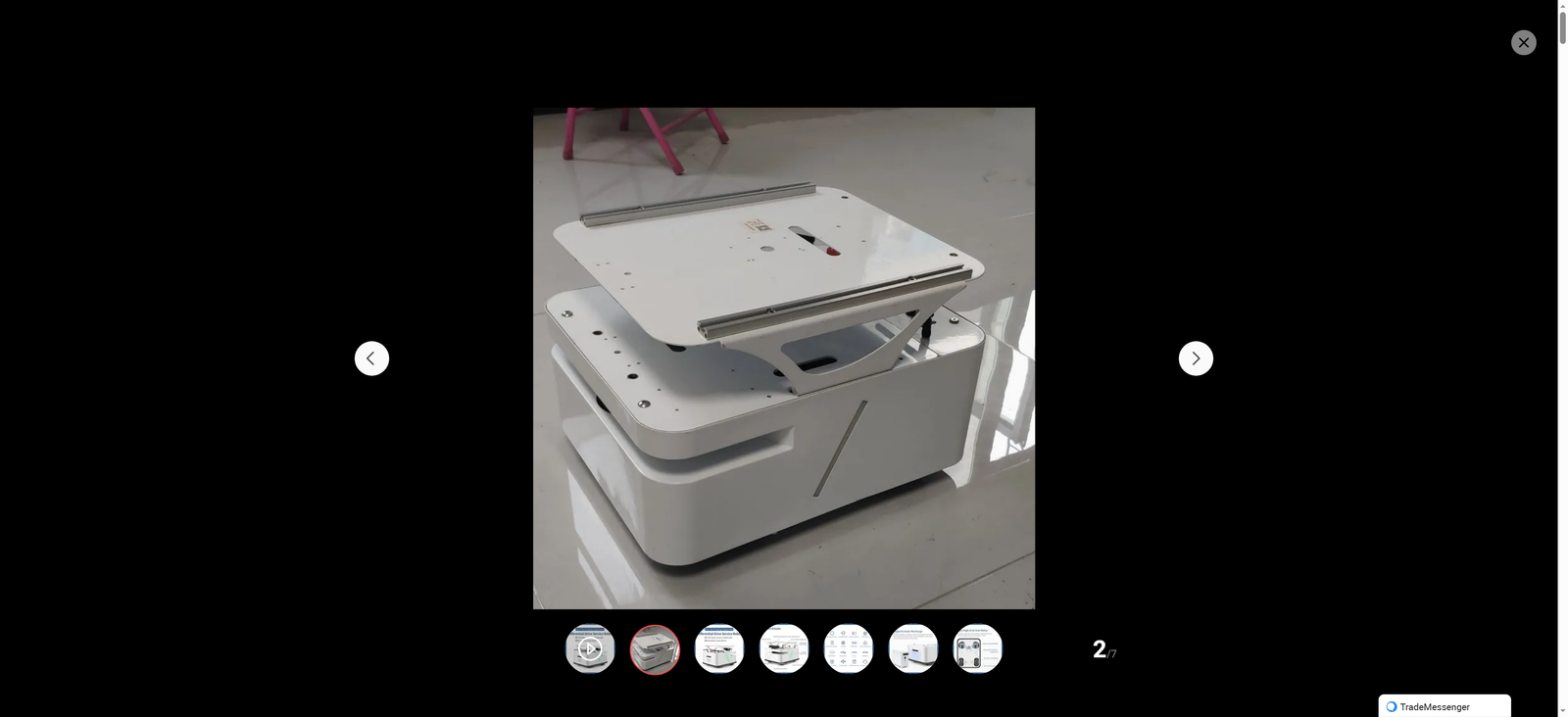
In the era of intelligent robotics, open-source platforms have become the cornerstone of innovation, empowering developers, researchers, and enterprises to accelerate product iteration and technological breakthroughs. Among them, the open-source differential robot, equipped with auto-recharging, hub motor drive, and ROS-based mapping & SLAM navigation, stands out as a versatile and high-performance solution. It breaks through the limitations of traditional robots in mobility, autonomy, and scalability, opening up new possibilities for applications in industrial inspection, smart home, scientific research, and more.
Core Configuration: Hub Motor Driven for Precise and Efficient Mobility
The choice of drive system directly determines the robot’s mobility performance, and the hub motor drive design is a key highlight of this open-source differential robot. Unlike traditional motor drive structures with complex transmission mechanisms, hub motors integrate the motor directly into the wheel hub, eliminating the need for chains, gears, or shafts. This integration brings multiple advantages that elevate the robot’s overall performance.
Firstly, it achieves higher transmission efficiency. By reducing intermediate transmission links, energy loss is minimized, allowing the robot to convert more electrical energy into kinetic energy. This not only extends the battery life (complementing the auto-recharging function) but also ensures stable power output for long-duration operations. Secondly, hub motors enable precise differential control. The independent control of left and right hub motors allows the robot to achieve flexible movements such as straight-line driving, in-place rotation, and curve turning with high accuracy—critical for scenarios requiring precise positioning and path following, such as indoor inspection and warehouse sorting.
Additionally, the compact structure of hub motors saves internal space for the robot, providing more room for installing sensors, controllers, and battery modules. For open-source users, this design simplifies customization and secondary development, as they can easily expand the robot’s functions without being restricted by complex drive components.
Intelligent Autonomy: ROS Mapping & SLAM Navigation for Unmanned Operation
Autonomous navigation is the core capability of intelligent robots, and this open-source differential robot relies on the Robot Operating System (ROS) to realize advanced mapping and SLAM (Simultaneous Localization and Mapping) navigation. ROS, as a mature open-source robotics framework, offers a wealth of functional packages, tools, and community support, making it the preferred choice for developers worldwide.
The robot’s SLAM navigation system integrates multi-sensor data (such as LiDAR, RGB-D cameras, and IMUs) to build real-time environmental maps while accurately localizing itself. Thanks to ROS’s modular architecture, developers can flexibly select sensor combinations and SLAM algorithms (such as GMapping, Cartographer, and RTAB-Map) based on application scenarios. For example, in indoor environments with complex obstacles, LiDAR-based SLAM ensures high-precision mapping and navigation; in scenarios with rich visual features, RGB-D cameras can reduce costs while meeting basic navigation requirements.
Moreover, ROS’s compatibility and scalability enable the robot to seamlessly integrate additional functions such as object recognition, path planning optimization, and human-machine interaction. Open-source users can leverage the vast ROS community resources to modify algorithms, share code, and quickly resolve technical issues, significantly reducing the threshold for secondary development and shortening the product R&D cycle.
Uninterrupted Operation: Auto-Recharging for 24/7 Work Capacity
For commercial and industrial applications, uninterrupted operation is a key demand, and the auto-recharging function of this open-source differential robot effectively addresses the limitation of battery life. The robot is equipped with intelligent charging detection and positioning modules, which can automatically identify the charging station and complete docking and recharging when the battery level is low—no manual intervention required.
The auto-recharging system adopts high-precision positioning technology (such as infrared induction, visual recognition, or RFID) to ensure accurate docking even in complex environments. The charging process is fast and safe, with overcharge, overvoltage, and short-circuit protection to protect the battery and extend its service life. When fully charged, the robot automatically disconnects from the charging station and resumes its previous task, realizing 24/7 continuous operation.
This feature is particularly valuable in scenarios such as 24-hour industrial inspection, smart warehouse patrols, and unmanned retail guidance. It not only reduces labor costs associated with manual recharging and monitoring but also improves work efficiency and task continuity, making the robot a reliable automated tool for enterprises.
Application Scenarios: Empowering Diversified Industries with Open-Source Flexibility
With its integrated advantages of hub motor drive, ROS SLAM navigation, and auto-recharging, this open-source differential robot has broad application prospects across multiple industries, catering to both scientific research and commercial needs.
- Scientific Research and Education: It serves as an ideal teaching and research platform for universities and research institutions. Students and researchers can conduct experiments on robotics, SLAM algorithms, and autonomous control based on the open-source framework, fostering innovation in robotics technology.
- Industrial Inspection: In factories, power plants, and data centers, the robot can perform 24/7 patrols, detect equipment abnormalities, and record environmental data—improving inspection efficiency and reducing safety risks for human workers.
- Smart Warehousing and Logistics: It can realize autonomous goods transportation, inventory counting, and path optimization in warehouses, cooperating with other logistics equipment to build an intelligent logistics system.
- Smart Home and Property Services: In communities, office buildings, and shopping malls, the robot can provide services such as cleaning, guidance, and security patrols, enhancing the level of intelligent management.
Conclusion: The Future of Open-Source Robotics Lies in Integration and Customization
The open-source differential robot, with its hub motor-driven mobility, ROS-based SLAM navigation, and auto-recharging capability, represents a new direction in the development of intelligent robotics. It combines the flexibility of open-source platforms with the practicality of industrial-grade functions, providing developers and enterprises with a high-quality, customizable solution.
As open-source technology continues to evolve and the ROS ecosystem matures, this robot will be further optimized in terms of performance, cost, and scalability. Whether for technological research, product iteration, or commercial application, it is poised to become a core tool driving innovation in the robotics industry. For developers and enterprises looking to seize the opportunities of intelligent robotics, this open-source differential robot is undoubtedly a valuable starting point to unlock unlimited possibilities in automation and intelligence.