
Non-Slip Mat Design Luggage Handling Robots for Seamless Travel
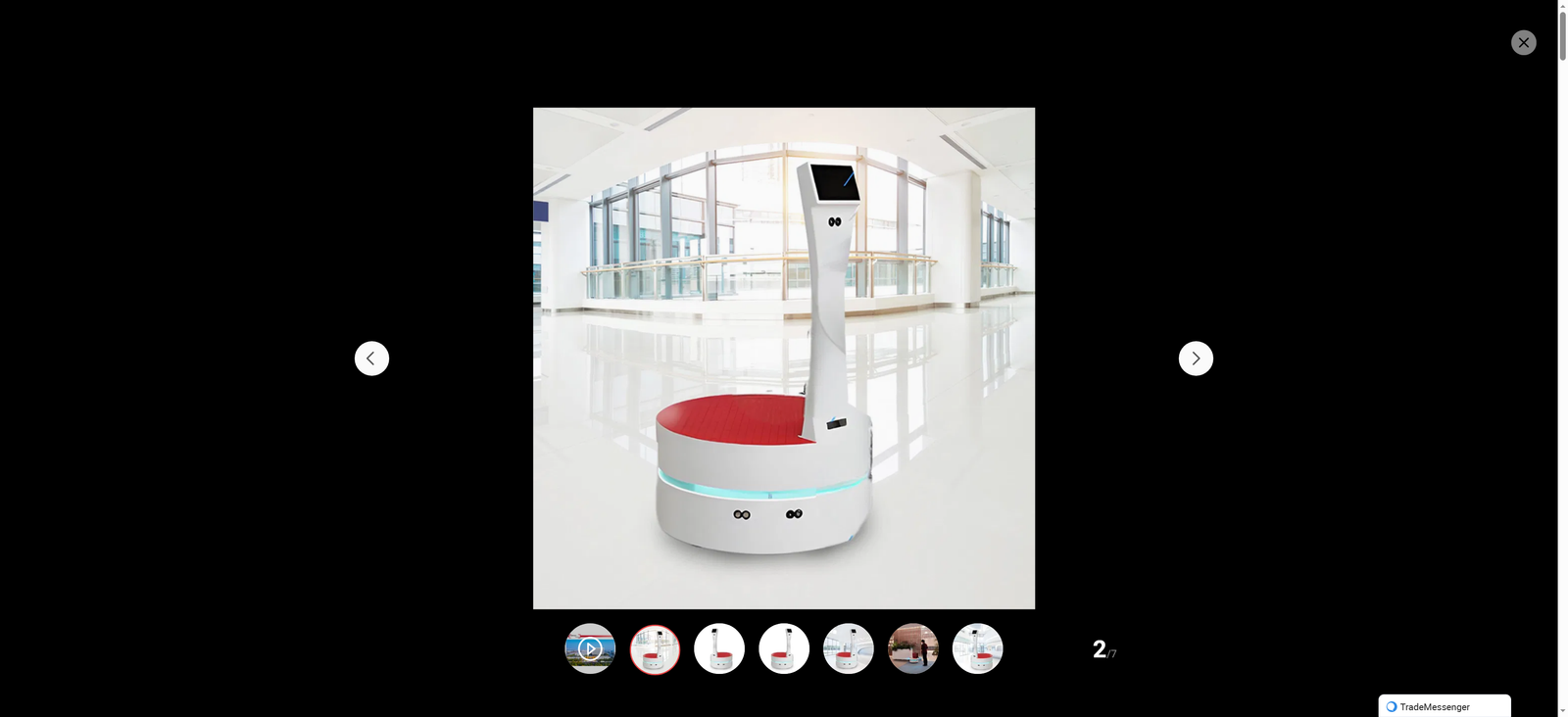
In the era of rapid global mobility, travel has evolved from a luxury to a common part of life, yet luggage handling remains a persistent pain point for travelers. From dragging heavy suitcases across slippery airport corridors to worrying about luggage slipping and tipping over during transit, these trivial but cumbersome issues often undermine the comfort of travel. Against this backdrop, luggage handling robots integrated with non-slip mat design have emerged as a transformative solution, redefining the efficiency, safety, and comfort of luggage management and paving the way for seamless travel experiences.
Luggage handling robots, as intelligent devices designed to automate luggage transportation, have been gradually applied in airports, hotels, and railway stations in recent years. However, early models often faced a critical challenge: the instability of luggage placement. Due to the smooth surfaces of most luggage cases and the varied sizes and weights of luggage, robots were prone to luggage slipping, shifting, or even falling during movement—especially when turning, accelerating, or moving on uneven ground. This not only affected the robot’s operational efficiency but also posed potential risks of luggage damage or personal injury. The integration of non-slip mat design has precisely addressed this pain point, becoming a key breakthrough in optimizing the performance of luggage handling robots.
The non-slip mat design for luggage handling robots is not a simple addition of anti-slip materials; it is a systematic optimization combining material science, structural design, and functional needs. In terms of material selection, high-performance non-slip materials are prioritized—such as rubber composites with strong friction coefficients, silica gel with excellent adsorption properties, and polyurethane materials with wear resistance and elasticity. These materials can effectively increase the friction between the luggage and the robot’s bearing surface, even in humid environments or when the luggage surface is smooth (such as hard-shell suitcases made of PC or ABS materials). Unlike ordinary anti-slip pads, the materials used for robot non-slip mats are also required to have high durability to withstand long-term friction, pressure, and frequent cleaning without losing their anti-slip performance.
In structural design, the non-slip mats are tailored to the robot’s bearing platform and luggage characteristics. Many advanced models adopt a segmented non-slip structure: the central area uses a dense convex dot design to enhance adsorption, while the edge area is equipped with raised baffles to prevent luggage from sliding sideways. Some robots even integrate adjustable non-slip mats that can automatically adjust the tightness and anti-slip range according to the size and weight of the luggage—ensuring that both small carry-on bags and large checked suitcases can be firmly fixed. In addition, the non-slip mats are designed with a waterproof and stain-resistant surface, which is easy to clean and maintain, adapting to the high-frequency use scenarios in public places such as airports.
The application of non-slip mat design has brought multiple improvements to luggage handling robots, directly promoting the realization of seamless travel. Firstly, it enhances operational safety. With the non-slip mat’s protection, luggage is less likely to slip or fall during transportation, reducing the risk of luggage damage and avoiding potential safety hazards caused by falling luggage in crowded public areas. For airports, this means a significant reduction in luggage-related accidents and improved on-site order. For travelers, it eliminates the anxiety of worrying about luggage stability, allowing them to focus more on their travel experience.
Secondly, it improves transportation efficiency. Early robots often needed to move at a slow speed to avoid luggage slipping, which limited their handling capacity. With the non-slip mat design, robots can maintain a stable speed even when turning or accelerating, shortening the time for luggage transportation. For example, in large airports, luggage handling robots equipped with non-slip mats can quickly transport luggage from check-in counters to baggage sorting areas, or from arrival halls to hotel shuttles—greatly reducing passenger waiting time. In hotels, such robots can directly deliver luggage to guests’ rooms efficiently, replacing manual luggage handling and improving service efficiency.
Thirdly, it optimizes the user experience. Seamless travel is not only about speed but also about comfort and peace of mind. Luggage handling robots with non-slip mats can adapt to various complex scenarios: they can move stably on smooth airport floors, uneven hotel lobbies, or even slightly sloped corridors. Travelers no longer need to carry heavy luggage or worry about luggage slipping during transit; they only need to place their luggage on the robot, and the intelligent device will complete the rest of the work. This is particularly friendly to the elderly, children, pregnant women, and other groups with limited mobility, reflecting the humanistic care of intelligent travel.
Beyond the immediate benefits, the combination of non-slip mat design and luggage handling robots also points to the future direction of intelligent travel. As artificial intelligence, Internet of Things, and sensor technology continue to develop, non-slip mats will be integrated with more intelligent functions. For example, by embedding pressure sensors in the non-slip mat, the robot can automatically detect the weight and center of gravity of the luggage, adjust the non-slip force in real-time, and optimize the movement path to ensure maximum stability. Some cutting-edge research even explores the use of adaptive non-slip materials that can change their friction coefficient according to environmental changes—further improving the robot’s adaptability.
Of course, the promotion of non-slip mat design luggage handling robots still faces some challenges. For instance, the cost of high-performance non-slip materials and intelligent structural design may increase the production cost of robots, which needs to be balanced through large-scale production and technological innovation. In addition, in some extreme scenarios—such as heavy rain or snow, or luggage with extremely smooth surfaces—the non-slip performance still needs to be further improved. However, with the continuous advancement of technology and the growing demand for seamless travel, these challenges will gradually be overcome.
In conclusion, non-slip mat design is a crucial innovation that empowers luggage handling robots to become more reliable, efficient, and user-friendly. By solving the core problem of luggage stability, it has not only improved the performance of luggage handling robots but also injected new vitality into the construction of seamless travel. As intelligent technology continues to penetrate the travel industry, we can expect more luggage handling robots with optimized non-slip designs to appear in various travel scenarios—freeing travelers from the burden of luggage handling, making every journey smoother, more comfortable, and more enjoyable. This is the value of non-slip mat design in intelligent travel, and it is also a vivid practice of building a more convenient and humanistic travel ecosystem.