
Ai Food Delivery Robot with 3D Full-Directional Obstacle Avoidance: Redefining Catering Service Efficiency with 50kg Load Capacity
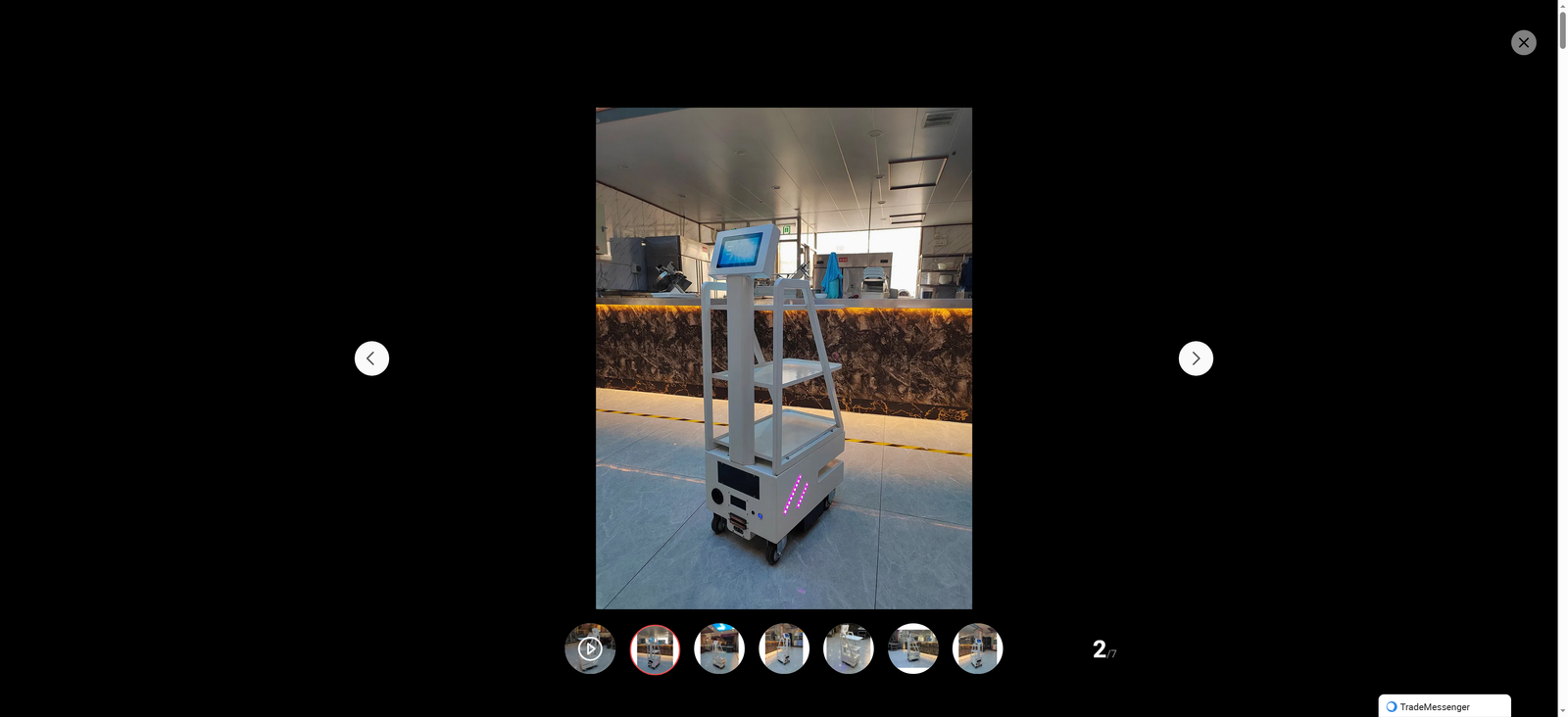
In the fast-paced catering industry, where efficiency, safety and customer experience are the core competitiveness, the integration of intelligent equipment has become an irreversible trend. Among them, AI food delivery robots have gradually moved from a novel "gadget" to a "core assistant" in restaurants, hotels and catering venues, solving the pain points of labor shortage, low service efficiency and high error rate. The Ai Food Delivery Robot equipped with 3D full-directional obstacle avoidance technology and 50kg load capacity is precisely a new generation of intelligent serving equipment tailored for the catering industry, which is injecting strong momentum into the intelligent transformation of the catering industry.
The 3D full-directional obstacle avoidance technology is the "core brain" that ensures the stable operation of the food delivery robot, and it is also the key to distinguishing it from ordinary delivery robots. Different from the traditional 2D obstacle avoidance that only detects plane obstacles, the 3D full-directional obstacle avoidance system integrates multiple high-precision sensors such as laser radar, visual cameras and ultrasonic sensors. It can conduct 360-degree all-round scanning and detection of the surrounding environment in real time, covering not only ground obstacles such as dining chairs, pedestrian feet and spilled food, but also three-dimensional obstacles such as hanging tablecloths, placed tableware and even children jumping suddenly. Through the rapid calculation and analysis of the AI algorithm, the robot can accurately identify the type, size and moving speed of obstacles, and instantly plan the optimal avoidance path—whether it is bypassing, stopping or detouring, it can respond smoothly without affecting the progress of food delivery. This technology not only avoids the risk of collision and food spilling, but also ensures that the robot can adapt to the complex and dynamic catering environment, such as the peak period of dining with people coming and going, the narrow passage between tables and the temporary placement of items, making the delivery process safer and more reliable.
The 50kg load capacity is another major highlight of this robot, which fully meets the actual needs of catering scenarios. In restaurants and hotels, a single meal delivery often requires carrying multiple dishes, tableware, water cups or even large soup pots—ordinary food delivery robots with small load capacity (usually 10-20kg) can only carry 2-3 dishes at a time, which requires frequent round trips and reduces service efficiency. The 50kg load capacity of this robot allows it to carry 8-10 dishes at one time, or even a whole table of set meals, which greatly reduces the number of trips and improves the single delivery efficiency. For large catering venues such as hotels and banquet halls, where a large number of meals need to be delivered in a short time, this load capacity advantage is more obvious—it can cooperate with the catering staff to complete the meal delivery task quickly, avoid the backlog of meals in the kitchen, and ensure that customers can enjoy hot food in time. At the same time, the robot's bearing structure is specially optimized, with uniform force distribution and stable operation. Even when carrying heavy loads, it will not appear tilting or shaking, effectively protecting the tableware and food from damage.
In addition to the two core advantages, this AI food delivery robot also has a number of humanized designs to adapt to the diverse needs of restaurants, hotels and catering venues. It supports autonomous navigation and positioning—through the pre-mapped venue map, the robot can accurately reach the designated table, private room or banquet hall without manual guidance. It is equipped with a voice interaction system, which can actively remind customers "Food is here, please take it carefully" and respond to simple voice inquiries from customers, enhancing the interaction experience. The body design is compact and fashionable, with a height that is in line with the height of the dining table, which is convenient for customers to take food and does not occupy too much space. The detachable and washable food delivery tray is easy to clean and disinfect, meeting the food safety and health requirements of the catering industry. In terms of operation and management, the robot supports centralized control through a background system. The staff can view the running status, task progress and fault information of multiple robots in real time, and assign delivery tasks uniformly, which is convenient for venue management and reduces the difficulty of operation.
The application of this AI food delivery robot is bringing a comprehensive upgrade to the catering industry. For restaurant operators, it can effectively reduce labor costs—one robot can replace 1-2 waiters' meal delivery work, especially in the context of rising labor costs and difficulty in recruiting waiters, it can help operators save a lot of labor expenses. At the same time, the robot can work continuously for 8-10 hours without rest, which greatly improves the service efficiency, especially during the peak dining period, it can effectively alleviate the pressure of meal delivery and avoid the problem of slow meal delivery caused by insufficient staff. For customers, the intelligent delivery service brings a new and interesting dining experience—the novel robot delivery method can enhance the sense of experience and happiness, and the stable and efficient delivery can ensure the dining experience. For catering staff, the robot undertakes the heavy and repetitive meal delivery work, allowing them to focus more on providing high-quality services such as ordering, answering inquiries and after-dinner cleaning, improving work satisfaction and service quality.
In the hotel catering scene, this robot shows more unique value. Hotels often have large venues, many private rooms and complex layouts. The 3D full-directional obstacle avoidance technology ensures that the robot can accurately navigate in the hotel corridor, lobby and private room area, and the 50kg load capacity can meet the needs of delivering set meals for banquets, conferences and other activities. For example, in a hotel banquet with hundreds of people, multiple robots can cooperate to deliver meals in an orderly manner, which is efficient and neat, and also shows the hotel's intelligent and high-end service image. In addition, the robot's quiet operation will not affect the hotel's elegant environment, which is in line with the hotel's service positioning.
With the continuous development of artificial intelligence and intelligent manufacturing technology, AI food delivery robots are constantly upgrading and iterating. The Ai Food Delivery Robot with 3D full-directional obstacle avoidance and 50kg load capacity is a typical representative of the combination of technology and catering needs. It not only solves the practical pain points of the catering industry, but also promotes the transformation of the catering industry from "labor-intensive" to "intelligent and efficient". In the future, with the popularization of this kind of robot, it will become a common equipment in restaurants, hotels and catering venues, and work with human staff to create a more efficient, safe, healthy and high-quality catering service experience.
In conclusion, the Ai Food Delivery Robot with 3D full-directional obstacle avoidance and 50kg load capacity is a powerful tool for the intelligent transformation of the catering industry. Its core technologies and humanized design fully meet the actual needs of restaurants, hotels and catering venues, bringing multiple benefits to operators, customers and staff. It is believed that in the near future, this kind of intelligent serving robot will bloom more brilliant light in the catering industry and promote the continuous development of the catering industry in a more intelligent and high-quality direction.