
Newly Designed Self-Service Restaurant Intelligent Food Delivery Robot for Hotel: Empowering Smart Catering Services
With the accelerated digital transformation of the hotel industry, intelligent service robots have gradually evolved from a "technological gimmick" to a core tool for optimizing operations and enhancing guest experiences. Particularly in hotel self-service restaurants, where efficiency, hygiene, and service quality are paramount, the newly designed intelligent food delivery robot has emerged as a game-changer. It integrates cutting-edge navigation technology, humanized interaction design, and scenario-specific functional optimization, redefining the service paradigm of hotel self-service catering and injecting new vitality into the high-quality development of the hotel industry.
Breakthrough Design: Balancing Performance and Scenario Adaptability
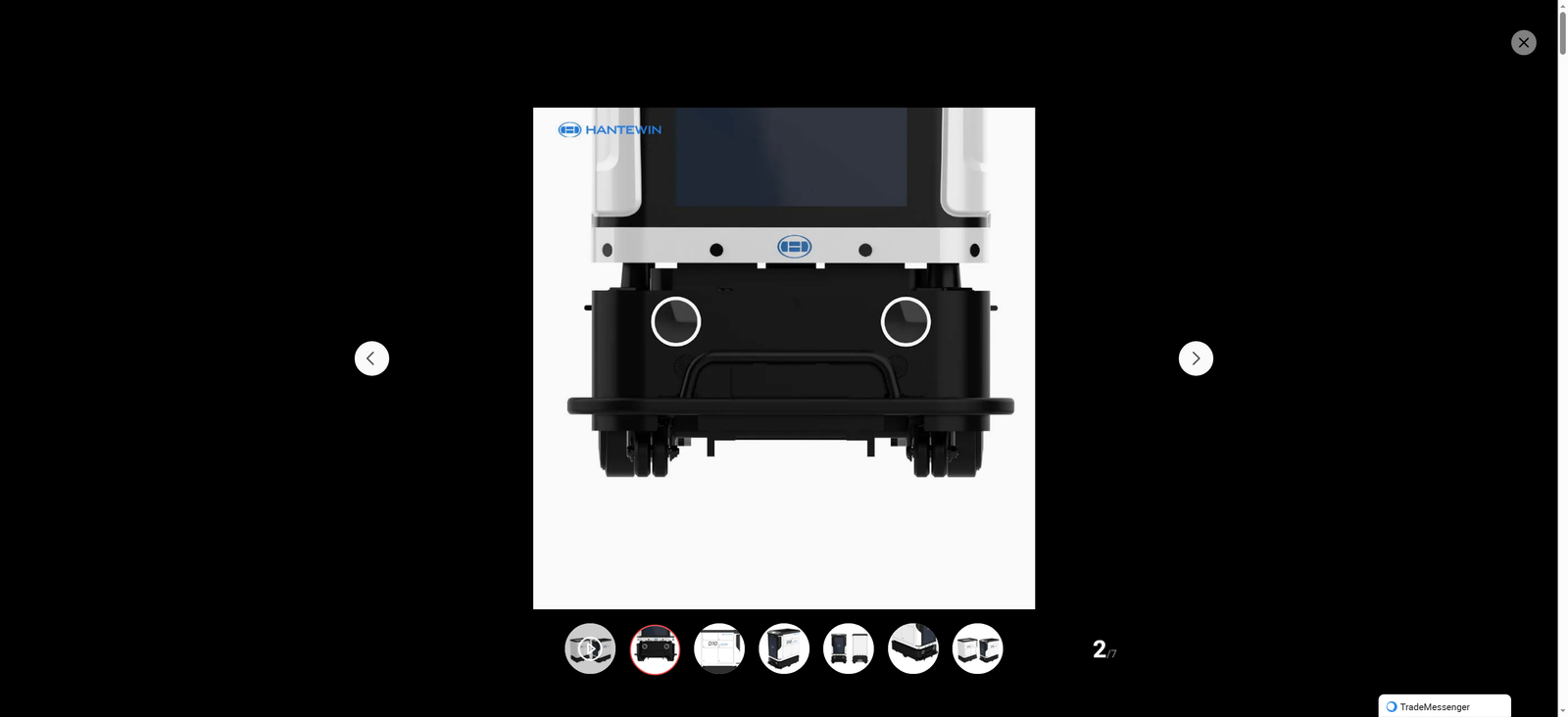
The newly designed intelligent food delivery robot for hotel self-service restaurants has achieved a breakthrough in solving industry pain points through innovative structural design, perfectly adapting to the complex environment of hotel catering spaces. Unlike traditional delivery equipment, this robot adopts a compact and flexible body structure, with a width strictly controlled to adapt to narrow passages of 55-59cm, which are common in hotel restaurants and corridors. This allows it to freely shuttle between dining tables, buffets, and kitchen entrances without disturbing guests' dining experience or colliding with other service facilities.
In terms of load capacity and storage design, it adopts a multi-layer tray structure with a maximum load of up to 40 kilograms, which can simultaneously carry multiple servings of meals, drinks, and tableware, equivalent to the delivery capacity of a professional waiter. The tray is equipped with an anti-slip and shock-absorbing system based on vehicle-grade independent suspension technology, ensuring that soups, drinks, and other easily spilled items remain stable during transportation, achieving a "drip-free" delivery effect. For hygiene protection, some models are designed with fully enclosed compartments to avoid secondary pollution of food during delivery, meeting the strict hygiene standards of hotel catering services.
Intelligent Core: Precise and Efficient Delivery Guarantee
The core competitiveness of the new intelligent food delivery robot lies in its advanced intelligent control system, which realizes full-process autonomous operation and efficient task execution. It integrates SLAM and Vslam dual positioning technologies, equipped with top visual sensors, laser radars, and RGB cameras to achieve centimeter-level navigation and positioning without the need for additional labels or modifications to the restaurant environment. This not only reduces the deployment cost but also enables the robot to quickly adapt to the layout changes of self-service restaurants, such as temporary adjustment of dining tables or buffet areas.
Safety performance is fully upgraded with a 360° panoramic perception system that covers a 300° dynamic obstacle detection range. The robot can accurately distinguish between humans and objects, automatically slow down or detour when encountering guests, cleaning carts, or other obstacles, effectively preventing collisions and foot crushing. For large-scale hotel self-service restaurants, the robot supports multi-machine collaborative scheduling through patented algorithms. Multiple robots can plan optimal routes in real-time, avoid "traffic jams" during peak dining hours, and realize efficient parallel operation, greatly improving the overall delivery efficiency.
In terms of endurance, the robot is equipped with a high-capacity battery that supports 8-12 hours of continuous work, fully meeting the needs of all-day catering services in hotels. When the power is low, it can automatically return to the charging station for replenishment without manual intervention, ensuring uninterrupted service during morning, noon, and evening peak periods.
Humanized Interaction: Enhancing Guest Experience and Service Value
The newly designed robot breaks the stereotype of "cold machines" through humanized interaction design, integrating into the hotel's service system with a more friendly attitude. It adopts a patented anthropomorphic interaction design, with its head capable of rotating 45° up and down and 50° left and right, making dynamic responses to guests' touches or glances. The 23.8-inch 1080P high-definition screen on the body can display meal information, promotional content, and even customized welcome messages, serving as both a delivery tool and a mobile marketing platform.
In the self-service restaurant scenario, the robot provides multiple convenient meal pickup reminders, including tray lights, screen guidance, and multi-language voice prompts, which are suitable for international guests from different countries. It supports AI tray detection technology with an accuracy rate of 99%, which can automatically identify whether the tray is loaded with meals and shield accompanying receipts, realizing one-click return after meal delivery. Some high-end models can also be customized with headdresses, emojis, and voices, becoming a "net celebrity check-in spot" in the restaurant, especially favored by family guests and young travelers.
Practical Value: Reducing Costs, Increasing Efficiency, and Upgrading Brand Image
For hotels, the application of the new intelligent food delivery robot brings tangible operational value. In terms of cost control, it can effectively replace manual labor in repetitive delivery tasks, reducing the pressure of labor shortage and high labor costs in the hotel industry. Data shows that the average delivery time of such robots is only 4.5 minutes per order, which is 55% more efficient than manual delivery. A single robot can complete nearly 50 delivery tasks per day, significantly reducing the workload of service staff.
More importantly, the robot liberates service personnel from tedious physical labor, allowing them to focus on more humanized services, such as guiding guests to use self-service equipment, introducing food features, and handling special needs, thereby improving the overall service quality. In terms of brand building, the intelligent robot has become a symbol of the hotel's digital transformation, helping hotels create a smart and high-end brand image, attract young and business guests who pursue efficient experiences, and enhance market competitiveness.
From the lobby to the self-service restaurant, from food delivery to interactive services, the newly designed intelligent food delivery robot is quietly changing the service ecology of the hotel industry. It is not just a simple "machine replacement" but a powerful assistant for service upgrading, building a win-win situation for hotels to reduce costs and increase efficiency, and guests to enjoy high-quality services. With the continuous iteration of AI technology, such robots will be endowed with more functions, contributing more to the development of the smart hotel industry.