
Factory-Customized Food Service Robots: Revolutionizing Hotel and Restaurant Operations
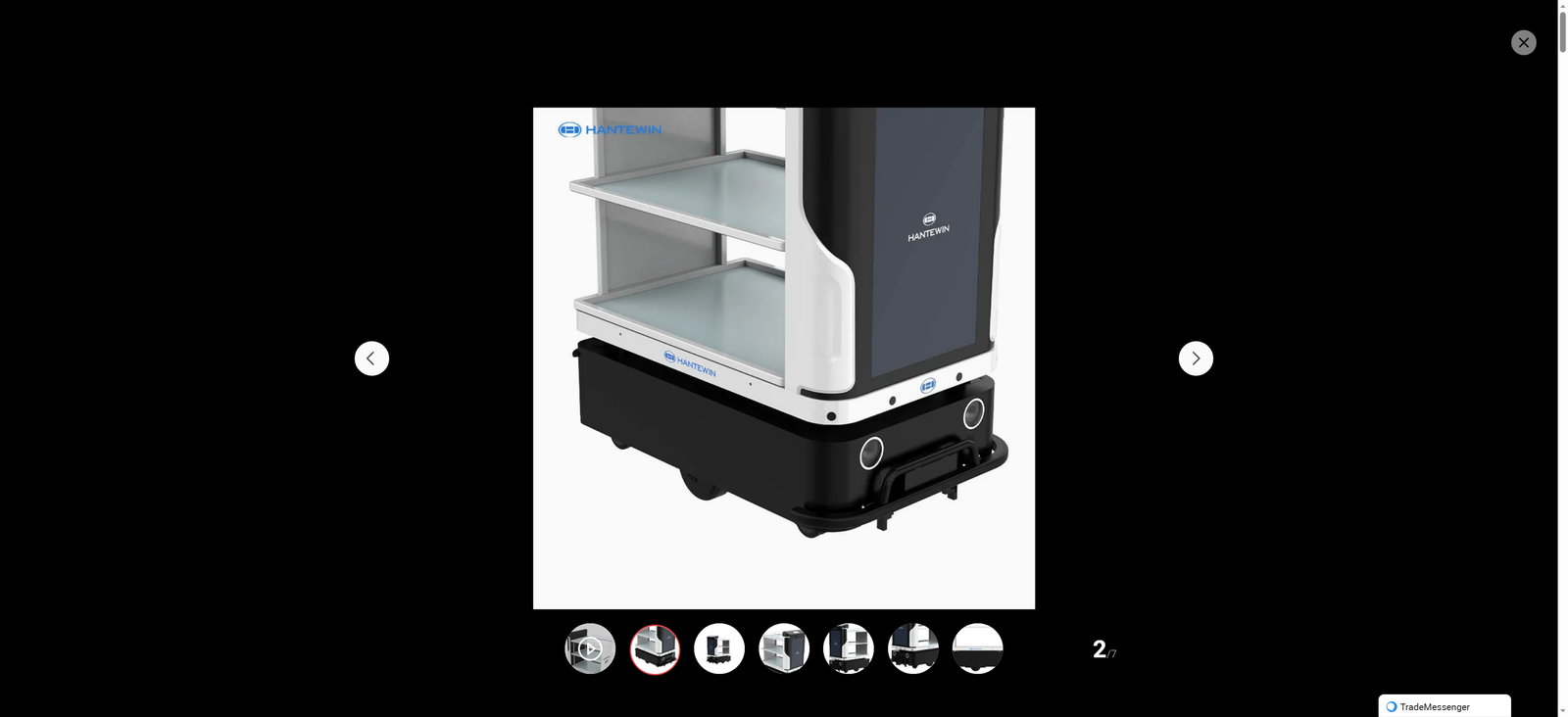
In the era of intelligent transformation, the food service industry is embracing a new wave of innovation driven by factory-customized commercial delivery robots and ordering robots. Tailored to the unique needs of hotels and restaurants, these intelligent devices are no longer just novelty additions but have evolved into core operational assets, addressing pain points such as labor shortages, efficiency bottlenecks, and service standardization. With precise customization capabilities and advanced technological support, factory-customized food service robots are reshaping the landscape of hospitality services.
The Core Value of Factory Customization: Aligning with Diverse Business Scenarios
Every hotel and restaurant has distinct operational characteristics, from space layout and service processes to brand positioning. Factory customization breaks the limitations of off-the-shelf robots, enabling seamless integration of intelligent equipment with specific business needs. For high-end hotels with narrow corridors and elegant decor, manufacturers can customize compact delivery robots with a sleek design that navigates 59cm narrow paths while maintaining a sophisticated appearance, avoiding damage to the ambient aesthetics . For large chain restaurants with high passenger flow, customized models with 40kg load capacity and four-layer trays can be developed to enhance delivery efficiency, matching the throughput of professional porters .
In terms of ordering functions, customization further amplifies the robots' adaptability. Luxury hotels may opt for ordering robots with multi-language interaction and high-definition touch screens, which not only facilitate order placement for international guests but also display hotel promotions and service introductions . Fast-food restaurants, on the other hand, can customize simplified ordering robots with one-click quick ordering and QR code payment functions, reducing guest waiting time. Such scenario-specific customization ensures that food service robots truly become "tailor-made" tools for businesses, maximizing their operational value.
Technological Empowerment: The Backbone of High-Performance Commercial Robots
Factory-customized food service robots rely on cutting-edge technologies to deliver stable and efficient performance in complex commercial environments. Navigation and positioning technology is a core advantage, with most customized robots integrating SLAM and VSLAM intelligent positioning systems. Equipped with top visual sensors, laser radars, and RGB cameras, these robots achieve centimeter-level positioning accuracy without the need for label pasting, adapting to dynamic environments such as moving guests and temporary obstacles . The 360° panoramic perception system covers a 300° dynamic obstacle detection range, enabling precise distinction between humans and objects to prevent collisions, foot crushing, and falls, ensuring safe operation in crowded spaces .
Stability and durability are also key focuses of factory customization. Targeting the long working hours of commercial scenarios, customized robots are equipped with replaceable batteries and energy-saving systems, supporting 24/7 continuous operation with a single charge lasting 9-12.5 hours . The chassis adopts automotive-grade independent suspension and multi-link damping shock absorption technology, ensuring stable operation even on uneven floors, with no spillage when delivering beverages . For kitchen-connected delivery, robots can be customized with high-temperature resistance and oil-proof designs, adapting to the harsh environment of back-of-house operations.
Intelligent interaction is another highlight of technological customization. Advanced models feature anthropomorphic interactive designs, with heads that can rotate 45° up and down and 50° left and right, providing dynamic feedback to touches and delivery actions . Customizable elements such as headdresses, emoticons, voices, and appearances transform the robots into brand ambassadors, enhancing the guest experience. The 23.8-inch 1080P high-definition screen not only displays order information but also serves as a mobile advertising platform, enabling dual functions of delivery and marketing .
Transforming Hotel and Restaurant Operations: From Cost Reduction to Experience Upgrade
The application of factory-customized food service robots brings a comprehensive upgrade to hotel and restaurant operations, starting with solving the industry's long-standing labor shortage problem. By automating repetitive tasks such as food delivery, tableware collection, and order taking, robots reduce reliance on manual labor. Data shows that deploying 20 ordering and delivery robots in a chain restaurant can reduce labor costs by approximately 40% . For hotels, delivery robots can handle room service, banquet catering, and lobby welcome services 24 hours a day, freeing up staff to focus on high-value interactions such as guest consultation and experience optimization .
Operational efficiency is significantly improved through customization. In peak hours, multi-robot scheduling systems customized for large venues can plan optimal routes in real time, avoiding congestion and ensuring efficient collaboration . Ordering robots eliminate manual order errors, with AI plate detection technology achieving a 99% accuracy rate, reducing disputes caused by wrong orders . For hotels hosting large banquets, customized delivery robots can be programmed to follow fixed routes and timing, ensuring synchronized service to multiple tables, enhancing service consistency.
Beyond operational improvements, these robots also elevate the guest experience and brand value. Young consumers, in particular, are drawn to the technological sense brought by intelligent robots, making them a new marketing highlight for businesses . In post-pandemic times, contactless service enabled by delivery and ordering robots reduces human-to-human interaction, strengthening food safety and hygiene assurance . For international hotels and restaurants, multi-language customized robots break down communication barriers, improving the experience of foreign guests and enhancing the brand's global image.
Market Trends and Future Outlook
The market for factory-customized food service robots is witnessing robust growth, driven by increasing demand for intelligent upgrading in the hospitality industry. Data indicates that the Chinese food service robot market size reached approximately 5 billion yuan in 2023 and is expected to exceed 10 billion yuan by 2025, with a compound annual growth rate exceeding 30% . Ordering and delivery robots account for over 60% of this market, and their share is projected to rise to 70% by 2025 . This growth trend reflects the industry's recognition of customized intelligent solutions.
Looking ahead, factory customization of food service robots will move toward deeper intelligence and integration. Manufacturers will leverage AI and big data to develop robots with predictive capabilities, such as anticipating peak hours and adjusting delivery routes proactively. Integration with hotel and restaurant management systems will enable seamless data sharing, allowing robots to sync with order systems, inventory management, and customer relationship management platforms. Additionally, environmental protection and energy efficiency will become key customization directions, with more low-energy, recyclable robot models emerging to align with sustainable development goals.
In conclusion, factory-customized commercial delivery robots and ordering robots are redefining the operational model of the hotel and restaurant industry. By combining scenario-specific customization with advanced technology, these intelligent devices not only solve practical operational challenges but also create new value for businesses in cost control, efficiency improvement, and experience enhancement. As technology continues to advance and market demand evolves, factory-customized food service robots will become an indispensable part of the intelligent hospitality ecosystem, leading the industry toward a more efficient, intelligent, and human-centric future.