
Multi-Functional Self-Service Food Delivery Robot: Redefining the New Ecology of Restaurant Services
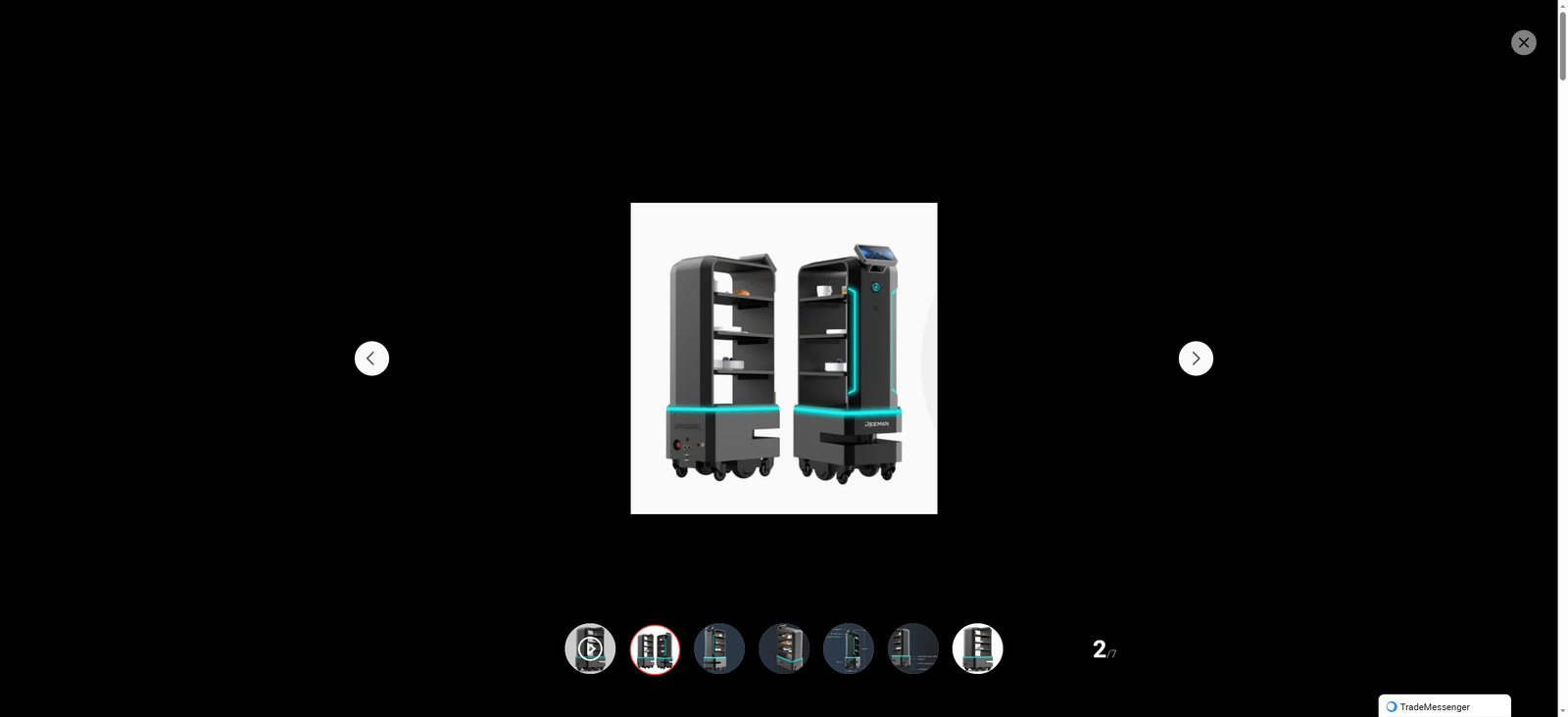
With the rapid development of the catering industry and the deep integration of intelligent technology, the demand for efficient, standardized and humanized services in restaurants is becoming increasingly prominent. Against this background, the multi-functional self-service food delivery robot has emerged as a new force, breaking the limitations of traditional manual service modes, and injecting a strong impetus into the transformation and upgrading of the catering industry. As a core intelligent device in modern restaurants, this kind of robot is no longer just a simple "food delivery tool", but a comprehensive service terminal integrating multiple functions such as food delivery, order taking, navigation and promotion, which is quietly reshaping the service ecology of the catering industry.
The multi-functional self-service food delivery robot has inherent advantages that traditional manual services cannot match in terms of improving service efficiency. In peak dining hours, restaurants often face the dilemma of insufficient waiters, long food delivery time and easy order mixing. The food delivery robot can effectively solve these pain points through intelligent path planning and accurate order matching. Equipped with advanced sensors and navigation modules, it can flexibly avoid obstacles such as diners and tables in the restaurant, and accurately deliver meals to the designated table in the shortest time. At the same time, it can undertake multiple food delivery tasks at one time, greatly reducing the number of trips of waiters, enabling the service staff to focus more on improving the quality of humanized services such as diners' consulting and after-sales, and realizing the optimal allocation of human resources.
Beyond the basic food delivery function, the multi-functional self-service food delivery robot has more extended service capabilities, which brings a new dining experience to diners. Many self-service food delivery robots are equipped with touch screens, voice interaction modules and other devices, supporting self-service order taking, payment, invoice printing and other functions. Diners can complete the whole process of ordering and payment without waiting for waiters, which not only saves time but also meets the personalized needs of young people for independent services. In addition, the robot can also act as a "restaurant guide", providing diners with information such as dish introduction, store promotion activities and seating navigation through voice or screen display. Some high-end models even have functions such as temperature control and heat preservation, which can ensure the temperature and taste of food during delivery, especially for hot pot, soup and other foods that have high requirements on temperature, effectively improving the dining experience of diners.
For restaurant operators, the application of multi-functional self-service food delivery robots is an important measure to reduce operating costs and enhance core competitiveness. In recent years, the labor cost of the catering industry has been rising continuously, and the difficulty of recruiting and retaining employees has become a common problem for many restaurant operators. The investment in food delivery robots is a one-time input with long-term returns. After purchasing and commissioning, it can work 24 hours a day without rest, holidays or salary increases, which greatly reduces the long-term labor cost of restaurants. At the same time, the robot's service process is standardized and unified, which can avoid service quality fluctuations caused by personal emotions, work experience and other factors of waiters, ensuring the stability of restaurant services. In addition, the intelligent management system supporting the robot can record and analyze data such as dining peak periods, popular dishes and food delivery efficiency in real time, providing data support for restaurant operators to adjust business strategies, optimize dish structure and improve operation and management level.
With the continuous progress of artificial intelligence, Internet of Things and other technologies, the multi-functional self-service food delivery robot is also constantly upgrading and iterating, showing a broader development prospect. In the future, the food delivery robot will be more intelligent and humanized: through the accumulation and analysis of big data, it can accurately predict the dining needs of diners and provide personalized dish recommendations; the voice interaction function will be more natural and smooth, realizing seamless communication with diners of different ages and accents; the integration with the restaurant's intelligent management system will be deeper, realizing the whole process intelligent linkage of ordering, food preparation, delivery and settlement. At the same time, the appearance design of the robot will be more diversified and aesthetic, which can be integrated with the decoration style of different types of restaurants, becoming a unique "scenic spot" in the restaurant.
Of course, the popularization and application of multi-functional self-service food delivery robots also need to face some challenges, such as the high initial investment cost, the need for regular maintenance and technical updates, and the acceptance of some middle-aged and elderly diners. However, with the continuous reduction of intelligent hardware costs and the continuous improvement of robot performance, these problems will be gradually solved. More and more restaurants have realized the value of intelligent service equipment, and the multi-functional self-service food delivery robot has become a standard configuration in many new catering stores and chain restaurants.
In conclusion, the multi-functional self-service food delivery robot is not only a product of the combination of catering industry and intelligent technology, but also a key force promoting the transformation and upgrading of the catering industry. It has brought revolutionary changes to the catering industry in terms of improving service efficiency, optimizing dining experience, reducing operating costs and enhancing management level. With the continuous development of intelligent technology, the multi-functional self-service food delivery robot will play a more important role in the future catering service field, helping the catering industry to move towards a more efficient, standardized and intelligent new stage, and creating a better dining experience for consumers and a better development prospect for operators.