
New Custom Greeting and Leading Hotel Restaurant Intelligent Unmanned Meal Delivery and Serving Robot: Leading the New Trend of Catering Service Innovation
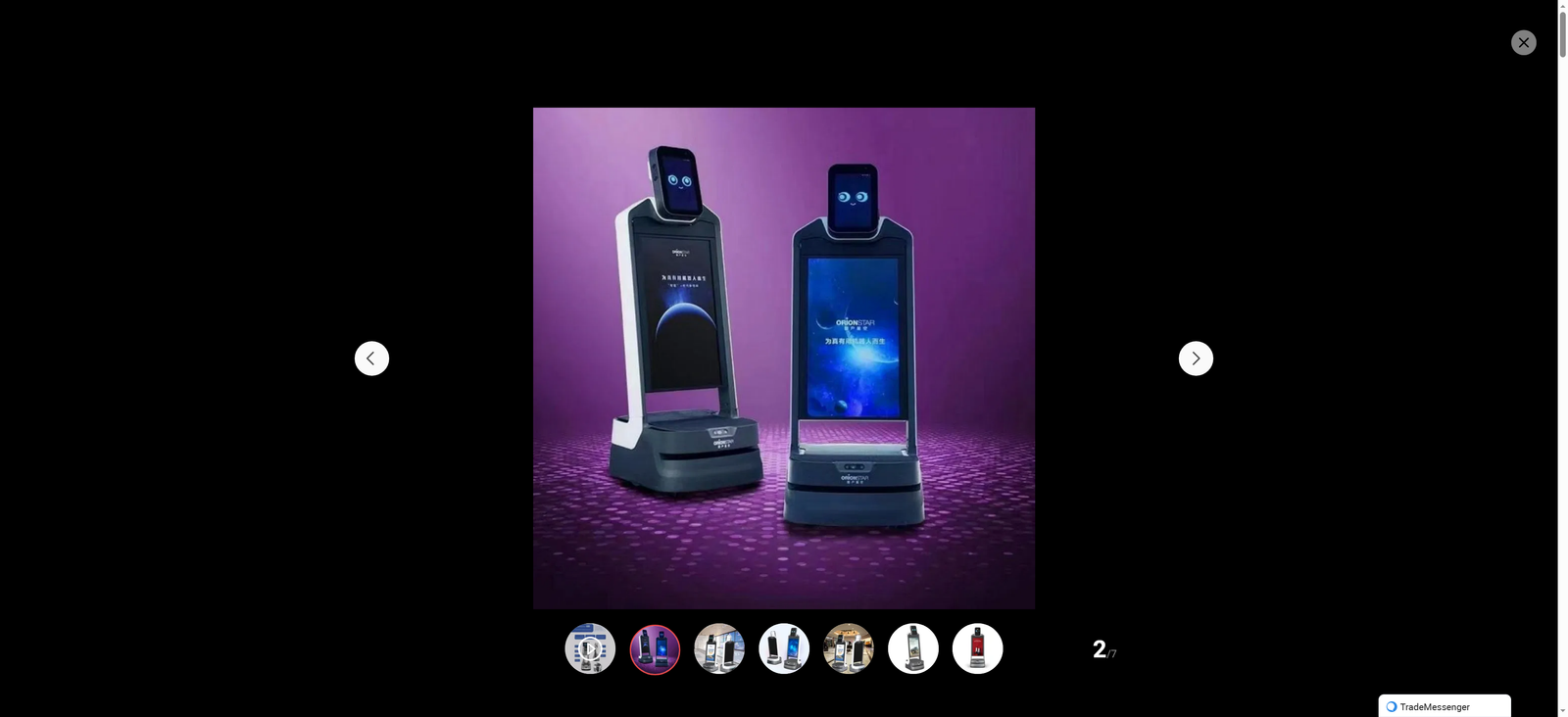
With the rapid development of artificial intelligence, Internet of Things and other emerging technologies, the hotel and catering industry is undergoing a profound transformation of "intelligent upgrading". Among them, the new custom greeting and leading hotel restaurant intelligent unmanned meal delivery and serving robot (hereinafter referred to as "hotel catering intelligent robot") has emerged as a key product integrating multiple functions such as customer reception, route guidance, and unmanned meal delivery. It not only breaks the limitations of traditional manual services, but also injects new vitality into the high-quality development of the hotel and catering industry, becoming a new benchmark for modern hotel service upgrading.
The hotel catering intelligent robot is a comprehensive intelligent equipment designed for the special scenarios of hotel restaurants. Different from the single-function meal delivery robots in the early stage, it takes "customization" and "intelligence" as the core, and realizes the full-link service coverage from customer arrival to meal completion. The most prominent feature is its "custom greeting and leading" function - through the pre-set program and intelligent recognition system, the robot can accurately identify the arrival of customers, take the initiative to greet them with a friendly voice, and can carry out personalized greeting interactions according to different scenarios such as hotel VIP customers, family tourists, and business groups. After the greeting, the robot will guide the customers to the reserved table or the appropriate seating area according to the on-site situation, and during the leading process, it can also introduce the restaurant's characteristic dishes, promotion activities and other information in real time, which greatly enriches the customer's pre-dining experience.
The "intelligent unmanned meal delivery and serving" function is the core competitiveness of the robot, which effectively solves the pain points of traditional hotel restaurant services. In the peak dining period, hotels often face problems such as insufficient waiters, long meal delivery time, and easy mistakes in serving. The intelligent robot relies on advanced SLAM navigation technology, multi-sensor fusion and obstacle avoidance system, which can flexibly navigate in the complex environment of the restaurant, accurately avoid diners, tables and chairs, and other obstacles, and realize efficient and safe meal delivery. After the kitchen prepares the dishes, the waiter only needs to place the dishes on the robot's storage table, and the robot can automatically receive the task and deliver the dishes to the designated table accurately. At the same time, the robot can also complete the serving work such as placing tableware and pouring water according to the needs, and after the meal, it can take the initiative to collect the tableware, reducing the workload of the service staff. The whole process is unmanned, which not only improves the efficiency of meal delivery and serving, but also avoids the possible human errors in manual service, ensuring the standardization and consistency of service quality.
In addition to the core functions of greeting, leading, meal delivery and serving, the new hotel catering intelligent robot also has a variety of intelligent extension functions, which further enhances the service value. For example, it is equipped with a high-definition touch screen and voice interaction module, and customers can directly order meals, query the menu, call the waiter and other operations through the robot, without waiting for the waiter to come to the table; the robot can also connect with the hotel's customer management system, record the customer's dining preferences and consumption habits, and provide more accurate personalized services for customers' next visit; in terms of health and safety, the robot's body is made of food-grade environmentally friendly materials, which is easy to clean and disinfect, and can effectively reduce the contact between people during the service process, reducing the risk of cross-infection, which is in line with the health needs of modern catering services. In addition, the robot can also play the hotel's promotional videos, background music and other content through the audio and video system, creating a more comfortable and atmospheric dining environment.
The application of hotel catering intelligent robots has brought multiple positive impacts to the hotel and catering industry. For hotels, on the one hand, it can significantly reduce labor costs. In the long run, the one-time investment of robots is far lower than the long-term salary expenditure of manual services, and the robot has the advantages of 24-hour continuous work, no fatigue and no vacation, which effectively improves the service efficiency. On the other hand, it can enhance the hotel's brand image. The intelligent robot, as a new symbol of hotel intelligence, can attract more young consumers who pursue fashion and technology, and form a unique competitive advantage in the fierce market competition. For customers, the intelligent service brought by the robot is more efficient, standardized and personalized. The friendly greeting, accurate guidance and fast meal delivery not only save the customer's time, but also bring a novel and interesting dining experience, which improves the customer's satisfaction and loyalty. For the industry, the popularization of hotel catering intelligent robots is promoting the transformation of the hotel and catering industry from "labor-intensive" to "technology-intensive", driving the upgrading of the entire industry's service level and technical content, and promoting the high-quality development of the industry.
Of course, the development of hotel catering intelligent robots is still in a stage of continuous progress and improvement. At present, there are still some problems to be solved, such as the need to further optimize the robot's adaptability to complex scenarios, the need to improve the accuracy of voice interaction in noisy environments, and the need to reduce the cost of robot configuration. However, with the continuous breakthrough of core technologies such as artificial intelligence and the continuous expansion of application scenarios, these problems will be gradually solved. In the future, hotel catering intelligent robots will be more intelligent, personalized and humanized. They may realize more complex service functions such as emotional interaction and intelligent recommendation, and will be more closely integrated with the hotel's overall service system to become an indispensable part of the modern hotel service.
In conclusion, the new custom greeting and leading hotel restaurant intelligent unmanned meal delivery and serving robot is a powerful practice of the integration of technology and service in the hotel and catering industry. It not only solves the practical pain points of traditional services, but also creates a new service mode and experience, leading the new trend of catering service innovation. With the in-depth development of intelligent technology, it is believed that such intelligent robots will be more widely used in the hotel and catering industry, bringing a better future for the industry's development and customers' experience.