
In the wave of intelligent transformation sweeping the global service industry, large intelligent robots tailored for hotel catering scenarios have emerged as a transformative force. These robots, integrating automatic food delivery capabilities with professional commercial customer service functions, are reshaping the operational logic of hotel catering businesses, optimizing service efficiency, and elevating customer experience to new heights. As the demand for contactless, efficient, and standardized services continues to rise, large intelligent food delivery and customer service robots are no longer optional additions but have become a core competitiveness for modern hotel catering enterprises.
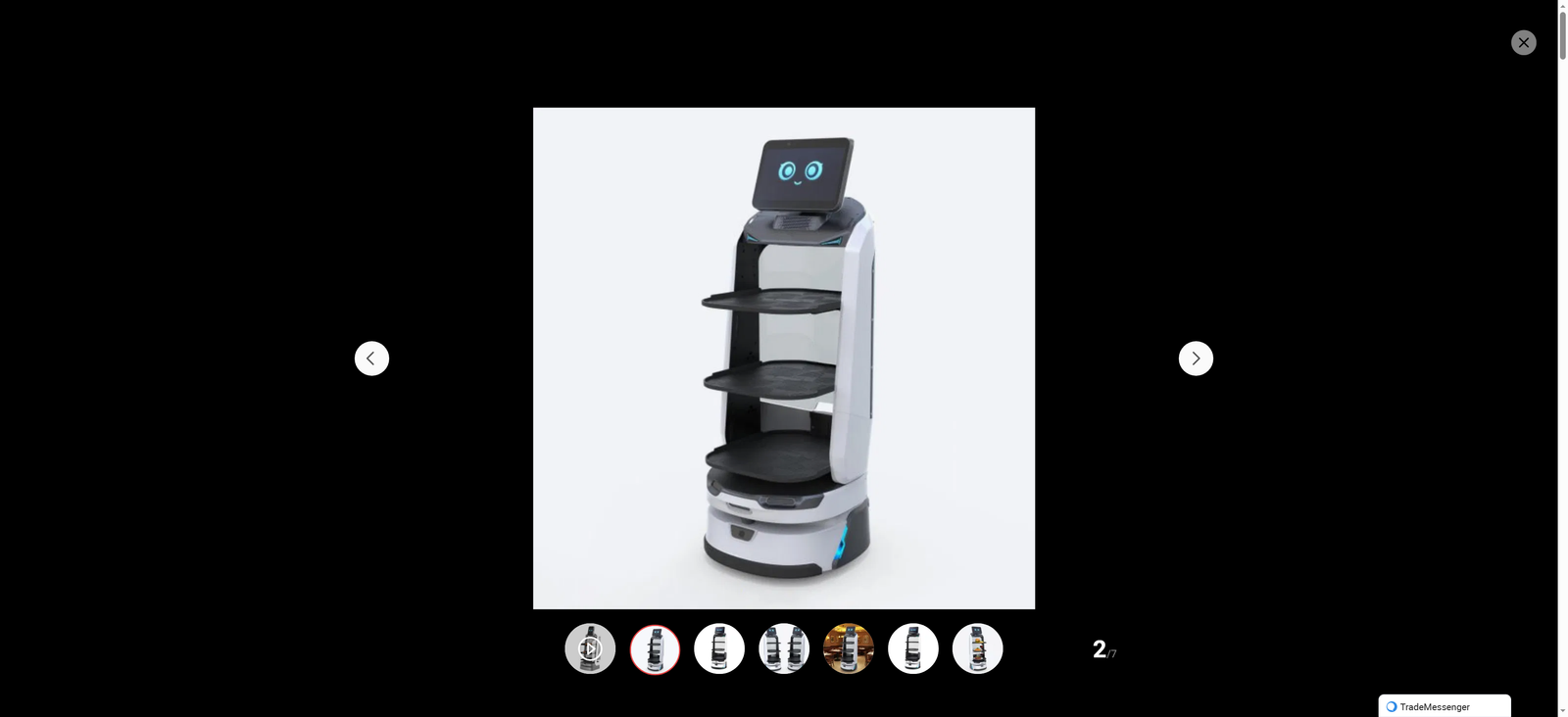
The core value of large intelligent robots in hotel catering lies in their seamless integration of automatic food delivery, a function that addresses the long-standing pain points of the industry. In traditional hotel catering operations, food delivery relies heavily on manual labor, which is prone to inefficiencies such as delayed deliveries during peak hours, order mix-ups, and high labor costs. Large intelligent food delivery robots, equipped with advanced navigation systems (including laser radar, visual recognition, and SLAM technology), can easily navigate through complex hotel environments—whether it’s crowded dining halls, narrow corridors, or elevators with frequent people flow. They can accurately identify target rooms or dining tables, avoid obstacles in real time, and complete food delivery tasks with high precision and speed. For example, during morning breakfast rushes in large hotels, multiple robots can work simultaneously to deliver meals to guest rooms, reducing guest waiting times and easing the workload of service staff. Moreover, these robots are designed with large-capacity storage compartments, capable of carrying multiple sets of tableware and meals, further enhancing delivery efficiency.
Beyond automatic food delivery, the commercial customer service function of large intelligent robots adds significant value to hotel catering services. These robots are embedded with intelligent voice interaction systems, multi-language recognition, and pre-set service scenarios, enabling them to handle a wide range of customer needs. Upon a guest’s arrival at the hotel restaurant, the robot can proactively greet them, guide them to available seats, and present digital menus. During the dining process, guests can use voice commands to ask the robot about dish ingredients, dietary precautions, or hotel facility information—all of which the robot can answer promptly and accurately. For foreign guests, the multi-language service capability eliminates communication barriers, making the dining experience more smooth and enjoyable. Additionally, the robots can collect customer feedback in real time, such as satisfaction with dishes and service, and transmit this data to the hotel’s management system. This data provides valuable insights for businesses to optimize their menus and service processes, realizing data-driven operational improvements.
The application of large intelligent robots in hotel catering also brings substantial operational benefits to businesses. Firstly, it reduces labor costs. With the continuous rise in labor prices in the service industry, hiring and retaining a large number of service staff has become a heavy burden for hotel catering enterprises. Investing in intelligent robots can replace part of the manual work in food delivery and customer service, reducing long-term labor expenses. Secondly, it improves service standardization. Unlike human staff, who may have variations in service quality due to factors such as mood and experience, robots can consistently deliver services according to pre-set standards, ensuring that every guest receives the same high-quality experience. Thirdly, it enhances food safety and hygiene. In the post-pandemic era, contactless service has become a key demand for customers. Intelligent robots avoid direct contact between service staff and guests during food delivery, reducing the risk of cross-contamination and improving food safety and hygiene levels.
Looking to the future, large intelligent robots for hotel catering automatic food delivery and commercial customer service will continue to evolve with technological advancements. With the development of artificial intelligence, machine learning, and Internet of Things (IoT) technologies, these robots will become more intelligent and versatile. For instance, they may be able to predict customer needs based on guest preferences and historical data, proactively recommending personalized dishes. They may also integrate with hotel room control systems, enabling guests to order meals directly through room terminals and have the robot deliver them precisely at the desired time. Furthermore, the integration of 5G technology will enhance the robots’ real-time response capabilities and remote control functions, making their operations more stable and efficient. As these technologies mature, intelligent robots will play an even more important role in the hotel catering industry, driving the industry towards a more intelligent, efficient, and customer-centric future.
In conclusion, large intelligent robots for automatic food delivery and commercial customer service are bringing a profound revolution to the hotel catering industry. They not only solve practical operational problems such as low efficiency and high labor costs but also elevate customer experience through standardized, contactless, and personalized services. As intelligent technology continues to advance, these robots will become an indispensable part of the modern hotel catering ecosystem, helping businesses gain a competitive edge in the fierce market competition. For hotel catering enterprises willing to embrace innovation, investing in and applying large intelligent robots is not only a response to the trend of the times but also a strategic choice for long-term development.