
Smart Serving Robots with AI Navigation: The Ultimate Solution for Busy Restaurants
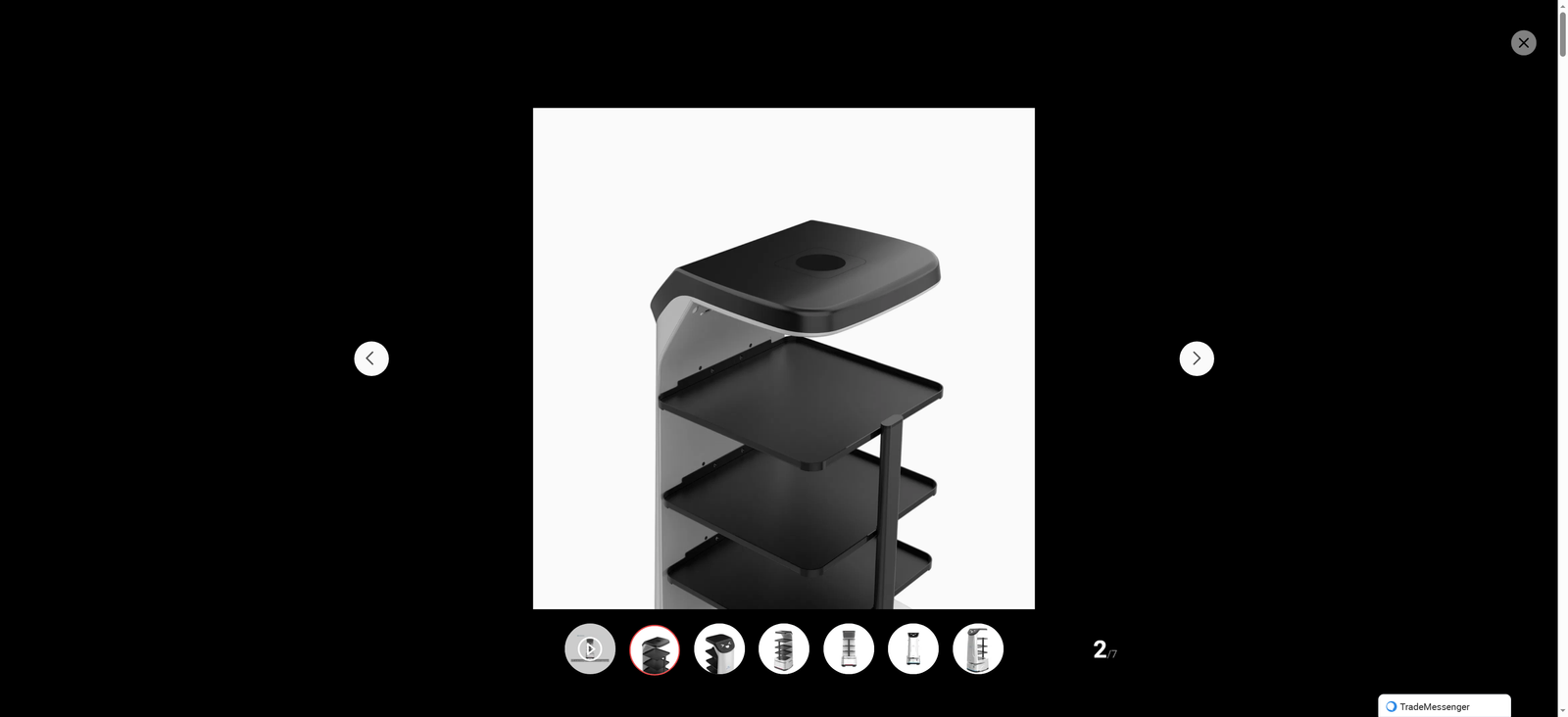
The catering industry has long been plagued by the "three highs and one low" dilemma—high rent, high labor costs, high ingredient costs, and low profit margins. For busy restaurants, especially during peak dining hours, the pressure of inadequate staffing, inefficient service, and rising operational costs becomes even more prominent. However, the emergence of smart serving robots equipped with advanced AI navigation technology is reshaping the operational landscape of the catering industry, turning from a novelty into an indispensable tool for efficient management.
At the core of these smart serving robots lies AI navigation technology, which breaks through the limitations of traditional manual service and adapts to the complex and dynamic environment of busy restaurants. Unlike early robots that relied on single-sensor navigation and were prone to positioning loss or collisions, modern smart serving robots adopt multi-sensor fusion SLAM (Simultaneous Localization and Mapping) technology. This integrated solution combines laser radar, depth cameras, inertial measurement units (IMU), and odometers to achieve centimeter-level positioning accuracy. Laser radar constructs high-precision environmental contours, depth cameras identify low obstacles such as children and table corners, and IMU provides dead reckoning in sensor blind spots, ensuring stable operation even in restaurants with glass partitions, reflective floors, or crowded corridors.
Dynamic path planning and predictive obstacle avoidance capabilities further enhance the robots' adaptability to busy dining scenarios. In restaurants where waiters shuttle back and forth and customers move unexpectedly, advanced algorithms enable robots to predict pedestrians' movement trajectories within seconds and make evasion or deceleration decisions in advance. This not only minimizes collision risks but also avoids traffic jams caused by frequent sudden stops. For large catering establishments, a decentralized distributed scheduling system allows dozens of robots to independently negotiate right-of-way through communication protocols, realizing seamless multi-machine collaboration without "traffic jams" at intersections.
Beyond navigation, AI-powered smart serving robots deliver comprehensive value across operational, employee, and customer dimensions. For restaurant owners, cost reduction and efficiency improvement are the most direct benefits. A mature serving robot can deliver 400 to 600 dishes per day, equivalent to the workload of 2 to 3 human waiters who typically handle around 200 dishes daily. With an average daily working time of nearly 12 hours, these robots operate continuously without rest, leave, or salary increases, saving 8,000 to 12,000 yuan in monthly labor costs per unit. Additionally, their ability to integrate with restaurant order systems enables real-time order tracking, optimizing operational transparency and management efficiency.
For employees, robots take over repetitive and labor-intensive tasks such as food delivery, dish retrieval, and heavy lifting, reducing daily walking distance and physical burden. This not only lowers the risk of work-related injuries from carrying hot dishes but also alleviates work pressure, effectively reducing staff turnover rates. Freed from tedious logistics work, employees can focus on high-quality table service, such as explaining dishes, interacting with customers, and promoting specialties, thereby enhancing service quality and customer satisfaction.
From the customer perspective, smart serving robots significantly improve the dining experience by reducing waiting time. With fast and accurate delivery, customers no longer endure long waits for their meals during peak hours. Advanced models are equipped with intelligent interaction functions driven by large language models (LLMs), enabling natural multi-round conversations to answer questions about dish flavors, ingredients, and promotions. Some robots even feature welcome, seating guidance, and customer-attracting capabilities—performing dances, distributing snacks, and showcasing promotional information to create a fun and technologically advanced dining atmosphere. A case study of Xi Jiade, a large Chinese chain restaurant, shows that its customer-attracting robots complete 220 interactions daily, including 140 dance performances, successfully converting a large number of family customers and enhancing customer engagement.
The practical value of AI navigation smart serving robots has been validated in global applications. Japan's leading restaurant chain Skylark deployed 3,000 Bella robots across over 2,000 stores, with 67% of customers expressing satisfaction with the robotic service. In a large theme park restaurant in Germany, a single robot can collect 2,000 to 3,000 dirty dishes daily, increasing dish retrieval efficiency by 300% and significantly boosting table turnover rates. These cases demonstrate that smart serving robots are not just technological additions but practical solutions that adapt to diverse catering scenarios.
Looking ahead, the catering service robot market is poised for rapid growth. It is projected that the global market size will expand at a compound annual growth rate of over 20%, with delivery robots maintaining a dominant 60% market share. As 5G, edge computing, and AI technologies continue to advance, future robots will feature higher levels of autonomy, learning capabilities, and human-machine collaboration. For busy restaurants striving to balance operational efficiency, cost control, and customer experience, smart serving robots with AI navigation are no longer an option but a strategic investment to gain a competitive edge in the evolving catering landscape.