
Intelligent Service Robot for Efficient Luggage Handling in Hotels and Airports
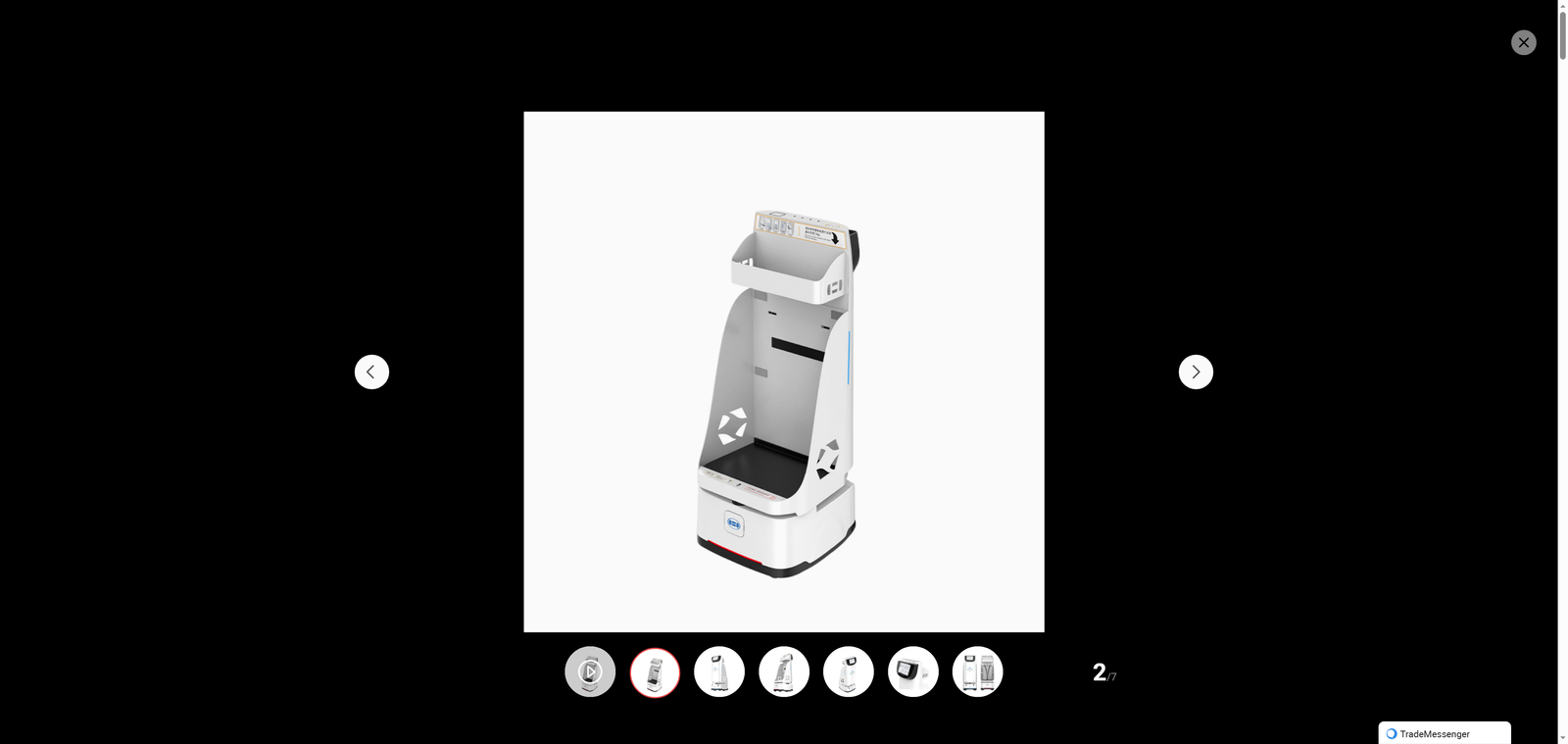
With the rapid development of global tourism and air transportation, hotels and airports, as key hubs of travel, are facing increasingly prominent challenges in luggage handling. Traditional manual luggage services are often limited by factors such as labor costs, work efficiency, service time and human error, which are difficult to meet the growing demand for high-quality and efficient travel services of passengers. Against this background, intelligent service robots dedicated to luggage handling have emerged as the times require, bringing revolutionary changes to the operation mode of hotels and airports and reshaping the passenger travel experience.
Intelligent luggage handling robots integrate multiple cutting-edge technologies such as artificial intelligence (AI), Internet of Things (IoT), autonomous navigation, computer vision and motion control. Compared with traditional manual handling, they have inherent advantages in efficiency, stability, safety and cost control. For airports and hotels, the application of such robots is not only a manifestation of technological upgrading, but also an important measure to optimize service processes, reduce operational costs and enhance core competitiveness.
In airport scenarios, luggage handling has always been a key link affecting the passenger travel chain, involving links such as luggage check-in, transportation, sorting, and pick-up. The traditional manual handling mode is not only inefficient, but also has the risk of luggage loss, damage and wrong delivery due to the large number of passengers and heavy luggage volume, especially during peak travel periods. Intelligent luggage handling robots can realize full-process automatic operation from the check-in counter to the aircraft cargo hold, and from the cargo hold to the luggage carousel, greatly improving the efficiency and accuracy of luggage handling.
Equipped with advanced autonomous navigation systems and obstacle avoidance sensors, airport luggage robots can accurately identify the airport environment, plan the optimal path in real time, and flexibly avoid passengers, vehicles and other obstacles, ensuring smooth travel in complex and crowded airport halls. At the check-in link, passengers only need to place their luggage on the robot, and the robot can automatically scan the luggage tag, upload the information to the airport management system, and then transport the luggage to the designated sorting area according to the flight information. In the luggage pick-up link, the robot can also guide passengers to pick up their luggage accurately through voice prompts and screen displays, reducing the time passengers spend looking for luggage. In addition, the robot can work 24 hours a day without rest, which effectively solves the problem of insufficient labor during peak hours and late-night flights, and ensures the continuity and stability of luggage handling services.
In hotel scenarios, luggage handling is an important part of the guest reception service, which directly affects the guest's first impression of the hotel. Traditional hotel luggage services rely on porters, who can only provide limited services within working hours, and there may be delays in service response during peak check-in and check-out periods, especially for guests with large luggage or special needs. Intelligent luggage handling robots can perfectly make up for these shortcomings, providing guests with all-weather, fast and intimate luggage service experience.
When guests arrive at the hotel, the robot can take the initiative to greet them at the door, accept the luggage handling request through voice interaction or touch screen operation, and then transport the luggage to the guest's room accurately according to the room number. During the transportation process, the robot can automatically take the elevator, avoid obstacles, and ensure the safety of the luggage. When guests check out, they only need to place their luggage outside the room and call the robot through the hotel APP or room phone, and the robot can come to pick up the luggage and send it to the front desk, saving guests the trouble of carrying heavy luggage back and forth. In addition, the robot can also provide value-added services such as luggage storage and temporary transportation, meeting the diverse luggage needs of guests. For hotels, the application of luggage robots not only reduces the labor cost of porters, but also improves the service efficiency and quality, enhancing the hotel's brand image and market competitiveness.
The popularization and application of intelligent luggage handling robots are also supported by continuous technological innovation. With the continuous progress of AI and computer vision technology, the robot's environmental perception and intelligent decision-making capabilities are constantly improving, which can better adapt to the complex and changeable working environments of hotels and airports. The development of IoT technology realizes the real-time connection and information sharing between the robot and the hotel/airport management system, enabling managers to monitor the robot's operation status, task progress and luggage information in real time, and realize refined management. At the same time, the continuous reduction of hardware costs and the improvement of battery life also provide favorable conditions for the large-scale application of intelligent luggage robots.
Of course, the application of intelligent luggage handling robots still faces some challenges. For example, in some old airports and hotels, the existing facilities and environment may not be fully compatible with the robot's operation needs, requiring certain transformation and upgrading; the standardization and unification of luggage tags and information systems also need to be further improved to ensure the smooth connection of robot handling services; in addition, some passengers may have a sense of strangeness and unease about the robot service, which requires relevant institutions to strengthen publicity and guidance and improve passengers' acceptance.
Looking to the future, with the continuous advancement of intelligent technology and the continuous optimization of application scenarios, intelligent luggage handling robots will play a more important role in hotels and airports. In terms of function, the robot will be more intelligent and diversified, not only able to handle luggage, but also integrate services such as guide, consultation and delivery, becoming a comprehensive intelligent service terminal. In terms of collaboration, multiple robots will realize intelligent collaboration and scheduling, forming a complete luggage handling service network to further improve service efficiency. In terms of technology, the application of 5G, cloud computing and big data will make the robot's operation more stable and the service more personalized, providing passengers with a more convenient and comfortable travel experience.
In conclusion, intelligent service robots for luggage handling have brought new development opportunities for hotels and airports. They not only solve the pain points of traditional manual handling, but also promote the transformation and upgrading of the service industry towards intelligence and efficiency. With the continuous breakthrough of technology and the continuous expansion of application scenarios, it is believed that in the near future, intelligent luggage handling robots will become an indispensable part of hotels and airports, contributing more to the development of the global travel service industry.