
The Rise of Intelligent Service Robots: Empowering the New Era of Hotel and Catering Services with Technology
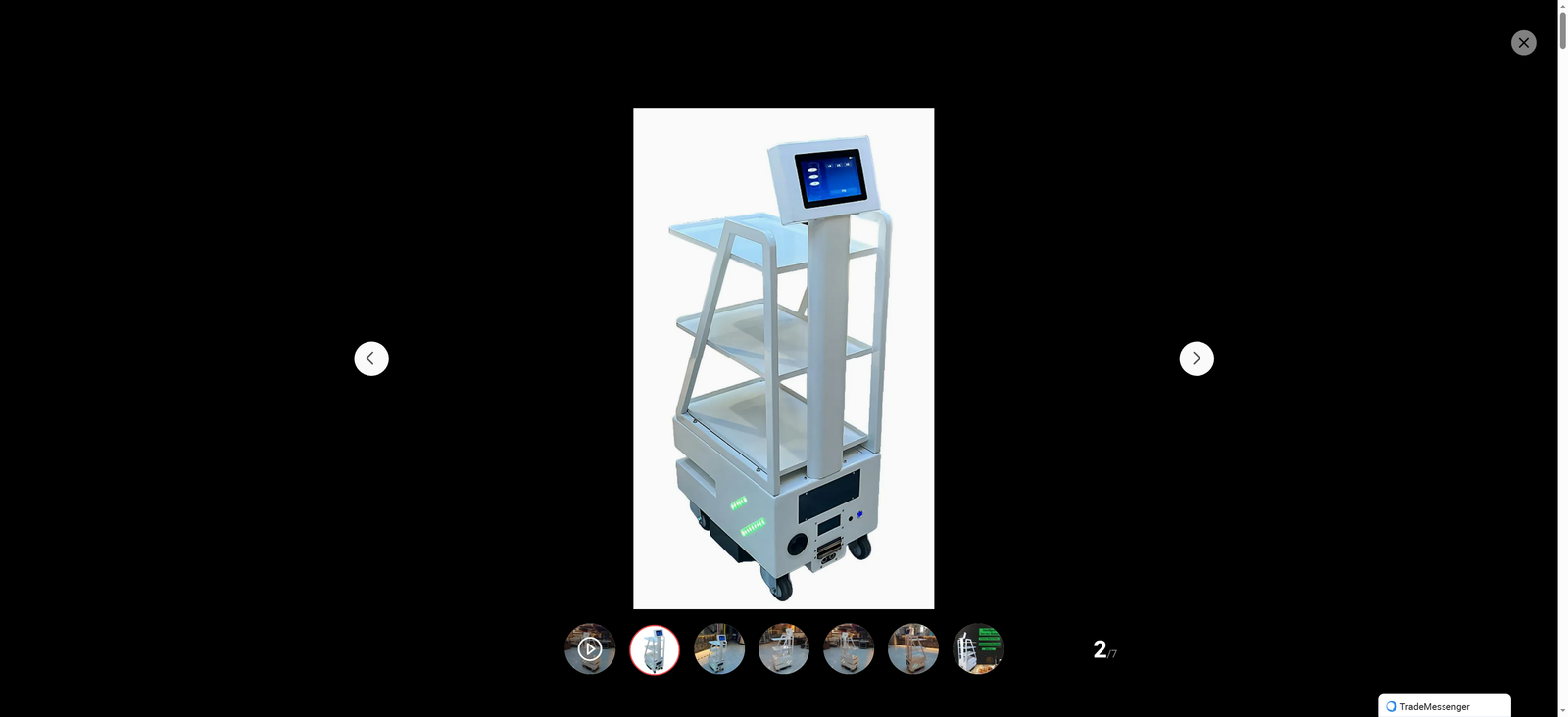
In the wave of global digital transformation, intelligent service-oriented robots have gradually stepped out of the laboratory and entered various fields of people's lives, among which food delivering robots and hotel-style service robots have become the most representative and widely used types. These intelligent robots, with their efficient, stable and humanized service capabilities, are reshaping the service ecology of the hotel and catering industries, and their pricing logic, which is closely related to technological iteration and market demand, has also become a focus of attention for industry insiders and investors.
Intelligent service-oriented robots are designed with "service" as the core, integrating advanced technologies such as artificial intelligence, Internet of Things, automatic navigation and obstacle avoidance. Different from traditional industrial robots, they pay more attention to human-computer interaction experience and adaptability to complex service scenarios. For the hotel and catering industries, which have high requirements for service efficiency and quality, the emergence of these robots has solved many long-standing pain points.
Hotel-style service robots, as the "intelligent butlers" in the hotel industry, have realized the full coverage of multiple service links. From the moment guests check in, they can carry luggage and guide guests to their rooms; during the stay, they can deliver water, towels, snacks and other items to the room on time according to the guests' needs, without the need for hotel attendants to make repeated trips. In addition, they can also undertake tasks such as floor patrol, environmental detection and information consultation, which not only reduces the work pressure of hotel staff, but also improves the response speed and accuracy of services. Especially in high-end hotels, hotel-style service robots have become a symbol of intelligent upgrading, which can bring guests a novel and high-quality stay experience and enhance the core competitiveness of the hotel.
Food delivering robots, on the other hand, have become the "hardcore assistants" in the catering industry. In restaurants, canteens and other scenarios, they can accurately deliver meals from the kitchen to the guests' tables according to the order information, avoiding the problems of slow meal delivery, wrong delivery and missing delivery caused by human factors. Even in the peak dining period, food delivering robots can operate stably and efficiently, greatly improving the meal delivery efficiency of catering stores. At the same time, they can also reduce the labor cost of catering stores to a certain extent. Under the background of increasing labor costs in the catering industry, food delivering robots have become an important choice for many catering brands to achieve cost control and efficiency improvement. In addition, the clean and hygienic characteristics of food delivering robots also meet the people's higher requirements for food safety and health in recent years.
When it comes to the price of intelligent service-oriented robots (including food delivering robots and hotel-style service robots), it is not a fixed figure, but is affected by multiple factors. First of all,technological configuration is the core factor determining the price. Robots with advanced navigation systems (such as SLAM laser navigation), high-precision sensors, intelligent voice interaction modules and long battery life will have higher R&D and production costs, so their selling price will also be relatively high. For example, high-end hotel-style service robots with multi-scenario adaptability and complex interaction capabilities may be priced at tens of thousands of yuan; while ordinary food delivering robots with basic meal delivery functions and simple navigation systems have a relatively low price, generally ranging from several thousand to ten thousand yuan.
Secondly, functional positioning also affects the price. Different robots have different functional orientations, and their prices will vary accordingly. For example, hotel-style service robots that can complete multiple tasks such as guidance, delivery, patrol and consultation are more expensive than single-functional robots that only undertake delivery tasks; food delivering robots that can adapt to multi-floor, multi-obstacle and large-space scenarios are more expensive than those suitable for small restaurants. In addition, customized robots developed according to the specific needs of hotels or catering brands (such as adding brand logos, customizing service processes, etc.) will also have higher prices due to the increase in R&D and production costs.
Thirdly, brand influence and after-sales service are also important factors affecting the price. Well-known robot brands with mature technology, complete product lines and perfect after-sales service systems usually have higher brand premiums, and their products are more expensive than those of small brands. However, choosing such brands can also bring more guaranteed product quality and after-sales service, such as regular maintenance, technical upgrades and fault repair, which is conducive to the long-term use of robots. For hotels and catering stores, although the initial purchase cost is higher, the subsequent use cost and risk are lower.
In recent years, with the continuous progress of intelligent technology and the expansion of market demand, the price of intelligent service-oriented robots has shown a gradual downward trend. On the one hand, the maturity of core technologies such as chips, sensors and navigation systems has reduced the production cost of robots; on the other hand, the increase in the number of robot manufacturers has intensified market competition, prompting manufacturers to reduce prices to expand market share. At the same time, the government's policy support for the intelligent manufacturing industry has also provided certain subsidies for enterprises to purchase intelligent robots, which has further reduced the threshold for hotels and catering stores to use robots.
Looking forward to the future, with the continuous deepening of artificial intelligence technology, intelligent service-oriented robots will have more powerful functions and higher adaptability. Hotel-style service robots may realize more humanized interaction and more accurate service scheduling, and food delivering robots may achieve faster delivery speed and more intelligent order management. In terms of price, with the large-scale production and technological innovation of robots, the price will be more close to the needs of the market, making more hotels and catering stores able to afford and use intelligent service robots.
In conclusion, intelligent service-oriented robots represented by food delivering robots and hotel-style service robots are not only changing the service mode of the hotel and catering industries, but also promoting the transformation and upgrading of the entire service industry. Their price, which is affected by technology, function, brand and other factors, is gradually moving towards rationalization and popularization. With the blessing of technology, these intelligent robots will become an indispensable part of the service industry, bringing more efficient, convenient and high-quality services to people's lives.