
Intelligent Restaurant Service Food Delivery Robot with Touchscreen and Obstacle Avoidance: Reshaping the Future of Catering Services
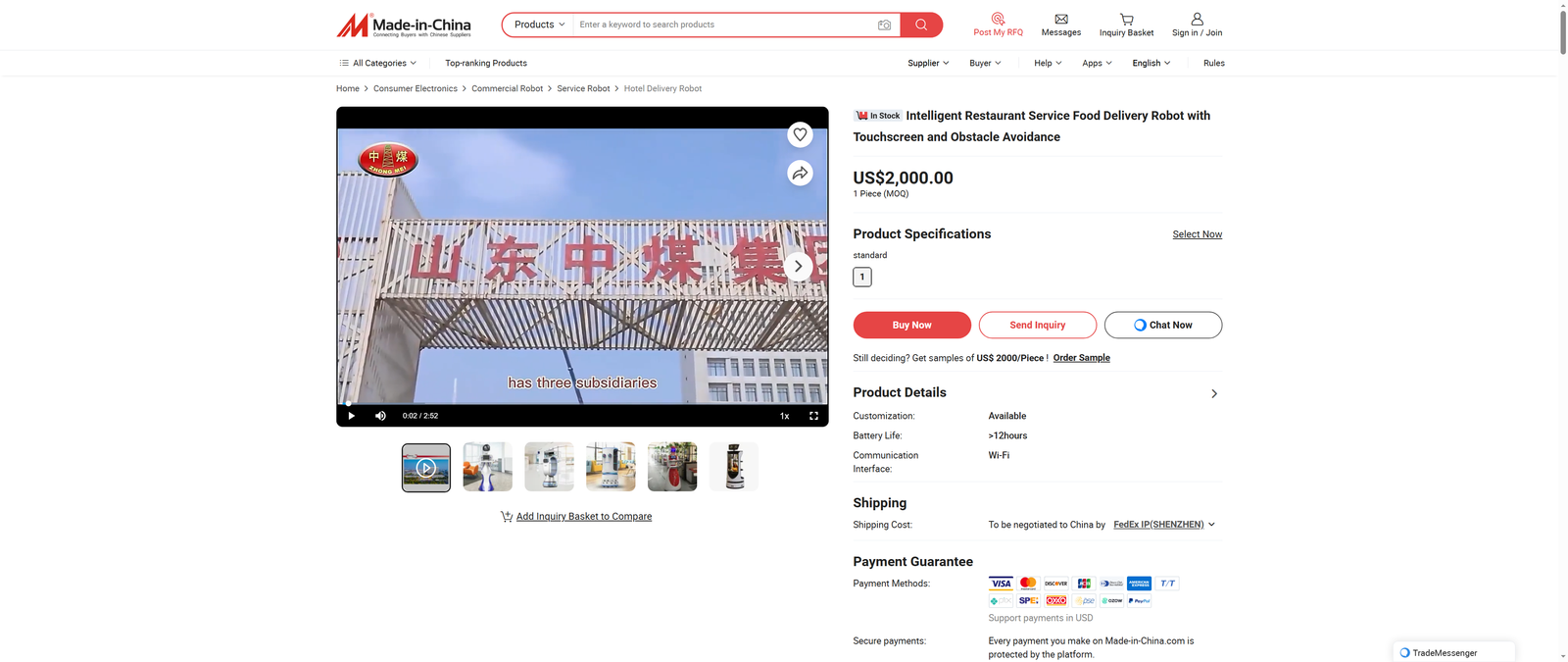
In the wave of digital transformation, the catering industry is undergoing a profound revolution. Faced with the dual challenges of labor cost pressure and increasing consumer demand for efficient services, intelligent equipment has become a key force driving the upgrading of the catering industry. Among them, the intelligent restaurant service food delivery robot equipped with a touchscreen and obstacle avoidance function stands out. It is no longer a simple "tool for delivering food" but a multi-functional service terminal that integrates interaction, transportation, and safety, injecting new vitality into the catering scene and redefining the standard of modern restaurant services.
The touchscreen, as the "interactive window" of the intelligent food delivery robot, breaks the barrier between humans and machines, making the service process more flexible and humanized. Unlike traditional robots that can only complete fixed delivery tasks, the touchscreen-equipped robot realizes two-way information interaction between customers, waiters and the restaurant system. For customers, after taking a seat, they can directly operate the robot's touchscreen to browse the menu, place orders, call for services (such as asking for tableware, refilling drinks) and even pay the bill. This not only reduces the waiting time for customers to call waiters but also gives them more autonomous control over the dining process, improving the overall dining experience. For restaurant staff, the touchscreen serves as a mobile workbench—they can receive order information, view table status, and send service reminders through the robot's screen, realizing efficient scheduling of work tasks. In addition, the touchscreen can also display restaurant promotions, new dish recommendations and other information, becoming a new marketing channel for restaurants to enhance brand influence.
Obstacle avoidance technology is the "core guarantee" for the stable operation of intelligent food delivery robots, ensuring that they can move safely and efficiently in complex restaurant environments. Restaurants are usually crowded with customers, tables and chairs, and waiters walking around, which puts high requirements on the robot's path planning and obstacle response capabilities. The intelligent food delivery robot adopts a multi-sensor fusion obstacle avoidance system, which integrates laser radar, ultrasonic sensors, visual cameras and other equipment to achieve 360-degree all-round environmental perception. Laser radar can accurately measure the distance between the robot and obstacles, ensuring high-precision positioning; ultrasonic sensors are sensitive to small obstacles (such as children's toys, tableware) and can avoid blind spots; visual cameras can identify dynamic obstacles (such as walking customers, moving waiters) and predict their movement trajectories, so as to adjust the moving path in advance. When encountering obstacles, the robot can quickly make decisions—either stop and wait, detour through the optimal path, or send a voice reminder to the surrounding people, ensuring that the food is delivered safely to the target table without causing collisions or disturbances. This reliable obstacle avoidance capability not only improves the work efficiency of the robot but also reduces the potential safety hazards in the restaurant, creating a more orderly dining environment.
The combination of touchscreen interaction and obstacle avoidance technology has made the intelligent food delivery robot a "versatile assistant" in the catering industry, bringing tangible benefits to both restaurants and customers. For restaurants, the application of robots can significantly reduce labor costs—one robot can replace 2-3 waiters' daily delivery and basic service work, especially during peak dining hours, it can effectively alleviate the pressure of insufficient staff. At the same time, the robot's standardized service process reduces the probability of human errors (such as wrong orders, missed orders), improving service quality and customer satisfaction. In terms of operation management, the robot can collect dining data (such as customer order preferences, peak dining time) through the touchscreen and upload it to the restaurant management system, providing data support for restaurants to adjust menus, optimize seating arrangements and formulate marketing strategies. For customers, the intelligent robot brings a novel and convenient dining experience—from autonomous ordering to quick food delivery, every link is simple and efficient, and the sense of technology brought by the robot also adds fun to the dining process, making dining no longer just a matter of satisfying appetite, but also a kind of sensory enjoyment.
With the continuous progress of artificial intelligence, sensor technology and Internet of Things technology, the intelligent restaurant service food delivery robot is also evolving towards a more intelligent and humanized direction. In the future, the touchscreen may realize more intelligent interaction modes, such as voice control, face recognition and gesture interaction, making the operation more convenient; the obstacle avoidance technology will be more precise, and the robot can better adapt to complex and changing restaurant environments, even realizing autonomous elevator taking and multi-floor delivery. In addition, the robot may also be connected with other intelligent equipment in the restaurant (such as intelligent cash registers, intelligent refrigerators) to form a complete intelligent catering service chain, realizing the full-link digital operation of the restaurant.
In conclusion, the intelligent restaurant service food delivery robot with touchscreen and obstacle avoidance function is a typical embodiment of the integration of catering industry and intelligent technology. It not only solves the practical pain points of the catering industry such as high labor costs and low service efficiency but also meets the personalized and diversified needs of modern consumers for dining services. As an important part of the intelligent catering ecosystem, this kind of robot is not only reshaping the service mode of the catering industry but also leading the catering industry to move towards a more efficient, standardized and intelligent future. It is believed that with the continuous popularization and upgrading of technology, intelligent food delivery robots will become a standard configuration in more restaurants, bringing a better dining experience to people and writing a new chapter in the development of the catering industry.