
Intelligent Food Serving & Delivery Robot: Redefine Catering Service with Radar-Precise Obstacle Avoidance
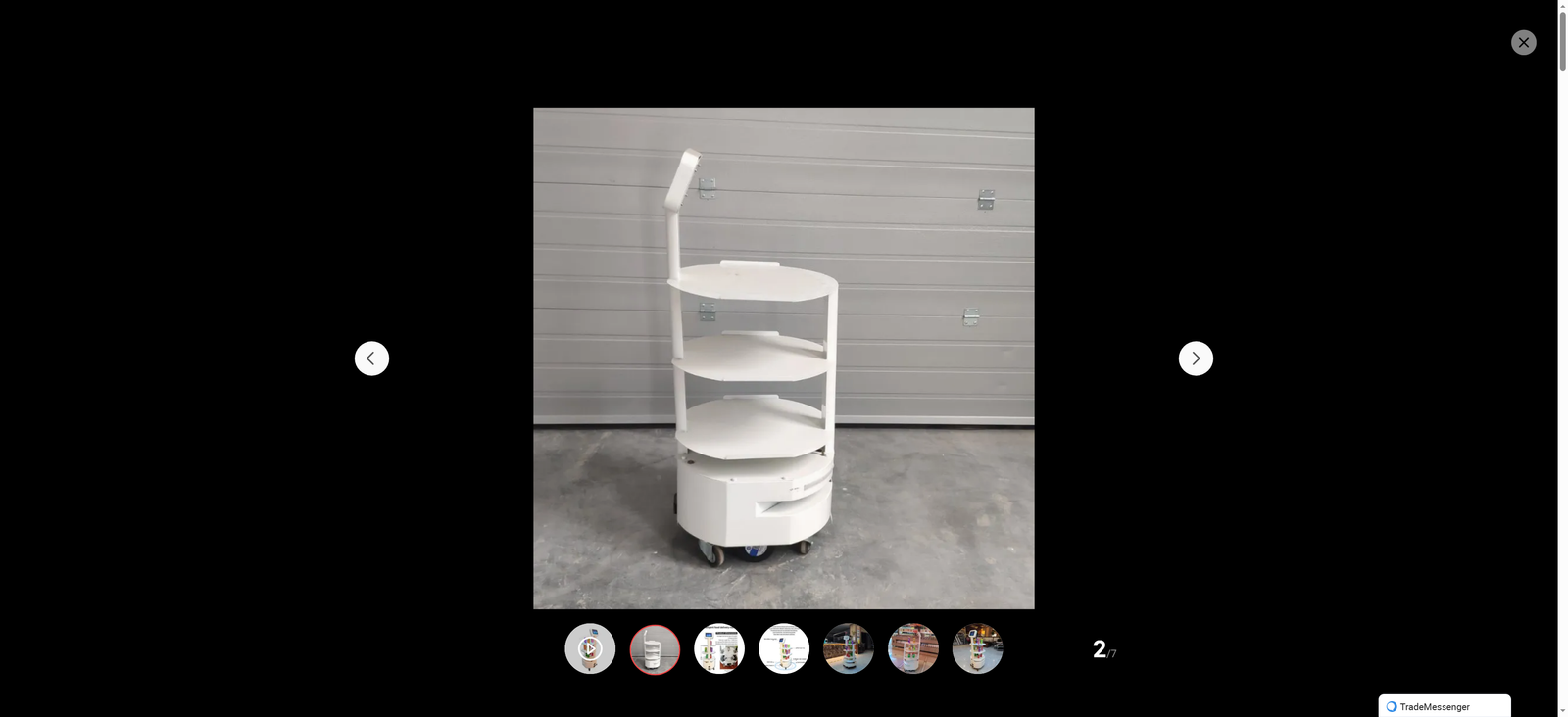
In the wave of intelligent upgrading in the catering industry, labor cost pressure, peak-hour service bottlenecks, and service standardization challenges have become key pain points restricting the development of restaurants and hot pot shops. The intelligent food serving & delivery robot, equipped with radar-precise obstacle avoidance technology, has emerged as a disruptive solution. It not only realizes automatic food delivery but also breaks through the limitations of complex catering environments, injecting new vitality into the efficient operation of catering businesses.
Radar-Precise Obstacle Avoidance: The Core Guarantee of Stable Operation in Complex Scenarios
The core competitiveness of the intelligent food serving & delivery robot lies in its advanced radar-based obstacle avoidance system, which integrates laser radar, ultrasonic sensors, and 3D visual perception technology to build a multi-dimensional environmental perception matrix. Different from traditional single-sensor solutions, the laser radar of this robot achieves 270° wide-angle scanning coverage, with a dynamic algorithm update rate of 30 times per second, enabling it to identify obstacles within 0.1-3.5 meters in real time and maintain a 5cm-level obstacle avoidance precision even when moving at 1.2m/s.
For restaurants and hot pot shops with dense pedestrian flow, narrow aisles, and random placement of chairs, this technology shows remarkable adaptability. When encountering sudden obstacles such as running children, moving dining chairs, or waiters carrying dishes, the robot responds in only 0.3 seconds, completing deceleration, detour, or emergency braking in a timely manner, far exceeding the industry average response time of 0.8 seconds. A practical test in a chain hot pot shop shows that during the evening peak with 200 customers per hour, the robot maintains a 98.7% task completion rate with zero collision accidents, effectively solving the problem of food spilling and safety hazards caused by manual delivery in crowded environments.
In addition, the robot is equipped with a "whisker-type" close-range detection system and a unique "crab step" lateral movement mode. It can quickly brake when touching soft obstacles such as curtains and tablecloths that are difficult to identify visually, and flexibly complete right-angle turns in aisles as narrow as 60cm. This makes it smoothly navigate through private rooms and dense dining areas, improving the traffic efficiency in complex areas by 62% compared with traditional delivery robots.
Automatic Food Serving: Create Efficient and Standardized Catering Services
The intelligent food serving & delivery robot realizes the full-process automation of food delivery from the kitchen to the dining table, fundamentally optimizing the catering service process. It adopts SLAM laser radar navigation technology to accurately locate the dining table position, and the built-in shock absorption system ensures stable operation, keeping the soup and dishes in the tray from spilling, with a soup spilling rate controlled below 0.03% even during emergency obstacle avoidance.
The double-layer tray design of the robot has a load capacity of about 5kg, which can meet the delivery needs of various dishes in restaurants and hot pot shops, whether it is hot pot bottom materials, fresh ingredients, or cold dishes and drinks. It can automatically receive orders from the kitchen POS system, plan the optimal delivery path, and send a soft prompt sound to remind customers when arriving at the target table, then slowly lower the tray for customers to take food, realizing a seamless connection between kitchen output and table service.
For catering businesses, the robot's 24-hour continuous working capacity and automatic charging function greatly improve service efficiency. It can work continuously for 12 hours after a full charge and automatically return to the charging station for charging when the power is low, without manual supervision. A Cantonese restaurant in Guangzhou deployed 6 such robots, which completed 458 delivery trips during the lunch rush, equivalent to the workload of 7-8 waiters, while reducing the labor cost by more than 30%.
Tailor-Made for Restaurants and Hot Pot Shops: Solve Industry Pain Points Practically
Restaurants and hot pot shops have the characteristics of high customer flow density, frequent food delivery, and high requirements for service timeliness, which are exactly the scenarios where the intelligent food serving & delivery robot can give full play to its advantages. In hot pot shops, where customers need to add ingredients frequently, the robot can quickly deliver fresh ingredients according to the order, avoiding the long waiting time caused by waiters being busy with multiple tasks. At the same time, it reduces the contact between staff and hot pots, reducing the risk of scalding.
In terms of cost control, the robot has obvious long-term advantages. With the average monthly salary of restaurant waiters in first-tier cities exceeding 6,200 yuan, the one-time investment in the robot can be recovered through labor cost savings in 18 months. Moreover, it avoids the cost loss caused by staff turnover, training, and social security, providing a stable and controllable service solution for catering businesses. At present, more than 1,200 catering establishments across the country have deployed this type of robot, covering Chinese restaurants, hot pot shops, Western restaurants, and other scenarios, and the user satisfaction rate reaches 95%.
In addition, the robot is equipped with a high-definition touch screen on the chest, which can play mobile advertisements, preferential information, and characteristic dish introductions while delivering food, realizing the integration of service and marketing. It can also customize welcome speeches and promotional words according to the needs of the store, enhancing the customer experience and brand image.
Conclusion: Lead the Intelligent Transformation of the Catering Industry
The intelligent food serving & delivery robot, with radar-precise obstacle avoidance as the core and automatic food serving as the main function, has become a powerful assistant for restaurants and hot pot shops to achieve efficient operation, cost reduction, and quality improvement. It not only solves the practical pain points of labor shortage and low service efficiency in the catering industry but also brings a new intelligent experience to customers, helping catering businesses gain a competitive advantage in the fierce market competition.
In the era of intelligent catering, choosing the right intelligent service equipment is equivalent to seizing the opportunity of industry upgrading. The intelligent food serving & delivery robot will continue to iterate and upgrade with its excellent performance and scenario adaptability, leading the catering industry to a more efficient, standardized, and intelligent future.