
Intelligent Delivery Robot: Revolutionizing Food Delivery for Restaurants
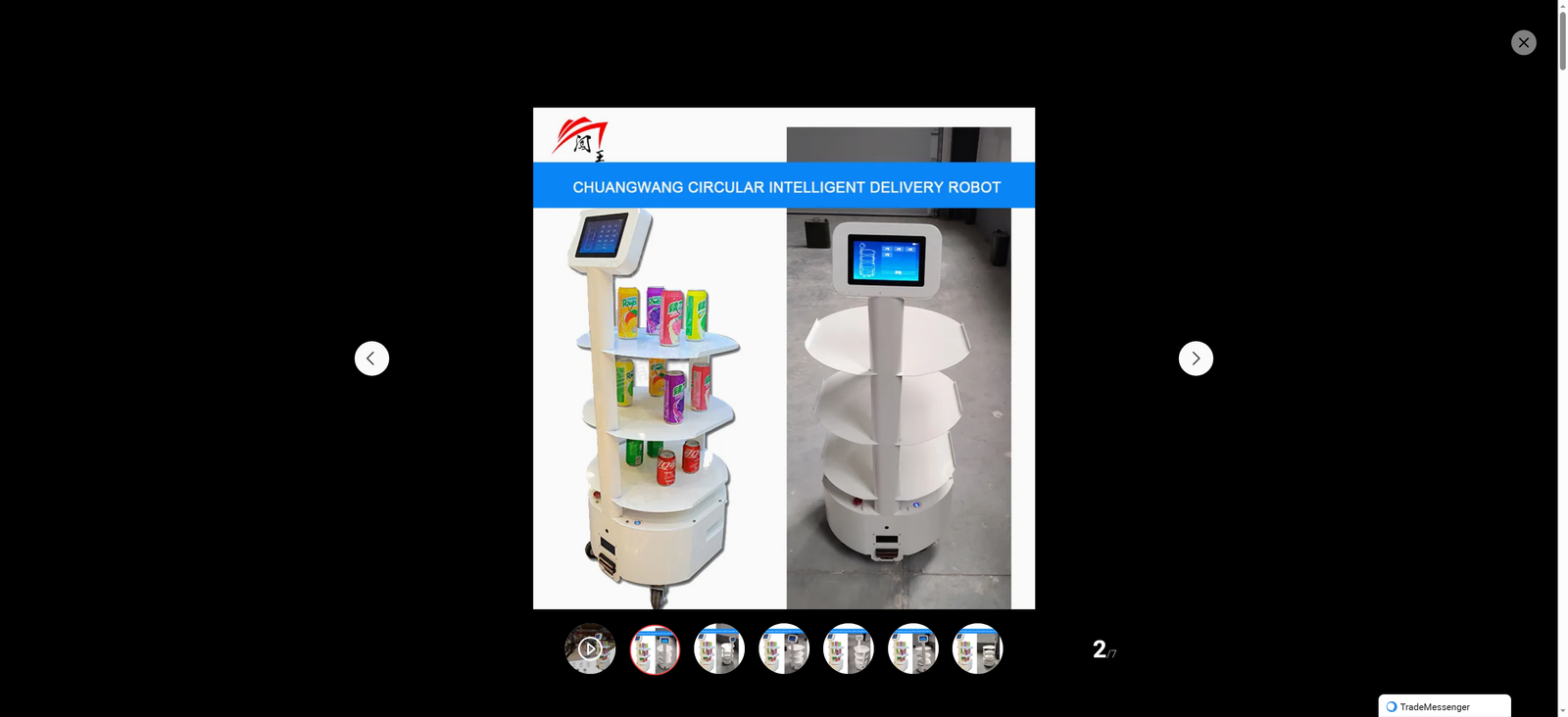
In the dynamic landscape of the foodservice industry, operational efficiency, customer experience, and cost control have become the core pillars of sustainable development. As labor shortages persist globally and consumers demand faster, more hygienic services, intelligent delivery robots have emerged as a transformative solution for restaurants. These advanced automated systems are redefining food delivery workflows, bridging the gap between kitchen efficiency and customer satisfaction while unlocking new value for restaurant operators.
The Era of Intelligent Delivery: Driving Forces Behind Restaurant Adoption
The global foodservice industry is witnessing a paradigm shift toward automation, with intelligent delivery robots at the forefront of this transformation. According to market research, the global food delivery robot market is projected to grow at a compound annual growth rate of nearly 30% in 2026, with the Asia-Pacific region accounting for over 40% of the global demand <superscript:5. This rapid adoption is fueled by three key drivers:
First, the persistent labor crunch has become a universal challenge for restaurants. Labor costs now account for a significant portion of total operational expenses, and high turnover rates disrupt service consistency. Intelligent delivery robots can replace 1.5 to 2 human servers, handling 400-600 dishes daily—three times the workload of a traditional server—while operating continuously without breaks or sick leave <superscript:3. This not only alleviates staffing pressures but also stabilizes service quality during peak hours.
Second, post-pandemic consumer preferences have prioritized contactless service and hygiene. Intelligent delivery robots minimize human-to-human interaction, reducing the risk of cross-contamination while meeting evolving customer expectations for safety <superscript:4. Their precise, automated workflows also reduce order errors, with some models boasting a 97% customer satisfaction rate due to timely and accurate deliveries <superscript:6.
Third, technological advancements have made these robots increasingly adaptable to complex restaurant environments. Modern models integrate advanced navigation, obstacle avoidance, and multi-machine collaboration capabilities, enabling seamless operation in crowded dining areas, narrow corridors, and multi-floor spaces. This technological maturity has accelerated their adoption across various restaurant types, from fast-food chains to high-end dining establishments.
Core Capabilities: How Intelligent Delivery Robots Elevate Restaurant Operations
Intelligent delivery robots are far more than mere "automated trolleys"—they are integrated solutions designed to optimize every stage of the food delivery process. Key capabilities include:
Precision Navigation & Dynamic Obstacle Avoidance
Equipped with dual SLAM (Simultaneous Localization and Mapping) technology and laser radar sensors with a detection range of up to 25 meters, these robots can create real-time environmental maps, plan optimal routes, and adjust dynamically to obstacles <superscript:4. Whether navigating around bustling diners, server carts, or unexpected spills, they maintain stable movement with an obstacle-surmounting capacity of up to 12mm and a minimum turning radius of 333mm, ensuring smooth deliveries even in high-traffic scenarios <superscript:2. Advanced 3D depth detection further reduces the risk of entering restricted areas, enhancing operational safety.
Efficient Multi-Machine Collaboration & Task Management
Cloud-based centralized调度 systems enable seamless coordination between multiple robots, allowing them to divide tasks, avoid collisions at intersections, and prioritize deliveries based on order urgency <superscript:6. This cluster operation capability significantly boosts overall delivery efficiency—single robots can complete up to 150 deliveries daily, while multi-robot fleets can handle peak-hour rushes without bottlenecks <superscript:3. Some models also support multi-point delivery, enabling one robot to serve multiple tables in a single trip, further optimizing workflow.
Autonomous Operation & User-Friendly Design
Intelligent delivery robots feature fully autonomous operation, from order receipt to table delivery and tray recycling. When battery levels drop below 10%, they automatically return to the nearest charging station for recharging, ensuring 12-15 hours of continuous operation without manual intervention <superscript:2. User-centric designs include multi-layered trays with a total loading capacity of 40kg, 360° accessible food placement, color-changing indicator lights for status updates, and voice broadcast systems that notify customers upon arrival <superscript:4. Some advanced models also offer additional modes such as greeting, customer guidance, and promotional content display, enhancing the overall dining experience.
Seamless Integration & Cost Efficiency
These robots integrate seamlessly with existing restaurant management systems, syncing real-time order data to enable accurate tracking and status updates for both staff and customers <superscript:3. From a cost perspective, the investment in intelligent delivery robots offers rapid ROI—high-load scenarios can recoup costs in 10-14 months through labor savings <superscript:1. The rise of RaaS (Robot as a Service) models, which convert fixed hardware costs into flexible monthly subscriptions, has further lowered entry barriers for small and medium-sized restaurants <superscript:5.
Transformative Benefits: Beyond Efficiency to Competitive Advantage
For restaurant operators, intelligent delivery robots deliver a holistic set of benefits that extend beyond operational efficiency:
Cost Optimization: By reducing reliance on manual labor, robots lower long-term staffing costs, with some restaurants reporting a 31.67% decrease in operational expenses <superscript:7. Energy-efficient designs, with daily power consumption of only 2.5-3.5 kWh, further minimize operational costs <superscript:1.
Enhanced Customer Experience: Faster delivery times (reduced by 25-30%), accurate order fulfillment, and the novelty of AI-powered service boost customer satisfaction and loyalty <superscript:7. The friendly, futuristic design of robots also creates memorable dining moments, driving social media engagement and word-of-mouth promotion.
Staff Empowerment: By handling repetitive, physically demanding delivery tasks, robots free up staff to focus on high-value interactions such as table service, upselling, and customer care. This not only reduces employee burnout and turnover but also increases staff productivity by 49% and potential tips <superscript:3.
Sustainable Operations: Aligning with global "dual carbon" goals, intelligent delivery robots support eco-friendly operations through energy efficiency and optimized route planning. Future integration with V2G (Vehicle-to-Grid) technology may even enable robot batteries to act as distributed energy storage, adding further value <superscript:1.
Future Outlook: The Next Frontier of Restaurant Automation
As AI and robotics technology evolve, intelligent delivery robots are poised to become even more versatile and intelligent. The integration of large language models will enable advanced autonomous decision-making and multi-modal human-computer interaction, allowing robots to handle complex scenarios such as customer inquiries and order adjustments <superscript:1. Energy补给 networks inspired by electric vehicle battery-swapping technology will further improve operational continuity, while cross-scenario expansion into hotels, hospitals, and office canteens will open new growth avenues <superscript:5.
For forward-thinking restaurant operators, adopting intelligent delivery robots is no longer a novelty but a strategic imperative. In an industry where efficiency, safety, and experience are paramount, these robots are not just tools—they are partners in building resilient, customer-centric, and future-ready businesses.
Embrace the intelligent delivery revolution today, and unlock a new era of operational excellence and competitive advantage for your restaurant.