
Intelligent Auto Disinfect Robot: The New Guardian of Public Health with AI Atomization Spray Technology
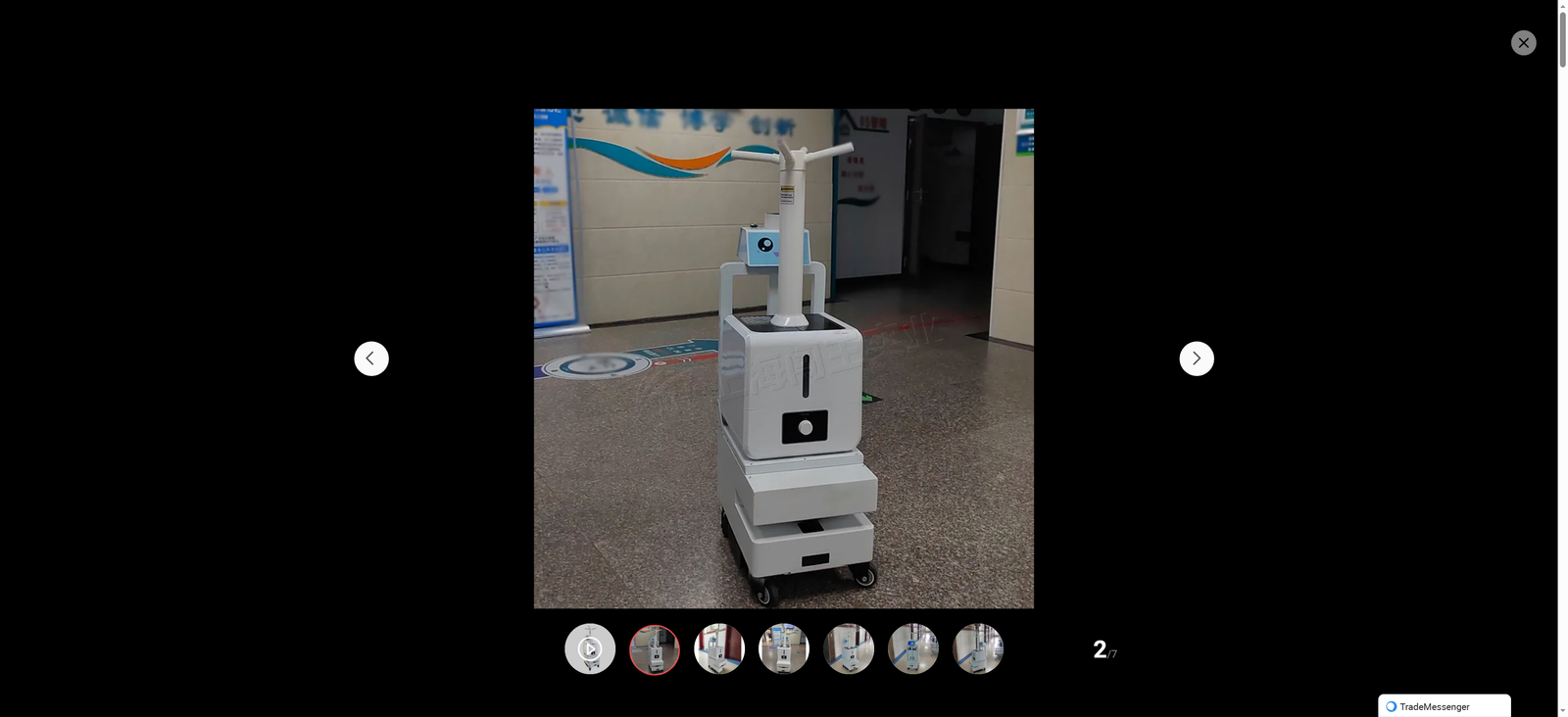
In the post-pandemic era, the demand for efficient, safe and intelligent disinfection solutions has been increasing significantly across various industries. The Intelligent Auto Disinfect Robot, equipped with AI atomization spray technology, has emerged as a revolutionary tool that redefines the standards of environmental disinfection. By integrating advanced artificial intelligence, precision navigation and efficient atomization technology, this robot breaks through the limitations of traditional manual disinfection, providing a reliable and automated solution for public health protection.
Core Technology: The Integration of AI and Atomization Spray
The core competitiveness of the Intelligent Auto Disinfect Robot lies in the seamless integration of AI technology and high-performance atomization spray systems. At the heart of its operation is the AI-driven control module, which enables intelligent decision-making, path planning and disinfection parameter adjustment. Unlike conventional disinfection equipment, this robot can automatically identify environmental characteristics, optimize disinfection strategies in real time, and ensure comprehensive coverage without dead corners.
The AI atomization spray system is a key component that ensures disinfection efficiency. It adopts ultrasonic atomization technology to convert disinfectant into micron-level fog droplets (2-5 μm in diameter), which can quickly diffuse in the air and adhere to all surfaces, including hard-to-reach areas such as gaps and corners . The robot supports a variety of safe disinfectants, such as sodium hypochlorite, hydrogen peroxide and peracetic acid, and can adjust the spray rate (up to 1.3L/H) and concentration according to different scenarios, achieving a high disinfection level of 6-log reduction in pathogenic microorganisms . Moreover, the use of chlorine dioxide as a disinfectant ensures that the disinfection process is non-toxic, residue-free and environmentally friendly, as it decomposes into carbon dioxide and water after use .
To ensure precise and safe movement, the robot is equipped with laser SLAM and visual V-SLAM fusion navigation technology. This dual-navigation system enables centimeter-level positioning accuracy (10mm) and intelligent obstacle avoidance through laser radar, ultrasonic sensors and mechanical collision prevention mechanisms . It can autonomously build maps, plan optimal disinfection paths, avoid dynamic obstacles such as pedestrians and furniture, and even take elevators independently to realize cross-floor disinfection tasks . The AI algorithm also supports remote map construction, deployment and real-time monitoring of disinfection data, making the entire disinfection process visualized and traceable .
Functional Advantages: Transcending Traditional Disinfection Methods
Compared with manual disinfection and traditional mechanical equipment, the Intelligent Auto Disinfect Robot boasts numerous advantages that make it an ideal choice for modern disinfection needs. First and foremost, it achieves a significant improvement in disinfection efficiency. With a maximum cleaning coverage of 25,000 square meters and the ability to disinfect 1,000 cubic meters of space in just 15 minutes, it far outperforms manual work, which is not only time-consuming but also prone to omissions . The robot can work continuously for 6 hours on a single charge and supports automatic recharging, ensuring uninterrupted disinfection operations .
Safety is another prominent advantage of this robot. By replacing manual disinfection in high-risk areas, it effectively reduces the risk of cross-infection among medical staff and workers . The "human-machine remote integration control" mode allows operators to control the robot from a safe distance via mobile phones or tablets, and multiple safety mechanisms such as heartbeat detection and automatic stop functions prevent accidents caused by system failures . Additionally, the robot's disinfection process is compliant with international safety standards, and the use of non-toxic disinfectants ensures no harm to human health or the environment .
Intelligence and automation are also key highlights. The robot can be preset with disinfection schedules, forbidden areas and task priorities, realizing fully automated operation without manual supervision . It can also adapt to different scenarios by switching between multiple disinfection modes, such as "space spray" for large areas and "targeted tracking" for specific high-risk spots . The integration with smart building management systems enables centralized control of multiple robots, making it suitable for large-scale facilities such as hospitals and commercial complexes .
Widely Application: Guarding Various Scenarios
The versatility of the Intelligent Auto Disinfect Robot makes it applicable to a wide range of scenarios, covering medical, public, industrial and residential fields. In the medical industry, it has become an indispensable tool in hospitals, ICUs, operating rooms and isolation wards. It can perform high-level terminal disinfection in areas with high-frequency activities of patients and medical staff, effectively reducing the risk of hospital-acquired infections . Leading hospitals around the world have adopted this technology, with over 1,000 units used in nearly 300 Grade A tertiary hospitals in China alone .
In public spaces such as airports, railway stations, schools and shopping malls, the robot plays a crucial role in daily epidemic prevention. It can operate during off-peak hours to disinfect crowded areas, ensuring a safe environment for the public . For food factories, pharmaceutical workshops and sterile laboratories, the robot's precise disinfection capability meets strict hygiene standards, preventing product contamination . It is also widely used in nursing homes, hotels, office buildings and even military facilities, providing customized disinfection solutions for different needs .
Market Prospect: A Booming Industry Driven by Demand
Driven by the increasing awareness of public health and the continuous advancement of intelligent technology, the global market for intelligent disinfection robots is experiencing robust growth. According to market research, the global medical cleaning and disinfection robot market is expected to grow from 1.496 billion US dollars in 2024 to 2.72 billion US dollars in 2031, with a compound annual growth rate (CAGR) of 8.9% . The intelligent atomization spray disinfection robot segment, as a key part of this market, is projected to reach 1.519 billion US dollars by 2031 with a CAGR of 6.0% .
The future development of Intelligent Auto Disinfect Robots will focus on further upgrading AI algorithms, improving energy efficiency and expanding functional integration. Manufacturers are striving to develop robots with more advanced multi-sensor fusion technology, better adaptability to complex environments and stronger data analysis capabilities . The integration of AI large models will enable more intelligent decision-making, such as automatic identification of pollution sources and dynamic adjustment of disinfection intensity . With the continuous expansion of application scenarios and technological innovation, the Intelligent Auto Disinfect Robot will become an essential part of the intelligent public health system, safeguarding human health in a more efficient and intelligent way.
In conclusion, the Intelligent Auto Disinfect Robot with AI atomization spray technology represents a major leap in environmental disinfection. By combining AI intelligence, precision navigation and efficient atomization, it addresses the pain points of traditional disinfection methods and provides a reliable solution for various industries. As technology advances and market demand grows, this robot will continue to play an increasingly important role in protecting public health and building a safer living environment.