
Intelligent Atomizing Disinfection Robot: Automatic Spray Sterilization, More Efficient Mobile Disinfection
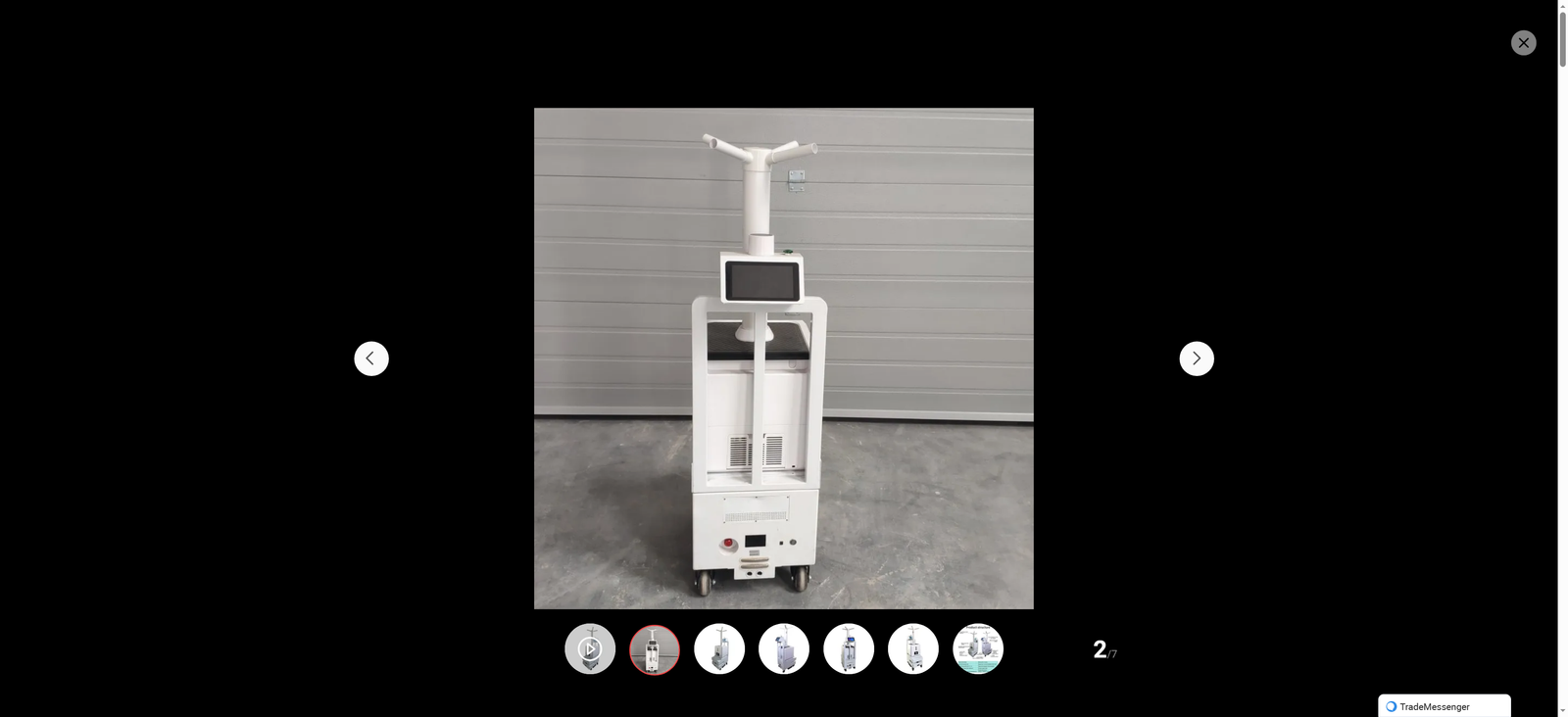
In the context of rising global attention to public health security, traditional manual disinfection methods are gradually struggling to meet the needs of high efficiency, full coverage, and low-risk prevention and control. Against this backdrop, the intelligent atomizing disinfection robot has emerged as a disruptive solution, integrating automatic spray sterilization technology and intelligent mobile capabilities to build a more reliable and efficient "sanitary defense line" for various scenarios.
The core advantage of the intelligent atomizing disinfection robot lies in its advanced automatic spray sterilization system, which redefines the efficiency and effectiveness of disinfection. Unlike manual spraying that is prone to uneven coverage and blind spots, this robot adopts high-pressure atomization technology to convert disinfectant into fine particles of 10-50 microns. These micron-level droplets can suspend in the air for a long time, penetrate deeply into narrow gaps, equipment dead corners, and other hard-to-reach areas, realizing 360-degree all-round disinfection without dead ends. To ensure safety and efficiency, most products use broad-spectrum, non-toxic disinfectants such as pure molecular chlorine dioxide, which can effectively inactivate more than 99% of viruses and bacteria, including avian influenza and foot-and-mouth disease, and decompose into carbon dioxide and water after reaction, leaving no harmful residues.
The intelligent mobile capability is another key highlight that distinguishes this robot from traditional fixed disinfection equipment. Equipped with a fusion navigation system of VSLAM and laser SLAM, combined with multi-dimensional sensors and AI algorithms, the robot can achieve stable autonomous walking and flexible obstacle avoidance. It can automatically plan the optimal disinfection path according to the pre-set area, intelligently adjust the route when encountering pedestrians or obstacles, and even independently take elevators for cross-floor operation with optional configurations. When the power is lower than the preset value, it will automatically return to the charging station for recharging, realizing 24-hour unattended continuous operation. With a disinfection efficiency of up to 100 square meters per minute, it is equivalent to the work efficiency of 2-3 skilled disinfection workers, greatly reducing labor costs and work intensity.
The application scenarios of intelligent atomizing disinfection robots are becoming increasingly widespread, covering medical care, breeding, public transportation, commercial complexes, and other fields. In hospitals, they focus on high-frequency activity areas such as patient wards, operating rooms, and medical waste disposal zones, replacing manual work in high-risk environments to avoid cross-infection risks. In large-scale breeding bases, they can switch disinfection modes according to the breeding cycle—high-concentration atomization during the empty pen period and low-concentration intermittent spraying during the brooding period—to balance disinfection effectiveness and animal comfort, helping farms reduce drug costs by 25% and improve animal survival rates. In airports, railway stations, and shopping malls with dense crowds, the robots can operate during off-peak hours, completing large-area disinfection quickly without affecting normal operations, and generating detailed disinfection records through the Internet of Things module to meet traceability requirements.
With the continuous advancement of intelligent technology, the performance of intelligent atomizing disinfection robots is constantly upgrading. Modern products are equipped with remote control and intelligent management functions—staff can set disinfection time, adjust spray intensity, and monitor working progress and disinfectant levels in real time through mobile apps or central control systems. Some high-end models even integrate "spatial spraying targeted tracking" dual modes, combining AI big data analysis to optimize disinfection strategies according to environmental pollution levels, realizing precise and efficient disinfection. The modular design also reduces maintenance costs, and the miniaturized body allows flexible movement in narrow passages such as elevators and corridors, further expanding its adaptability.
The global market for intelligent disinfection robots is showing a rapid growth trend. It is predicted that the global market size of autonomous disinfection robots will reach 76.834 billion yuan by 2030, with a compound annual growth rate of 18.36%. As a mainstream product in this field, the intelligent atomizing disinfection robot is not only a product of technological innovation but also a concrete practice of the transformation of public health protection towards intelligence and refinement. It not only improves disinfection efficiency and reduces labor risks but also provides data support for scientific epidemic prevention through standardized operation and detailed records.
In the post-epidemic era where health needs are continuously upgraded, the intelligent atomizing disinfection robot will play an increasingly important role in more fields. With the continuous breakthroughs in navigation technology, disinfectant research, and human-computer interaction, it will become more intelligent, environmentally friendly, and cost-effective, injecting strong power into the construction of a safer and healthier living and working environment for humanity.