
The Rise of Humanoid AI Robots: Reshaping Service Scenarios in Supermarkets, Hotels and Restaurants
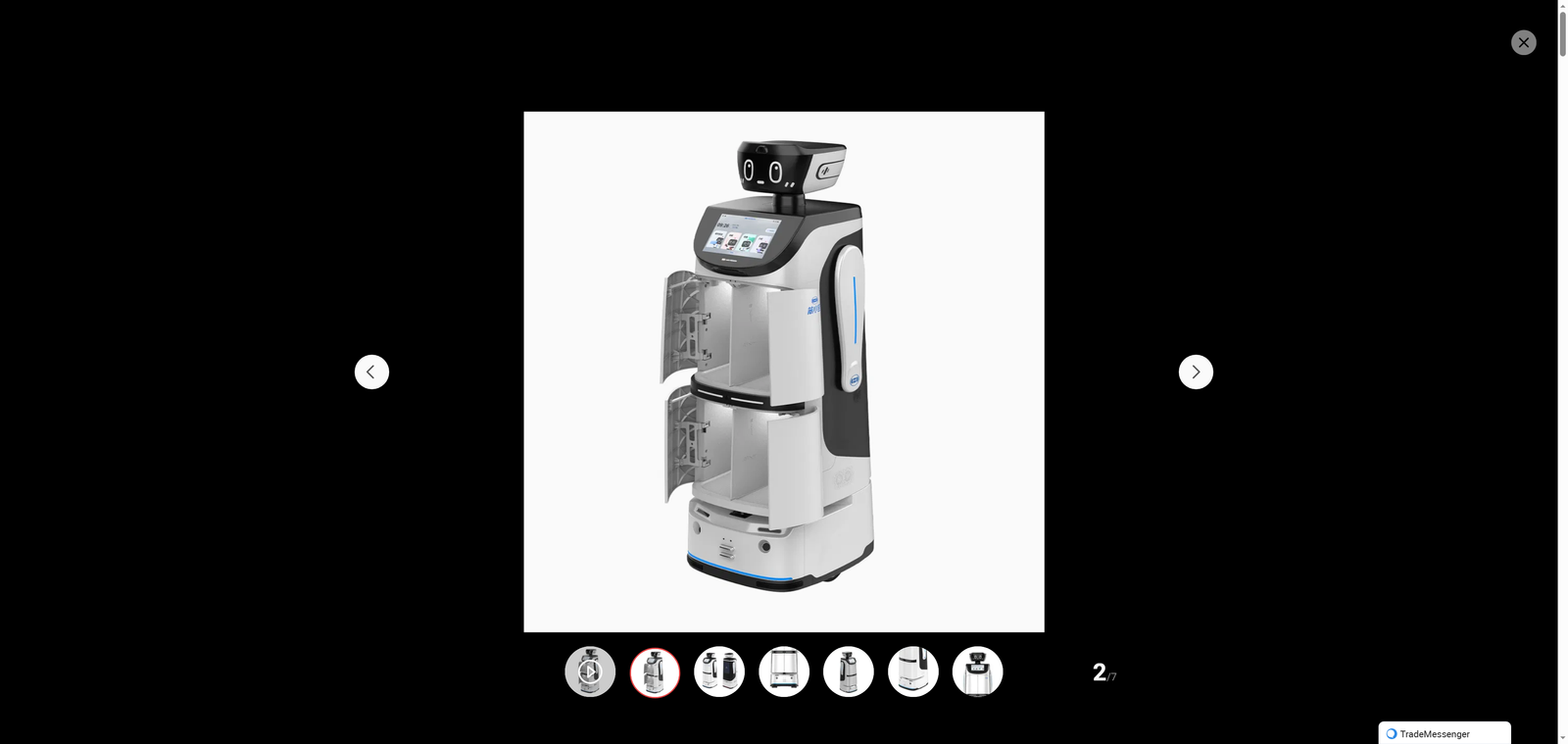
With the rapid advancement of artificial intelligence technology, humanoid AI robots have gradually stepped out of the laboratory and entered various service fields, becoming a powerful driving force for the transformation and upgrading of the service industry. Among them, the application of Humanoid Inteligencia Artificial (Humanoid AI) in scenarios such as Automatic Reception Supermarkets, Waiter Service in Hotels and Restaurants, and Intelligent Service Delivery has attracted widespread attention. These humanoid robots, with their human-like appearance, intelligent interaction capabilities and efficient work efficiency, are quietly reshaping the service experience, optimizing operational processes, and opening a new era of intelligent services.
In automatic reception supermarkets, humanoid AI robots have become a "new window" for customer service, breaking the limitations of traditional manual reception. Unlike fixed self-service equipment, humanoid reception robots have a more friendly and approachable image, which can reduce customers' psychological distance when facing intelligent equipment. Equipped with advanced speech recognition, natural language processing and computer vision technologies, these robots can accurately understand customers' needs. When a customer walks into the supermarket and asks about the location of a certain commodity, the robot can quickly retrieve the commodity information in the background system, and guide the customer to the target area through voice prompts and body movements. For elderly customers who are not familiar with self-service checkout, the robot can also provide one-on-one guidance, helping them complete the scanning, payment and other processes, effectively solving the problem of "difficult self-service" for special groups.
In addition to guiding and assisting, humanoid AI robots in supermarkets can also undertake functions such as inventory checking and information release. By carrying a visual sensor, the robot can automatically patrol the shelves during non-peak hours, detect whether there are missing goods, expired commodities or misplaced items in real time, and feed the information back to the supermarket management system. This not only reduces the workload of manual inventory, but also improves the accuracy and timeliness of inventory management, ensuring that the supermarket's commodity supply is always in a stable state. At the same time, the robot can also broadcast promotional information, preferential activities and safety tips through voice, becoming a mobile "promotion ambassador" in the supermarket, which helps to increase commodity sales and enhance the supermarket's operational efficiency.
In hotel and restaurant scenarios, humanoid AI robots are playing multiple roles such as waiter and intelligent delivery staff, bringing a new service experience to customers. In restaurants, the traditional waiter work includes ordering, serving, clearing the table and other links, which are not only labor-intensive, but also prone to errors due to busy work. Humanoid AI waiters can perfectly solve these pain points. When customers enter the restaurant, the robot can take the initiative to greet them, lead them to the reserved or appropriate seats, and then present the electronic menu through the touch screen on the body. After the customer orders, the robot will quickly send the order information to the kitchen, and after the dishes are ready, it can accurately deliver the dishes to the corresponding table according to the positioning system. During the meal, if the customer needs to add water, change tableware or ask for other services, they only need to call the robot or press the service button, and the robot will arrive in time to provide services.
Compared with human waiters, humanoid AI waiters have the advantages of 24-hour uninterrupted work, no fatigue, no emotional fluctuations, and can maintain a consistent service quality at all times. Especially during peak dining hours, the robot can effectively share the work pressure of the service staff, shorten the customer's waiting time for ordering and serving, and improve the restaurant's seating turnover rate. In hotels, humanoid AI delivery robots have become a standard configuration in many high-end hotels. Customers can place orders for daily necessities, food and beverages through the hotel APP or the smart terminal in the room, and the robot will take the elevator independently, accurately reach the door of the customer's room, and send the goods to the customer through voice interaction. This not only ensures the privacy and convenience of customers, but also reduces the workload of hotel service staff, making the hotel's service more efficient and intelligent.
The wide application of humanoid AI robots in supermarkets, hotels and restaurants is not only a manifestation of technological progress, but also a inevitable trend in the transformation of the service industry. However, the popularization of these robots does not mean replacing human labor, but forming a complementary relationship with human services. For example, in scenarios that require emotional communication, humanistic care and complex decision-making, human service staff still have irreplaceable advantages; while robots can undertake repetitive, mechanical and labor-intensive work, allowing human staff to focus more on improving service quality and providing more personalized services. This human-machine collaboration model can not only optimize the allocation of human resources in the service industry, but also promote the upgrading of the service industry from "labor-intensive" to "intelligent and high-quality".
Looking to the future, with the continuous breakthrough of AI technology, humanoid AI robots will have more powerful functions and wider application scenarios. In supermarkets, they may realize more intelligent services such as personalized commodity recommendation and intelligent after-sales consultation; in hotels and restaurants, they may have more human-like emotional interaction capabilities, and even provide customized services according to customers' preferences. At the same time, the cost of humanoid robots will gradually decrease with the maturity of the industrial chain, making them more popular in small and medium-sized service institutions.
In conclusion, Humanoid Inteligencia Artificial has brought profound changes to the service scenarios of supermarkets, hotels and restaurants as automatic receptionists, waiters and intelligent delivery robots. It not only improves the operational efficiency of service institutions and reduces operational costs, but also enriches the service experience of customers. Under the wave of intelligent transformation, humanoid AI robots will continue to play an important role, promoting the service industry to move towards a more intelligent, efficient and high-quality future. The integration of human and machine will become the new normal of the service industry, creating more value for society and people's lives.