
In an era dominated by technological innovation, artificial intelligence (AI) has gradually penetrated into every corner of social life, reshaping the way people work and live. Among them, AI-driven autonomous rechargeable security guard robots have emerged as a disruptive force in the security industry, breaking through the limitations of traditional manual security and bringing a new paradigm of intelligent security to hotels, shopping malls, university campuses and other key scenarios. With their autonomous operation, 24/7 work capability, intelligent perception and automatic recharge functions, these robots are becoming an indispensable part of modern security systems, injecting unprecedented efficiency and reliability into public safety management.
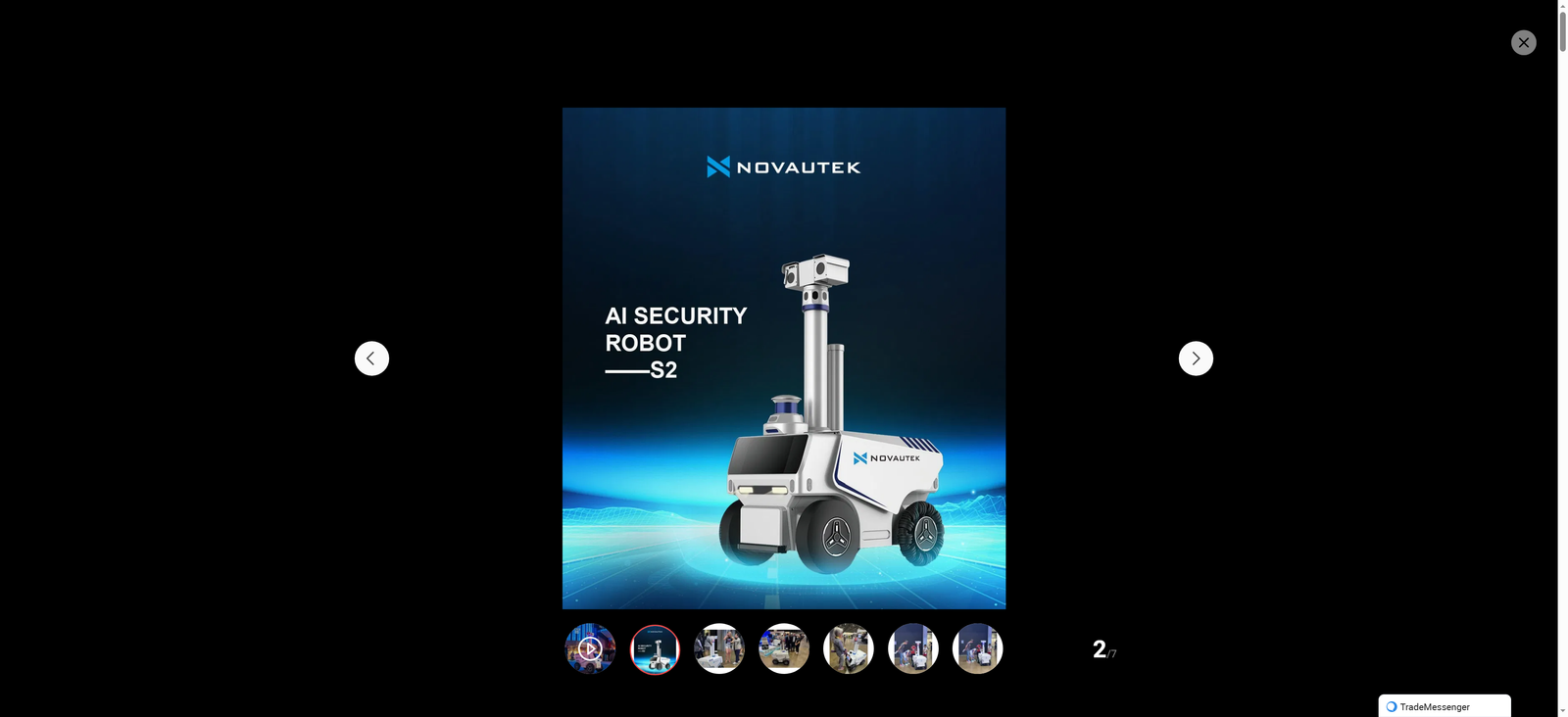
The core value of AI-driven autonomous rechargeable security guard robots lies in their integration of multiple cutting-edge technologies, which enables them to achieve full-process intelligent security without human intervention. Equipped with high-definition cameras, infrared thermal imagers, laser radars and other advanced sensing devices, the robots can comprehensively perceive the surrounding environment in real time. AI algorithms such as computer vision, behavior recognition and anomaly detection allow them to accurately identify potential security risks, such as unauthorized intrusion, abnormal gatherings, fire hazards and suspicious items. Compared with traditional manual security, which is prone to fatigue, negligence and limited monitoring range, these robots can maintain a high level of alertness around the clock, significantly improving the efficiency and accuracy of security work.
The autonomous rechargeable function is another key advantage that makes these robots suitable for long-term continuous work. Equipped with intelligent positioning and navigation systems, the robots can automatically plan patrol routes according to preset tasks and adjust them flexibly according to real-time environmental changes. When the battery power is low, the robots can independently return to the charging station for automatic recharge without human operation, ensuring uninterrupted security patrols. This feature not only reduces the labor cost of manual management but also avoids security loopholes caused by insufficient patrol time, providing a stable and reliable security guarantee for various scenarios.
In hotels, AI-driven security guard robots have become a new "benchmark" for high-quality security services. Hotels, as places with frequent personnel flow and complex personnel composition, have high requirements for security and service quality. The robots can patrol in public areas such as lobbies, corridors, parking lots and hotel courtyards 24 hours a day. They can quickly identify abnormal behaviors such as unruly guests, unauthorized entry into restricted areas and luggage left unattended, and immediately send alarm information to the hotel security center through the intelligent management platform. At the same time, some robots are also equipped with voice interaction functions, which can provide guests with consulting services such as route guidance and room inquiry, integrating security and service, and enhancing the overall experience of guests. For example, in high-end hotels, the robots can patrol the parking lot at night to prevent vehicle theft and scratch incidents, and monitor the fire safety of the corridor to avoid potential fire hazards, creating a safe and comfortable living environment for guests.
Shopping malls, as large-scale public places with dense crowds and high traffic volume, have always been the focus of security management. The complex layout of shopping malls, numerous stores and large flow of people make traditional manual security face great challenges. AI-driven security guard robots can effectively solve these problems by virtue of their efficient patrol and intelligent identification capabilities. They can patrol in shopping mall aisles, atriums, escalators, fire exits and other key areas, accurately identify potential risks such as crowd stampedes, fights, fire hazards and counterfeit goods. In the event of an emergency, the robots can quickly lock the location of the incident, transmit real-time images and video to the mall security center, and guide security personnel to rush to the scene for disposal. In addition, the robots can also count the number of people in the mall in real time, providing data support for the mall's crowd management and flow control, helping to avoid overcrowding and ensuring the safety of consumers and merchants.
University campuses, as places for teaching, scientific research and student life, have a wide area, scattered buildings and a large number of young students, so security management needs to balance strictness and humanization. AI-driven autonomous rechargeable security guard robots are perfectly suitable for campus security scenarios. They can patrol in campus roads, teaching buildings, dormitories, playgrounds, libraries and other areas, carrying out security tasks such as anti-theft, fire prevention and anti-intrusion. For example, at night, the robots can patrol the campus roads and dormitory areas to ensure the personal safety of students returning to dormitories late; in the library and teaching buildings, they can monitor the use of electrical appliances to avoid fire hazards caused by illegal use of electricity. At the same time, the robots can also be connected to the campus access control system and student information system, accurately identifying external personnel and vehicles entering the campus, and preventing unauthorized entry. Compared with manual patrols, the robots can cover a wider area and work more efficiently, reducing the work pressure of campus security personnel and creating a safe and stable campus environment for teachers and students.
With the continuous progress of AI technology and the continuous optimization of robot hardware, AI-driven autonomous rechargeable security guard robots will have more extensive application prospects in the future. In terms of technology, the integration of 5G, edge computing and big data will make the robots have faster response speed, more accurate identification capabilities and more intelligent decision-making capabilities. They can realize interconnection and intercommunication with other intelligent devices in the scene, such as monitoring cameras, access control systems and fire alarm systems, forming a comprehensive intelligent security network. In terms of function, the robots will be further expanded, such as adding environmental detection functions (detecting air quality, noise, etc.) and emergency rescue functions (carrying first-aid kits, guiding evacuation, etc.), making them play a more important role in public safety management.
However, the popularization and application of AI-driven security guard robots also face some challenges, such as high initial investment cost, technical standards to be unified and public acceptance to be improved. In response to these challenges, it is necessary for the government, enterprises and research institutions to work together: the government should introduce relevant policies to support the development of the industry, formulate unified technical standards and norms; enterprises should increase R&D investment, reduce production costs and improve product quality and stability; research institutions should strengthen technological research, solve key technical problems; at the same time, it is necessary to strengthen public publicity and education, improve the public's understanding and acceptance of intelligent security robots.
In conclusion, AI-driven autonomous rechargeable security guard robots, with their unique technical advantages and practical value, are bringing a profound revolution to the security management of hotels, shopping malls, university campuses and other scenarios. They not only improve the efficiency and level of security work but also promote the transformation and upgrading of the security industry towards intelligence and informatization. With the continuous advancement of technology and the continuous improvement of the industry environment, these intelligent robots will become an important part of the modern public security system, contributing more to the construction of a safe, intelligent and harmonious society.