
Hospitality Intelligent Catering and Hotel Customized Commercial Service Delivery Robot: Reshaping the New Ecology of Hotel Service
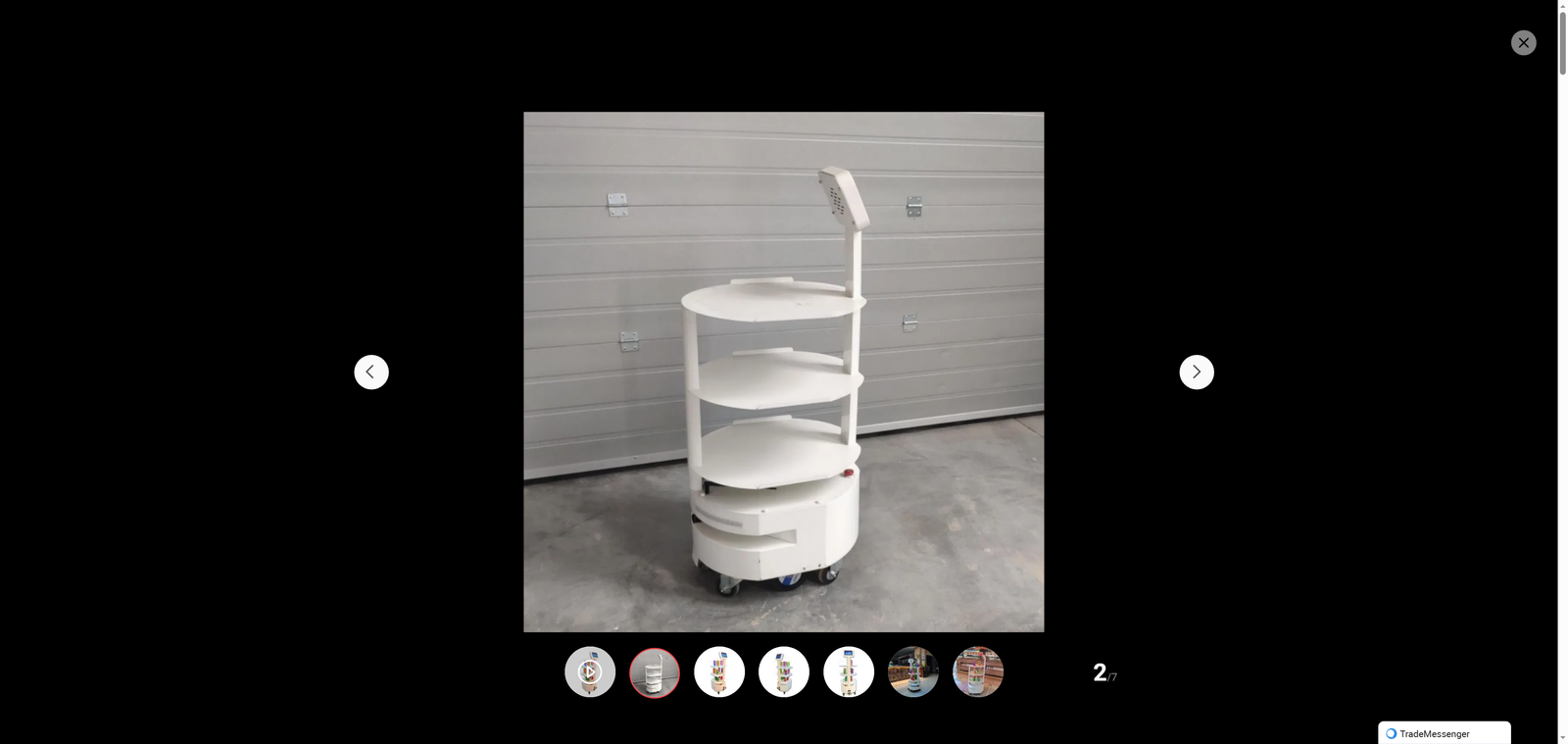
With the rapid development of artificial intelligence, Internet of Things and intelligent manufacturing technologies, the hospitality industry is undergoing a profound transformation from "traditional service" to "intelligent service". Among them, the hospitality intelligent catering and hotel customized commercial service delivery robot (hereinafter referred to as "hotel intelligent delivery robot") has emerged as a key carrier of intelligent transformation. It breaks through the limitations of traditional manual service, integrates catering delivery, item distribution, commercial services and other functions, and provides customized solutions for hotels, which not only improves service efficiency and quality, but also reconstructs the service ecology of the hospitality industry and injects new vitality into the high-quality development of the industry.
The hotel intelligent delivery robot is not a simple "machine replacement" of manual work, but a customized intelligent terminal developed for the specific service scenarios of hotels and catering. Different from the general delivery robots in the market, it has the characteristics of strong scenario adaptability, high service customization and perfect functional integration, which can accurately match the diverse service needs of hotels of different levels and types. For high-end hotels, the robot can realize high-standard services such as silent delivery, etiquette interaction and customized item distribution, maintaining the high-end and elegant service atmosphere of the hotel; for business hotels, it focuses on improving service efficiency, undertaking tasks such as room catering delivery, laundry delivery and express delivery, reducing the workload of service personnel; for resort hotels, it can also be equipped with scenic spot explanation, route guidance and other functions, becoming a multi-functional service assistant for tourists.
The application of hotel intelligent delivery robot has brought a comprehensive upgrade to the service mode of the hospitality industry, and its value is reflected in multiple dimensions. Firstly, it improves service efficiency and breaks through the time and space limitations of manual service. In hotels, the peak period of service demand is often concentrated, such as meal time, check-in and check-out time. At this time, the number of service personnel is limited, which is easy to cause service delays and affect the guest experience. The intelligent delivery robot can work 24 hours a day without rest, and can complete the delivery task efficiently through intelligent path planning, avoiding the influence of human factors such as fatigue and emotion. It only takes a few minutes to deliver the catering or items to the designated room, greatly shortening the guest's waiting time. At the same time, the robot can automatically avoid obstacles, take elevators independently and complete door-to-door delivery, which fully adapts to the complex space environment of hotels and realizes "point-to-point" accurate service.
Secondly, it optimizes the service quality and enhances the guest's sense of experience and satisfaction. Manual service is often affected by subjective factors such as mood, professional quality and work state, which may lead to inconsistent service standards. The intelligent delivery robot adheres to unified service specifications, with standardized language interaction, gentle action and thoughtful service, ensuring the stability and consistency of service quality. In addition, the novel form of intelligent robot itself is also a "highlight" of hotel service. Guests can complete the service request through voice control, WeChat mini program and other ways, and interact with the robot in the process of receiving the service, which adds fun to the stay experience. For young guests who are familiar with and love intelligent technology, the intelligent delivery service has become an important factor to attract them to choose the hotel, helping the hotel form a unique competitive advantage.
Thirdly, it reduces the operation cost of hotels and realizes the optimization of human resource allocation. The hospitality industry is a labor-intensive industry, and the cost of human resources has always been an important part of the hotel's operation cost. With the increasing difficulty of recruiting and retaining employees in the service industry, the pressure of hotel operation is further increased. The application of intelligent delivery robots can replace manual work to complete a large number of repetitive and mechanical delivery tasks, reducing the demand for front-line service personnel, thus reducing the labor cost, management cost and training cost of the hotel. At the same time, the liberated service personnel can be transferred to high-value service links such as guest reception, personalized consultation and experience service, which improves the efficiency of human resource utilization and realizes the transformation of hotel service from "quantity" to "quality".
The realization of the functions of hotel intelligent delivery robot is supported by a variety of core technologies. Among them, intelligent path planning technology is the foundation, which relies on laser radar, visual sensor and other equipment to collect the environmental information of the hotel in real time, and constructs a three-dimensional map through algorithms to realize autonomous navigation, obstacle avoidance and path optimization. Voice interaction technology enables the robot to accurately recognize the guest's voice commands, complete the service request response and simple communication, and improve the interactivity of the service. The Internet of Things technology realizes the information interconnection between the robot and the hotel management system, elevator system and room control system, so that the robot can receive service orders in real time, take elevators independently and open the door automatically, forming a closed-loop service. In addition, with the development of big data technology, the robot can also collect and analyze the guest's service behavior data, such as the type of catering ordered, the time of delivery demand and the frequency of item distribution, so as to provide data support for the hotel's personalized service and business decision-making, and help the hotel realize "precision service" and "intelligent operation".
At present, the application of hotel intelligent delivery robots is becoming more and more widespread, and the market demand is showing a rapid growth trend. However, there are still some problems to be solved in the development process, such as the high cost of high-end robots, the limited adaptability to complex scenarios, and the imperfect after-sales service system. With the continuous progress of technology and the continuous maturity of the market, these problems will be gradually solved. In the future, the hotel intelligent delivery robot will develop towards a more intelligent, humanized and multi-functional direction.
On the one hand, the intelligence level of the robot will be further improved. With the application of technologies such as deep learning and computer vision, the robot will have stronger environmental perception ability and decision-making ability, which can better adapt to the dynamic and complex hotel environment, and even realize personalized service according to the guest's preferences and habits. For example, it can automatically recommend catering according to the guest's historical consumption records, and adjust the service mode according to the guest's age and identity. On the other hand, the function integration of the robot will be more perfect. It will not only undertake the delivery task, but also integrate functions such as room cleaning, intelligent check-in, security patrol and so on, becoming a multi-functional intelligent service platform, which comprehensively improves the intelligent level of hotel operation. In addition, the customization degree of the robot will be higher, and it can provide personalized customization solutions according to the brand positioning, service characteristics and customer groups of the hotel, including appearance design, function configuration and service process, so as to help the hotel shape a unique brand image.
The emergence of hospitality intelligent catering and hotel customized commercial service delivery robot is a inevitable result of the intelligent transformation of the hospitality industry. It is not only a tool to improve service efficiency and reduce operation cost, but also a key force to reshape the service ecology of the industry and promote the high-quality development of the industry. In the new era of intelligent technology, hotels should actively embrace the trend of intelligent development, reasonably apply intelligent delivery robots, and combine manual service with intelligent service to form a complementary service mode, so as to better meet the diverse and personalized needs of guests. At the same time, enterprises in the robot industry should also increase R & D investment, break through technical bottlenecks, reduce production costs, and provide more high-quality and cost-effective intelligent robot products and services for the hospitality industry.
It is believed that with the joint efforts of the hospitality industry and the robot industry, the hotel intelligent delivery robot will play a more important role in the future, creating a more efficient, high-quality and humanized hotel service experience for guests, and promoting the hospitality industry to enter a new stage of intelligent development.