
Fully Autonomous Mobile Platform UVC Sterilizing Disinfection Robot: Guarding Public Health in Diversified Scenarios
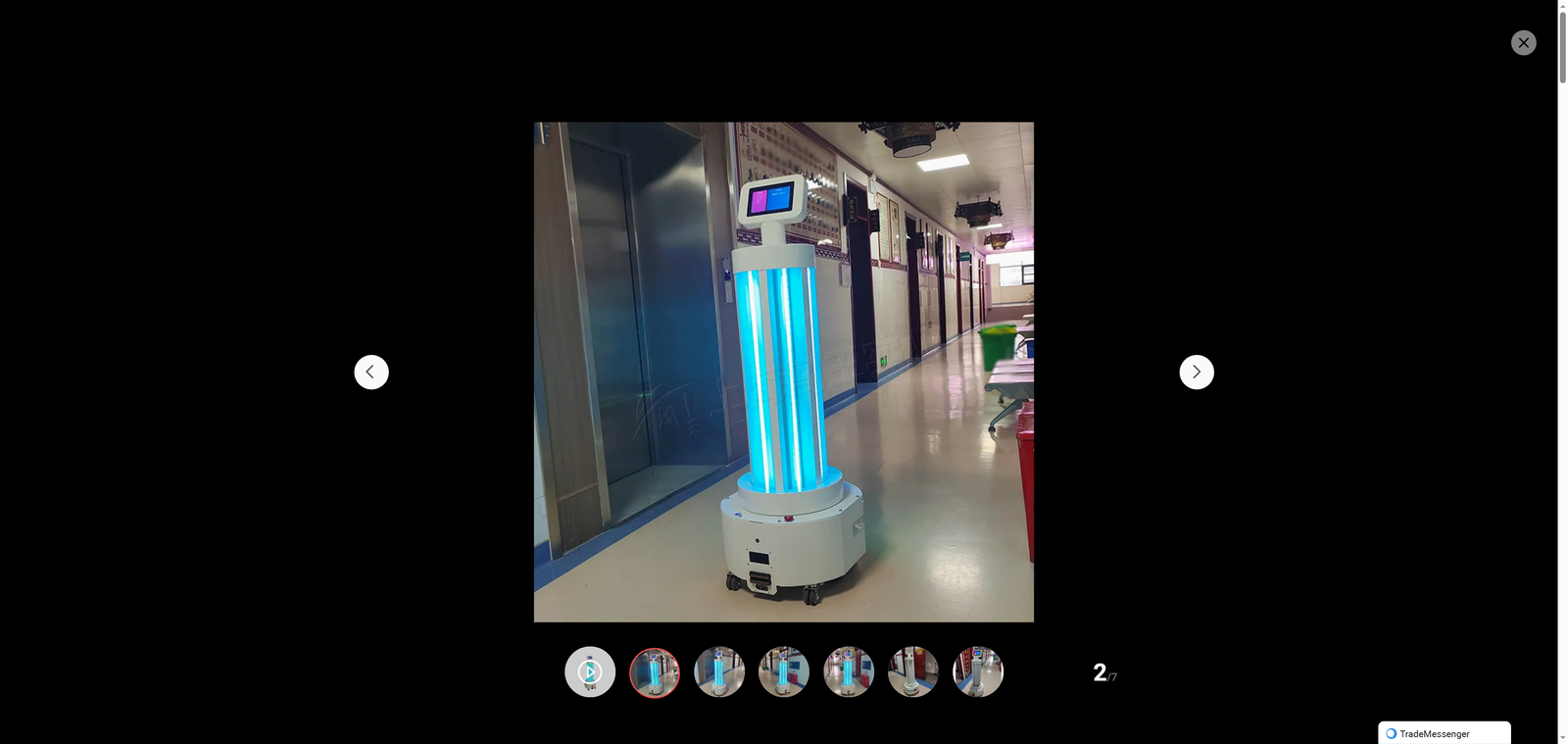
In the context of increasing attention to public health security, the demand for efficient, thorough and contactless disinfection solutions in hospitals, hotels, malls, restaurants and other high-traffic public places has become increasingly prominent. The fully autonomous mobile platform UVC sterilizing disinfection robot (hereinafter referred to as "UVC disinfection robot") has emerged as a new type of intelligent disinfection equipment, integrating advanced autonomous navigation technology, UVC sterilization technology and mobile platform technology. It breaks through the limitations of traditional manual disinfection, and builds a solid "protective wall" for public health with its high efficiency, accuracy, intelligence and safety characteristics.
UVC disinfection technology, as a mature and effective physical disinfection method, has been widely recognized in the field of public health. It uses short-wave ultraviolet rays (with a wavelength of 200-280nm) to destroy the DNA and RNA structure of bacteria, viruses and other microorganisms, making them lose their ability to reproduce and survive, thus achieving the purpose of thorough disinfection. Compared with chemical disinfection methods such as disinfectant spraying, UVC disinfection has the advantages of no residual pollution, no irritation to the human body, and broad-spectrum sterilization. It can effectively kill common pathogenic microorganisms such as Escherichia coli, Staphylococcus aureus, influenza virus and novel coronavirus, with a sterilization rate of up to 99.99%.
The fully autonomous mobile platform is the core advantage that distinguishes UVC disinfection robots from traditional fixed UVC disinfection equipment. Equipped with advanced sensors such as laser radar, visual cameras and ultrasonic sensors, the robot can realize real-time environmental perception, autonomous path planning and intelligent obstacle avoidance. It does not need manual control or guidance. It can independently complete the disinfection task according to the pre-set route or the actual environment. This not only saves a lot of human resources, but also avoids the risk of cross-infection caused by manual disinfection, and greatly improves the disinfection efficiency and coverage.
In different public places, the UVC disinfection robot can play its unique advantages and adapt to the diversified disinfection needs of different scenarios.
In hospitals, which are high-risk areas for pathogen transmission, the demand for disinfection is extremely strict. The UVC disinfection robot can be used in operating rooms, wards, corridors, nurse stations, inspection rooms and other areas. It can flexibly navigate in narrow spaces and around medical equipment, and carry out 360-degree all-round disinfection without dead corners. Especially in isolation wards, the robot can replace medical staff to complete disinfection tasks, reducing the risk of infection of medical staff. At the same time, the robot can record the disinfection time, area and other data in real time, forming a complete disinfection log, which is convenient for hospital management and traceability.
In hotels, which are places with frequent personnel flow, the hygiene condition directly affects the customer experience and brand reputation. The UVC disinfection robot can carry out targeted disinfection on guest rooms, lobbies, elevators, corridors and other areas. After the guest checks out, the robot can quickly enter the guest room to disinfect the bed, desk, sofa, bathroom and other key parts, ensuring that the next guest can live in a clean and safe environment. In public areas such as lobbies and elevators, the robot can carry out regular disinfection to reduce the risk of pathogen transmission caused by personnel contact.
In shopping malls, which have large space and dense personnel, traditional manual disinfection is difficult to achieve full coverage and timely disinfection. The UVC disinfection robot can carry out autonomous disinfection in shopping mall corridors, storefronts, rest areas, escalators, elevators and other areas. It can adjust the disinfection speed and time according to the flow of people, and carry out intensive disinfection during peak hours to ensure the hygiene and safety of the shopping environment. At the same time, the intelligent and technological image of the robot can also become a new "business card" of the shopping mall, enhancing the customer's sense of security and experience.
In restaurants, which are closely related to food safety and public health, the disinfection of dining tables, chairs, dining areas and kitchen areas is particularly important. The UVC disinfection robot can disinfect dining tables, chairs and surrounding areas after diners leave, and can also carry out regular disinfection in the kitchen, especially in areas such as food processing tables and storage areas, to prevent food contamination caused by pathogenic microorganisms. Compared with manual disinfection, the robot can avoid the problem of incomplete disinfection caused by human factors, ensuring the hygiene and safety of the dining environment.
In addition to the above scenarios, the UVC disinfection robot can also be widely used in airports, railway stations, office buildings, schools, libraries and other public places. With the continuous progress of technology, the functions of UVC disinfection robots are also constantly upgrading. Some high-end models are also equipped with functions such as remote control, intelligent scheduling and automatic charging. Multiple robots can work together to complete large-area disinfection tasks, further improving the efficiency and intelligence of disinfection work.
Of course, when using UVC disinfection robots, we also need to pay attention to some safety issues. UVC ultraviolet rays are harmful to human eyes and skin. Therefore, when the robot is working, it is necessary to ensure that there is no one in the disinfection area. The robot is usually equipped with a human body induction function. Once a person enters the disinfection area, it will automatically stop working to ensure human safety. At the same time, regular maintenance and calibration of the robot's UVC lamp and sensors are required to ensure its stable and effective operation.
In conclusion, the fully autonomous mobile platform UVC sterilizing disinfection robot, as an important part of intelligent public health protection equipment, has broad application prospects in hospitals, hotels, malls, restaurants and other public places. It not only solves the problems of low efficiency, incomplete disinfection and high cross-infection risk of traditional manual disinfection, but also provides a more efficient, safe and intelligent disinfection solution for public health security. With the continuous development of intelligent technology and the increasing attention to public health, UVC disinfection robots will play a more important role in guarding public health and creating a clean and safe living and working environment for people.