
High-Tech Food Delivery Robot with Autonomous Navigation Features: Redefine Efficient and Hygienic Service
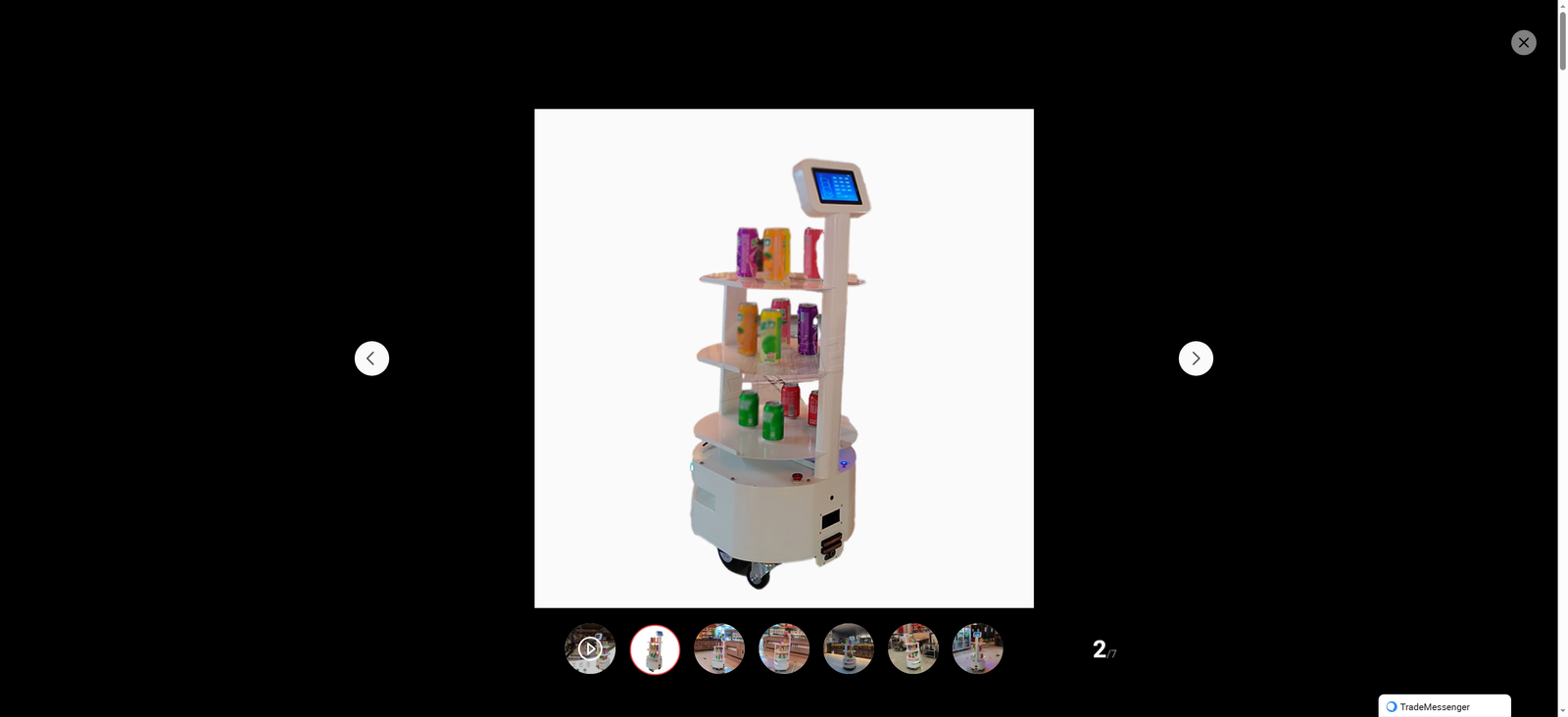
In the era of intelligent transformation, the catering, hotel, and healthcare industries are witnessing a paradigm shift in service models. Labor cost escalation, rising hygiene requirements, and the demand for operational efficiency have driven the widespread adoption of intelligent equipment. Among them, high-tech food delivery robots equipped with advanced autonomous navigation features have emerged as a game-changer, breaking through the limitations of traditional delivery methods and injecting new vitality into commercial services.
Autonomous navigation technology is the core competitiveness of modern food delivery robots, distinguishing them from conventional manual delivery and early-stage semi-automatic robots. Unlike traditional wheeled robots that rely on fixed routes or magnetic strips, the latest generation of delivery robots adopts a multi-sensor fusion solution, integrating laser radar, depth cameras, and ultrasonic sensors to achieve full-scene adaptive navigation. This advanced system enables the robot to accurately perceive its surroundings with a detection range of up to 40 meters, even in complex environments with dynamic obstacles such as pedestrians, tables, and chairs. With a turning radius as small as 333mm, it can easily navigate narrow spaces like restaurant kitchens and hospital corridors, solving the long-standing problem of poor flexibility in traditional robots <superscript:2superscript:3.
The intelligent path planning algorithm further enhances the delivery efficiency of the robot. Powered by SLAM (Simultaneous Localization and Mapping) technology, the robot can quickly build a high-precision environmental map upon first deployment, realizing real-time dynamic path adjustment. It adopts the D* dynamic heuristic search algorithm to avoid sudden obstacles such as moving customers or cleaning tools with a success rate of over 97%, far exceeding the industry average of 65%<superscript:1superscript:3. Whether it is cross-floor delivery via elevators or point-to-point delivery in large spaces such as shopping malls and office buildings, the robot can complete the task in the shortest time, with an average single delivery time controlled within 3 minutes—significantly improving service responsiveness.
Beyond efficient navigation, these high-tech delivery robots are equipped with a suite of practical functions tailored for commercial scenarios. The automatic charging feature ensures uninterrupted operation: when the remaining battery power is less than 10%, the robot will autonomously navigate to the nearest charging station for replenishment, supporting 24/7 continuous work with replaceable batteries for peak-hour flexibility <superscript:4. With a loading capacity of up to 40kg, it can carry multiple meals, tableware, or medical supplies at once, meeting the needs of high-volume delivery in restaurants and hospitals. The safety protection system, including emergency stop switches and collision avoidance sensors, minimizes operational risks, reducing collision accident rates to below 0.01% <superscript:2superscript:4.
The application of autonomous navigation food delivery robots has brought tangible benefits to multiple industries. In the catering industry, they effectively reduce labor costs—addressing the issue of rising delivery staff hourly wages (exceeding $3.5 per hour in first-tier cities) and high turnover rates <superscript:1. For example, fast-food chains using these robots have achieved a 50% reduction in customer complaint rates and an average daily delivery capacity of over 200 orders, freeing up staff to focus on personalized customer service <superscript:1superscript:4. In hospitals, the robots minimize human-to-human contact, reducing cross-infection risks in isolation areas while improving the efficiency of meal and medicine delivery to wards <superscript:2. Hotels and office buildings also benefit from their 24-hour service capability, enhancing guest experience and operational efficiency.
As the global service robot market grows at a rate of 17% annually, autonomous navigation food delivery robots are poised to become a standard configuration in commercial service venues <superscript:3. Their ability to balance efficiency, hygiene, and cost-effectiveness addresses the core pain points of modern businesses. Whether it is a restaurant striving to optimize service speed, a hospital prioritizing infection control, or a hotel aiming to elevate guest experience, these high-tech robots offer a reliable intelligent solution.
In the wave of intelligent upgrading, embracing food delivery robots with autonomous navigation features is not just a technological choice but a strategic investment in future competitiveness. These robots are redefining the boundaries of commercial services, creating a more efficient, hygienic, and intelligent operating environment for businesses worldwide.