
High Quality, Good Performance, Lightweight Design: The New Engine of Hotel Smart Services
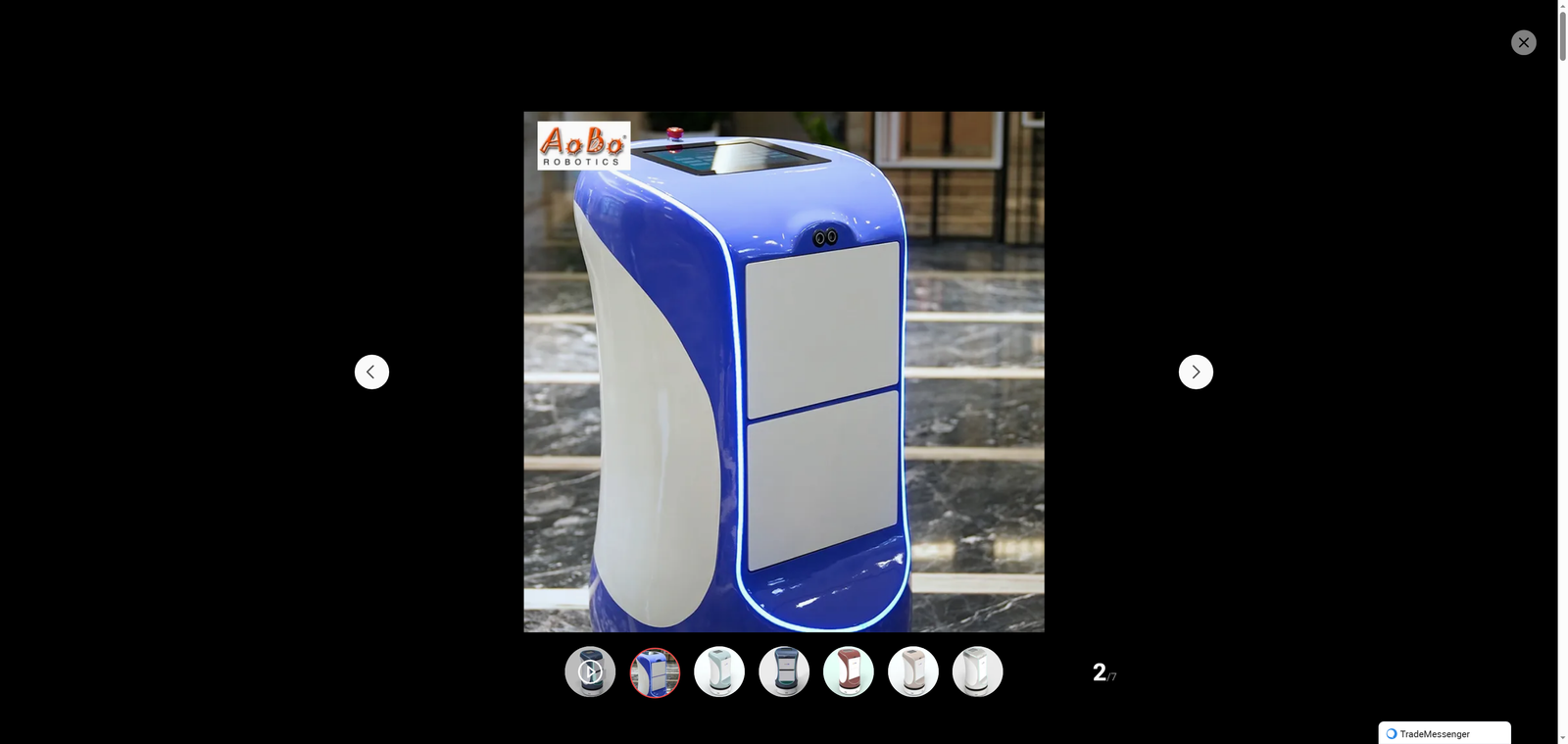
In the wave of digital transformation, the hotel industry is undergoing a profound change from "traditional service" to "smart service". Among them, hotel delivery robots, as a key carrier of smart upgrades, have gradually become a standard configuration in mid-to-high-end hotels with their efficient, stable and humanized service capabilities. The hotel delivery robot with high quality, good performance and lightweight design is not only a technological product, but also a new symbol of hotel service quality, which is redefining the service experience of guests and the operational efficiency of hotels.
High quality is the cornerstone of the hotel delivery robot to gain market recognition. For hotels, service equipment needs to withstand long-term high-frequency use, and the stability and durability of products directly affect the service process and guest perception. The high-quality hotel delivery robot adheres to strict quality control standards from the selection of raw materials to the assembly of components. The body is made of high-strength and wear-resistant materials, which can resist slight collisions and friction in daily operations, ensuring a long service life. At the same time, the core components such as the robot's navigation module, movement system and control panel have undergone thousands of tests, which can stably operate in complex hotel environments such as crowded corridors, elevator rooms with strong signal interference, and rooms with narrow doorways. It avoids failures such as sudden shutdown and deviation in navigation during service, and ensures the smooth progress of delivery services. For guests, a high-quality delivery robot means reliable service guarantee—whether it is delivering meals, mineral water, towels or other items, it can accurately reach the designated room on time, without letting guests wait for a long time or face service interruptions, which enhances the guest's sense of trust and satisfaction with the hotel.
Good performance is the core competitiveness of hotel delivery robots to realize efficient services. The performance of the delivery robot is directly related to the service efficiency and coverage, and is the key to helping hotels reduce labor costs and improve service quality. The hotel delivery robot with good performance has excellent navigation and positioning capabilities. It adopts advanced SLAM algorithm and multi-sensor fusion technology, which can quickly map the hotel's floor plan, accurately identify obstacles, and flexibly plan the optimal delivery route. Even in the case of dynamic obstacles such as pedestrians and cleaning carts, it can quickly respond and avoid, without affecting the progress of delivery. At the same time, its movement performance is outstanding—with stable moving speed and flexible turning ability, it can easily pass through narrow passages and take elevators independently. The robot can automatically call the elevator, recognize the elevator space, and avoid collisions with passengers, realizing full-process autonomous delivery from the hotel lobby to the guest room door. In addition, the good performance of the robot is also reflected in its load capacity and battery life. It can carry a certain weight of items to meet the needs of hotel daily delivery, and the high-capacity battery can support all-day continuous operation, which only needs to be charged in a centralized manner at night, without affecting the daytime service. With these excellent performance, the delivery robot can replace manual work to complete most of the delivery tasks, allowing hotel service personnel to focus on more personalized and high-value services such as guest reception and demand response, and improving the overall operational efficiency of the hotel.
Lightweight design is a new trend in the development of hotel delivery robots, which injects more flexibility into hotel services. The lightweight design does not mean reducing the quality and performance of the robot, but on the premise of ensuring high quality and good performance, through the optimization of structural design and the selection of lightweight materials, the overall weight of the robot is reduced, and its flexibility and adaptability are improved. For hotels, the lightweight delivery robot has obvious advantages in space occupation and movement flexibility. Its compact body can easily enter small spaces such as narrow guest room doorways and elevator corners, without taking up too much public space, and avoiding the problem of blocking the passage. At the same time, the lightweight body reduces the energy consumption of the robot during movement, which helps to improve the battery life and reduce the operating cost of the hotel. For guests, the lightweight robot gives people a more friendly and non-intimidating feeling. Its smooth and compact appearance design is more in line with the aesthetic needs of the hotel space, and it will not bring a sense of oppression to guests when moving in the corridor or elevator. In addition, the lightweight design also makes the robot easier to maintain and debug—when it is necessary to move or maintain the robot, the staff can operate it more easily, reducing the difficulty of daily management. It is worth mentioning that the lightweight design of the robot also takes into account the safety performance. The lightweight body can reduce the impact force in case of accidental collision, ensuring the safety of guests and the robot itself.
The integration of high quality, good performance and lightweight design makes the hotel delivery robot not only a tool to improve operational efficiency, but also an important part of creating a high-quality hotel service experience. In the context of increasing consumer demand for personalized and efficient services, hotels that introduce such delivery robots can not only reduce labor costs and improve operational efficiency, but also show their smart service concept, enhancing their core competitiveness in the market. With the continuous progress of technology, the hotel delivery robot will be more optimized in quality, performance and design, and will play a more important role in the hotel industry's smart transformation.
In conclusion, the hotel delivery robot with high quality, good performance and lightweight design is a new engine driving the smart development of the hotel industry. It takes high quality as the foundation, good performance as the core, and lightweight design as the highlight, bringing a win-win situation for hotels and guests. In the future, with the deep integration of artificial intelligence, Internet of Things and other technologies, such robots will continue to innovate, adding more vitality to the high-quality development of the hotel industry.