
High Load Bearing Auto Charging Navigation Intelligent Food Delivery Robot: Redefining Service Efficiency in Catering and Hospitality Industry
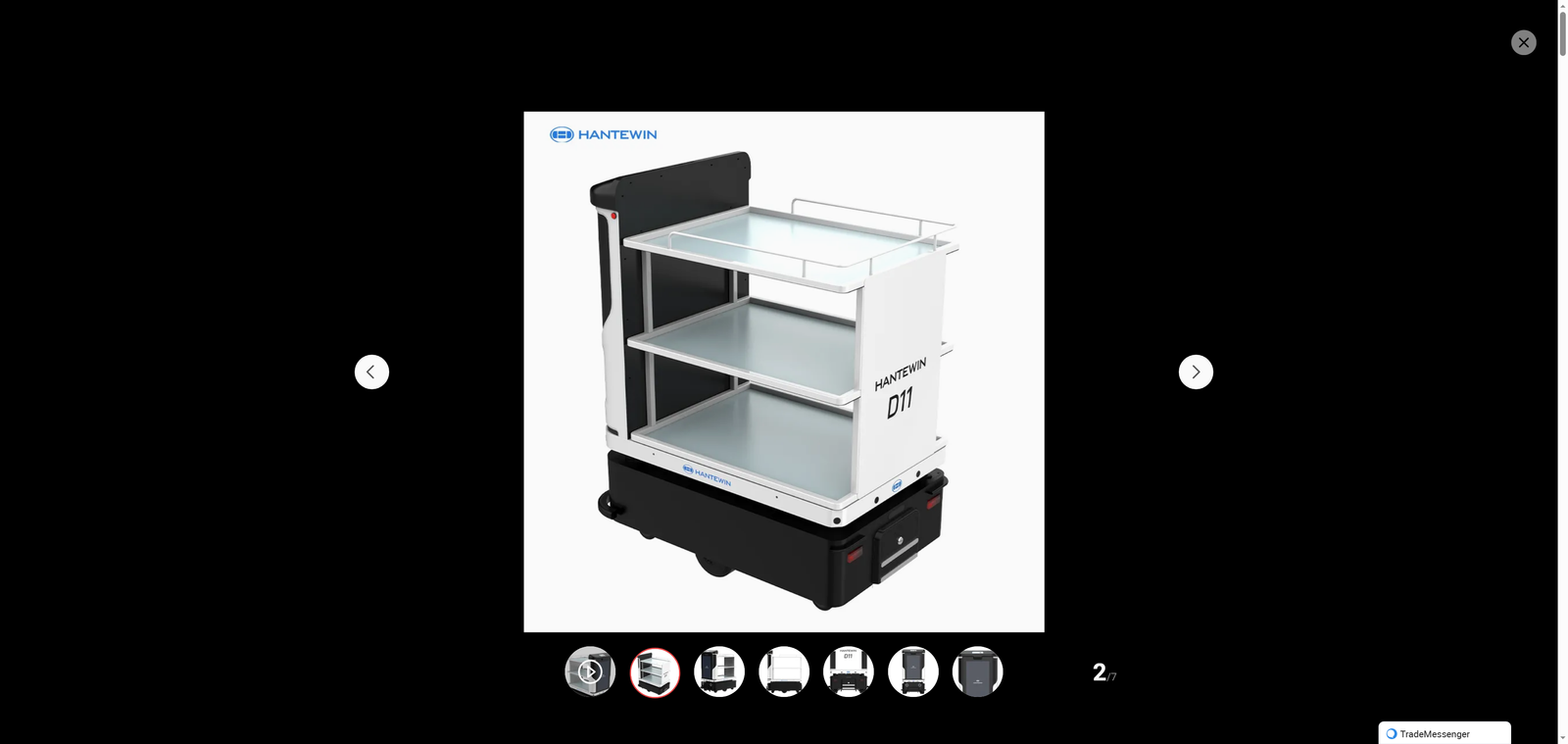
With the rapid development of intelligent technology and the continuous upgrading of the catering and hospitality industry, the demand for efficient, stable and humanized service solutions is becoming increasingly prominent. Against this backdrop, the High Load Bearing Auto Charging Navigation Intelligent Food Delivery Robot has emerged as a disruptive innovation, integrating multiple core technologies to break through the limitations of traditional manual service. It is widely applied in restaurants, hotels, cafes and other scenarios, injecting new vitality into the service industry and redefining the new pattern of intelligent service.
The core competitiveness of this intelligent food delivery robot lies in its four-dimensional core advantages, which are closely linked to the key keywords and form a comprehensive service capability that cannot be matched by traditional equipment. Firstly, the high load bearing performance is the foundation of its efficient service. Different from the lightweight food delivery robots on the market that can only carry a small number of dishes or drinks, this robot adopts a high-strength integrated body structure and a stable chassis design, with a load-bearing capacity far exceeding that of ordinary products. It can easily carry multiple large plates of dishes, full buckets of drinks, or even heavy tableware and supplies at one time, which greatly reduces the number of trips for food delivery. For restaurants with a large passenger flow, hotels with banquet services, or cafes with a variety of takeaway orders, this high load bearing performance can directly improve the efficiency of goods transfer, avoid the backlog of orders caused by insufficient carrying capacity, and ensure that customers can get their meals or supplies in a timely manner.
Secondly, the auto charging function solves the pain point of frequent manual charging and realizes 24-hour uninterrupted service. The robot is equipped with an intelligent power management system and a high-precision automatic charging module. It can real-time monitor its own power status. When the power is lower than the set threshold, it will automatically plan the optimal path to return to the charging station for fast charging without manual intervention. At the same time, the fast charging technology adopted by the robot can shorten the charging time as much as possible, ensuring that it can quickly return to work after charging. This function not only saves the labor cost of arranging special personnel to charge the robot, but also avoids the service interruption caused by the robot running out of power suddenly, which is particularly important for 24-hour operating hotels and late-night catering stores. It ensures the continuity and stability of the service process and improves the overall service quality of the store.
Thirdly, the intelligent navigation system is the "brain" of the robot, ensuring that it can move freely and safely in complex scenarios. The robot integrates multiple advanced navigation technologies such as laser SLAM, visual navigation and ultrasonic radar. It can quickly scan and map the environment of restaurants, hotels and cafes, and establish a high-precision spatial model. During the movement, it can real-time identify obstacles such as pedestrians, tables and chairs, and quickly adjust the movement path to avoid collisions. Whether it is a narrow corridor in a cafe, a crowded dining area in a restaurant, or a multi-floor hotel with elevators, the robot can accurately locate its own position, plan the shortest and most efficient delivery path, and accurately send meals or supplies to the designated table or room. In addition, the navigation system also supports dynamic environment adaptation. When the layout of the store changes (such as moving tables and chairs) or there are temporary obstacles, the robot can quickly update the map and adjust the path, ensuring that the delivery task is not affected. This high-precision and flexible navigation capability greatly improves the robot's adaptability to different scenarios and reduces the failure rate of delivery tasks.
As an intelligent food delivery robot, its value is not only reflected in basic delivery functions, but also in the intelligent service experience it brings to customers and stores. For customers, the robot's novel appearance and intelligent interaction method can enhance the dining or accommodation experience. It can send voice reminders such as "Your meal has arrived" when delivering meals, and can also respond to simple customer inquiries through the voice interaction module, adding a sense of technology and fun to the service. For store operators, the robot can be connected to the store's order management system, realizing automatic order receiving, automatic delivery and automatic order completion. It can real-time synchronize the delivery status to the background, facilitating managers to grasp the service progress and make reasonable scheduling. At the same time, the robot can collect a large amount of service data during operation, such as delivery time, order quantity, customer flow distribution, etc. These data can provide data support for store operators to optimize service processes, adjust menu settings and arrange personnel on duty, helping stores reduce operating costs and improve operational efficiency.
In terms of application scenarios, this high load bearing auto charging navigation intelligent food delivery robot is highly adaptable and can play an important role in various catering and hospitality venues. In restaurants, especially large-scale Chinese restaurants, hot pot restaurants and buffet restaurants, the robot can undertake the heavy work of delivering dishes, soup and tableware, reducing the labor intensity of waiters and allowing them to focus more on providing intimate services such as customer consultation and table cleaning. In hotels, the robot can not only deliver meals to guests' rooms, but also deliver daily necessities such as mineral water, towels and toiletries, as well as takeaway and express delivery, solving the problem of insufficient room service personnel and improving the efficiency of guest service. In cafes, which are usually small in space and have a large number of takeaway orders, the robot's flexible navigation and high load bearing performance can help deliver coffee, desserts and takeaway orders quickly and accurately, avoiding the confusion caused by manual delivery in narrow spaces.
With the continuous progress of intelligent technology and the increasing emphasis on service quality in the catering and hospitality industry, the high load bearing auto charging navigation intelligent food delivery robot will have a broader development prospect. In the future, with the integration of more advanced technologies such as artificial intelligence, big data and the Internet of Things, the robot will not only have more powerful delivery capabilities, but also realize more intelligent service functions, such as personalized order recommendation, intelligent table arrangement and automatic cleaning. It will become an indispensable core force in the intelligent transformation of the catering and hospitality industry, helping stores reduce costs and increase efficiency, and bringing customers a more high-quality and convenient service experience.
In conclusion, the high load bearing auto charging navigation intelligent food delivery robot, with its unique core advantages and wide application scenarios, is profoundly changing the service mode of the catering and hospitality industry. It is not only a tool to improve service efficiency, but also a symbol of the intelligent upgrading of the industry. In the era of intelligent service, this robot will surely play a more important role, promoting the continuous development and progress of the catering and hospitality industry towards a more efficient, intelligent and humanized direction.