
High-Frequency on-Time Delivery for Fast Food Delivery Robot: Empowering the New Retail of Catering
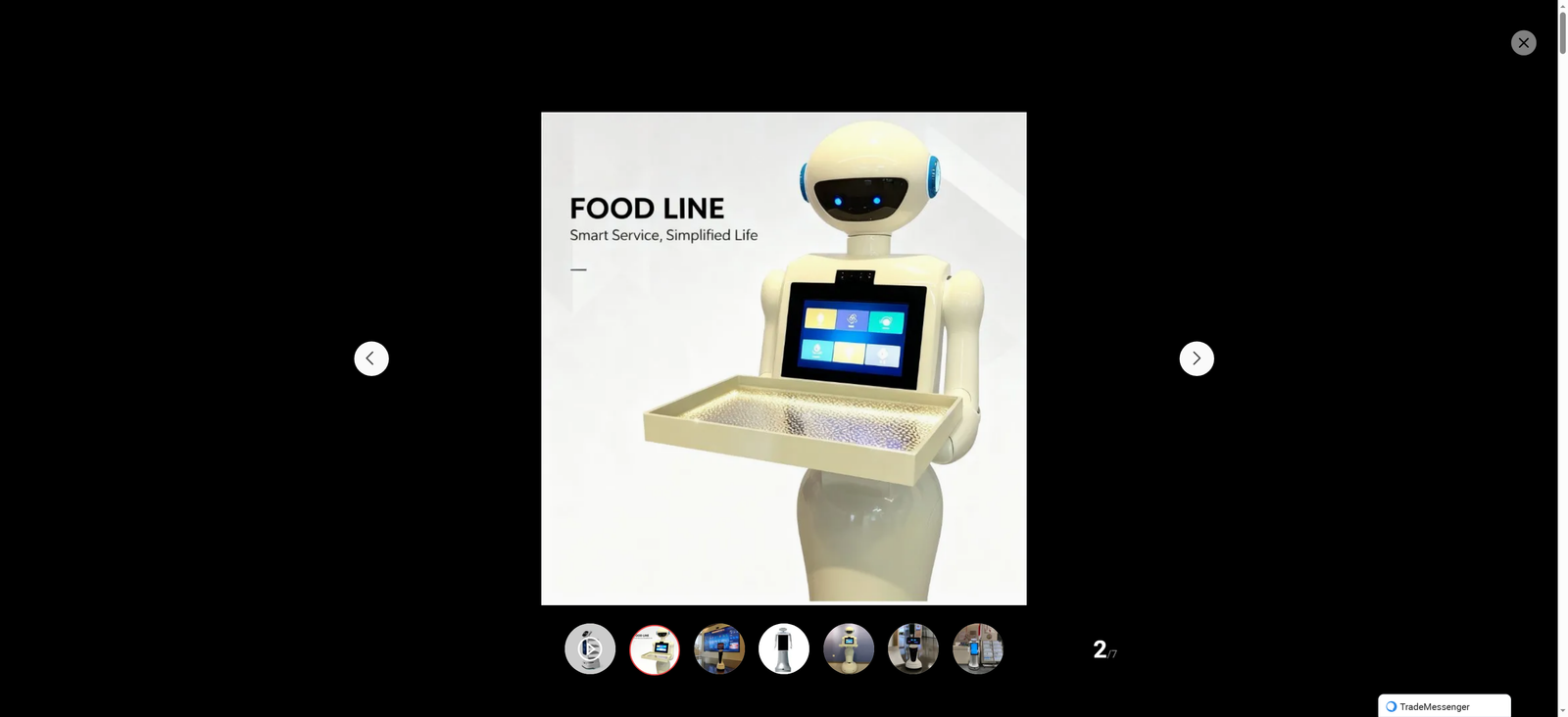
With the rapid development of the catering industry and the increasing demand for efficient services, fast food, as a mainstream format focusing on "speed, convenience and standardization", has put forward higher requirements for delivery efficiency. In recent years, food delivery robots have gradually become a key force in transforming the catering service chain, and their ability to achieve high-frequency on-time delivery has become a core competitiveness that affects the operational efficiency and customer experience of fast food brands. This article will explore the connotation, value, technical support and practical paths of high-frequency on-time delivery for fast food delivery robots, and look forward to their development prospects in the catering industry.
High-frequency on-time delivery for fast food delivery robots refers to the ability of intelligent robots to complete order receiving, meal taking, delivery and return tasks continuously, stably and within the agreed time under the scenario of high order volume and dense delivery demand in fast food restaurants. Different from the low-frequency and scattered delivery scenarios of traditional catering, fast food restaurants usually face peak passenger flows in breakfast, lunch and dinner, with concentrated orders, short delivery time requirements and high frequency of repeated tasks. This requires delivery robots not only to have basic navigation and transportation capabilities, but also to achieve efficient task scheduling, stable operation and accurate time control to ensure that each meal can be delivered to customers on time even in the peak period of high-frequency orders.
The realization of high-frequency on-time delivery for fast food delivery robots is of great strategic significance for the development of fast food brands. Firstly, it can significantly improve service efficiency and reduce operating costs. In the traditional fast food service mode, the number of waiters is limited, and in the peak period, it is easy to have problems such as slow meal delivery, wrong delivery and missed delivery, which not only affects the customer experience, but also increases the labor cost caused by overtime work. Delivery robots can work 24 hours a day without fatigue, and can complete high-frequency delivery tasks efficiently, which can replace part of the manual work, reduce the labor cost of the restaurant, and improve the overall service capacity. Secondly, it can enhance the customer experience and build brand competitiveness. For fast food consumers, "on-time delivery" is a basic and core demand. The stable on-time delivery ability of robots can avoid the anxiety of customers waiting for meals, improve customer satisfaction and loyalty. At the same time, the intelligent delivery mode can also bring a novel consumption experience to customers, helping fast food brands form a differentiated competitive advantage in the fierce market competition. Finally, it can promote the digital transformation of the catering industry. The operation process of delivery robots is closely connected with the restaurant's order system, inventory system and management system, which can realize the real-time collection, analysis and application of data such as order volume, delivery time and robot operation status, provide data support for the refined operation of restaurants, and promote the transformation and upgrading of the catering industry from traditional experience-driven to data-driven.
The realization of high-frequency on-time delivery for fast food delivery robots is not a single technical breakthrough, but the result of the integrated application of multiple technologies. Among them, intelligent navigation and positioning technology is the foundation. Fast food restaurants usually have complex environments, including dense tables and chairs, moving customers, narrow passages and other obstacles. Robots need to rely on advanced navigation technologies such as SLAM (Simultaneous Localization and Mapping), laser radar and visual sensors to quickly build environmental maps, accurately locate their own positions, and plan the optimal delivery path in real time. Compared with the traditional fixed-path navigation, the autonomous navigation technology with obstacle avoidance function can make the robot flexibly avoid obstacles during delivery, reduce the time delay caused by detours or stagnation, and ensure the timeliness of delivery. In addition, the high-precision positioning technology can also ensure that the robot can accurately reach the target table, avoid the time loss caused by finding the table, and lay a foundation for high-frequency on-time delivery.
Intelligent task scheduling system is the core to realize high-frequency on-time delivery. In the peak period of fast food restaurants, a large number of orders are generated at the same time, and multiple robots need to cooperate to complete the delivery tasks. The task scheduling system is equivalent to the "brain" of the robot group, which can comprehensively consider factors such as order priority, delivery distance, robot load status and battery power, and reasonably allocate tasks to each robot. For example, for urgent orders or orders with short delivery distance, the system can prioritize the allocation to the nearest idle robot; for robots with low battery power, the system can arrange them to complete short-distance delivery tasks first and then return to charge, ensuring the continuous and stable operation of the robot group. At the same time, the scheduling system can also realize dynamic task adjustment. When a new order is generated or an unexpected situation (such as a robot failure) occurs, the system can quickly adjust the task plan to avoid task backlog and ensure that the overall delivery efficiency is not affected. The efficiency of the task scheduling system directly determines the ability of the robot group to handle high-frequency orders, and is a key link to realize on-time delivery.
Stable hardware performance and reliable energy management technology are important guarantees for high-frequency on-time delivery. Fast food delivery robots need to complete high-frequency repeated tasks such as taking meals, delivering meals and returning, which puts forward high requirements for the durability and stability of their hardware. For example, the robot's driving system needs to have strong load capacity and stable operation performance to ensure that it can run smoothly for a long time without failure; the meal taking and placing mechanism needs to be accurate and fast to avoid time loss caused by meal dropping or slow meal taking. In addition, energy management technology is also crucial. High-frequency delivery tasks consume a lot of power. If the robot frequently needs to charge, it will seriously affect the delivery efficiency. Therefore, delivery robots need to be equipped with high-capacity batteries and efficient charging technologies, such as fast charging and automatic charging. When the battery power is low, the robot can automatically return to the charging station for charging without manual intervention, ensuring that the robot can maintain a high operating rate and meet the needs of high-frequency delivery.
In addition to technical support, the realization of high-frequency on-time delivery for fast food delivery robots also needs to be combined with reasonable scenario adaptation and operational management. On the one hand, robots need to be adapted to the characteristics of fast food restaurant scenarios. Different fast food restaurants have different store layouts, table arrangements and peak flow rules. Therefore, when introducing delivery robots, restaurants need to carry out personalized debugging and optimization according to their own scenarios. For example, optimizing the robot's navigation parameters according to the store layout to improve the path planning efficiency; setting up special robot channels in narrow passages to avoid conflicts between robots and customers; adjusting the robot's delivery speed according to the peak flow to ensure both efficiency and safety. On the other hand, restaurants need to establish a sound robot operation management system. This includes regular maintenance and inspection of robots to ensure their stable operation; training staff to cooperate with robots to work, such as helping robots take meals quickly when the order volume is large; and analyzing the operation data of robots to find out the problems affecting delivery efficiency and carry out targeted optimization. Only by combining technical support with scenario adaptation and operational management can we maximize the high-frequency on-time delivery capacity of robots.
At present, although fast food delivery robots have made great progress in realizing high-frequency on-time delivery, there are still some challenges to be solved. For example, in the face of extremely complex environments (such as a large number of moving people and messy obstacles), the robot's navigation and obstacle avoidance ability still needs to be improved; the coordination efficiency between multiple robots in the case of ultra-high order volume needs to be further optimized; the cost of robots is still relatively high, which limits the large-scale promotion of some small and medium-sized fast food brands. However, with the continuous progress of artificial intelligence, sensor, battery and other technologies, and the continuous accumulation of scenario application experience, these challenges will be gradually solved.
Looking forward to the future, the high-frequency on-time delivery capacity of fast food delivery robots will be further enhanced, and they will play a more important role in the catering industry. With the development of 5G, edge computing and other technologies, the robot's data processing speed and response ability will be significantly improved, and the navigation and scheduling efficiency will be further optimized; the popularization of low-cost and high-performance robot hardware will promote more fast food brands to introduce delivery robots, realizing the large-scale application of robots in the fast food industry; in addition, delivery robots will also be deeply integrated with other intelligent devices in the catering industry, such as intelligent ordering machines, intelligent meal preparation equipment, to form a full-link intelligent service chain, and promote the comprehensive transformation and upgrading of the fast food industry towards intelligence and digitization.
In conclusion, high-frequency on-time delivery is the core requirement of fast food delivery robots in scenario application, and also the key to their empowering the catering industry. Relying on the integrated application of intelligent navigation, task scheduling, hardware performance and other technologies, combined with reasonable scenario adaptation and operational management, fast food delivery robots can effectively improve delivery efficiency, reduce operating costs, enhance customer experience, and inject strong momentum into the development of the fast food industry. With the continuous advancement of technology and the deepening of scenario application, fast food delivery robots will surely become an indispensable part of the catering service system, and promote the continuous innovation and development of the catering industry in the new era.