
Fully Intelligent Hospital Disinfection Robot: Redefining Hygiene Standards in Lobby Scenarios
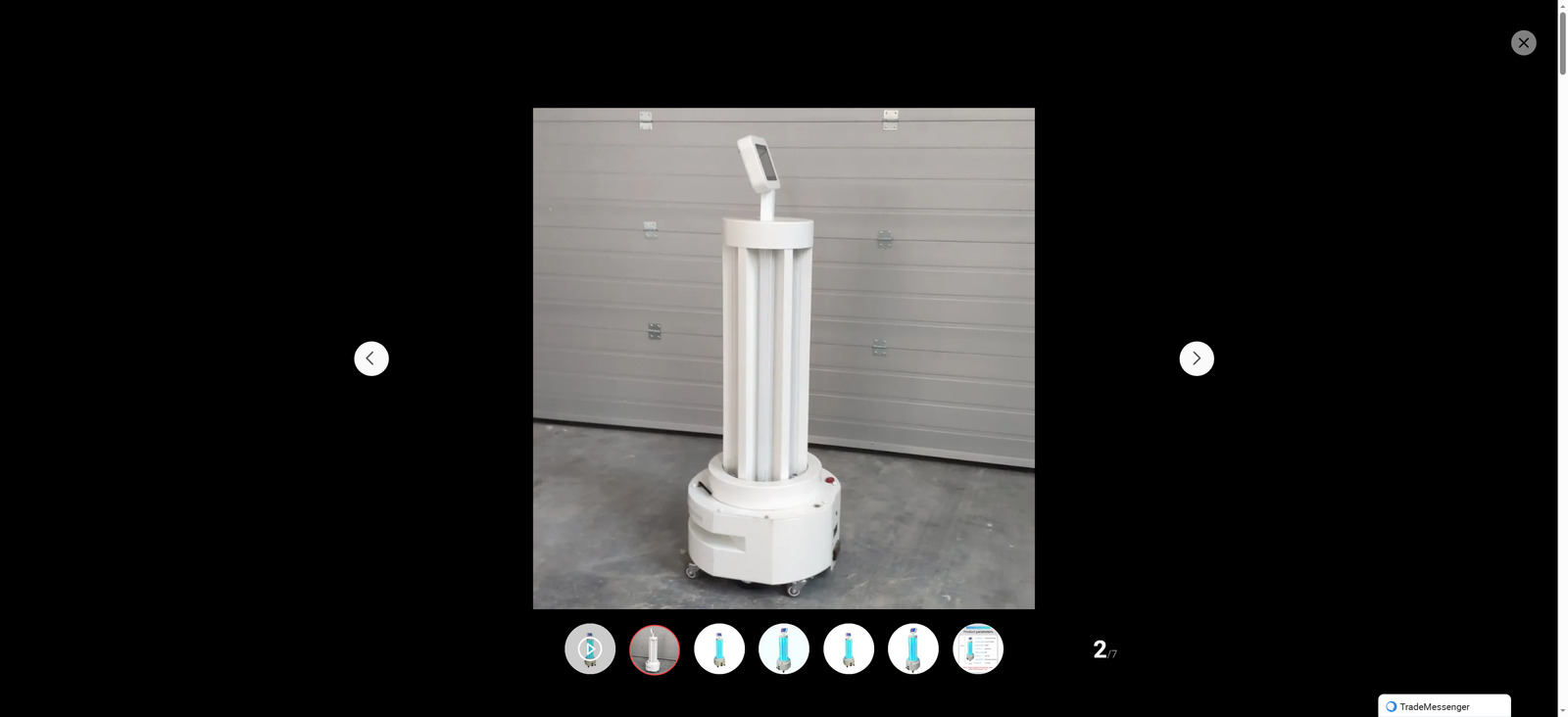
As the first line of defense for hospital infection control, lobbies bear the brunt of high foot traffic, complex personnel flow, and frequent contact with public surfaces—posing immense challenges to traditional disinfection methods. In response to the urgent need for efficient, comprehensive, and intelligent hygiene solutions, the fully intelligent hospital disinfection robot has emerged as a game-changer, especially tailored for lobby scenarios with its advanced UV sterilization technology and dual capability to disinfect both surfaces and air.
The core competitiveness of this intelligent robot lies in its adoption of ultraviolet germicidal irradiation (UVGI) technology, a scientifically proven disinfection method with a century-long application history in healthcare. Operating within the germicidal wavelength range of 200–320 nm, particularly the high-efficiency UV-C spectrum (180–280 nm), the robot inactivates microorganisms by damaging their genetic material, effectively inhibiting their ability to replicate and spread. Unlike traditional manual disinfection that relies on chemical agents, UV sterilization eliminates the risk of residue contamination and chemical irritation, making it ideal for public areas like hospital lobbies where vulnerable groups such as patients, elderly individuals, and children gather. Clinical studies have confirmed that UVGI technology can achieve a germicidal efficacy of up to 99.99% against bacteria, viruses, fungi, and molds, including SARS-CoV-2, significantly reducing the risk of healthcare-associated infections (HAIs).
Tailored to the unique characteristics of hospital lobby scenarios, the robot excels in delivering simultaneous surface and air disinfection—addressing the dual hygiene risks of these high-traffic spaces. Hospital lobbies feature numerous high-touch surfaces, such as door handles, elevator buttons, self-service kiosks, and seating armrests, which serve as major transmission vectors for pathogens. The robot’s intelligent navigation system, integrated with lidar, ultrasonic sensors, and 3D mapping technology, enables it to autonomously traverse the lobby, adjust its position dynamically, and ensure full coverage of these critical surfaces without missing any blind spots. It can complete mapping of a 10,000 sq ft lobby in less than five minutes, then execute a pre-planned disinfection route with precision, even navigating tight spaces between seating areas and service desks.
In terms of air disinfection, the robot effectively complements traditional ventilation methods by purifying the air in real time. Hospital lobbies often suffer from poor air circulation due to large crowds, leading to the accumulation of airborne pathogens. Equipped with high-efficiency air circulation modules and UV-C lamps, the robot neutralizes airborne microorganisms as it moves, reducing the bacterial count in the air to meet medical environmental standards. This dual disinfection capability ensures that both visible surfaces and invisible air are thoroughly sanitized, creating a comprehensive hygiene barrier for the lobby environment.
The full intelligence of the robot further enhances its adaptability and efficiency in lobby scenarios. It operates with complete autonomy, from route planning and disinfection execution to automatic charging, enabling 24/7 uninterrupted service without human intervention. Built-in motion sensors and safety interlocks ensure that the UV lamps automatically shut off when humans approach, eliminating the risk of accidental exposure to ultraviolet light—a key safety consideration for busy lobbies where personnel movement is constant. Additionally, the robot generates detailed disinfection reports in real time, including heat maps of disinfected areas, operation logs, and germicidal efficacy data, allowing hospital management to monitor and audit hygiene work efficiently. This data-driven approach not only ensures accountability but also helps optimize disinfection strategies based on traffic patterns and contamination risks.
Real-world applications have validated the practical value of these robots in hospital lobbies. Cameron Memorial Community Hospital, for instance, integrated UV-C disinfection robots into its daily protocols, deploying them nightly in lobbies and operating rooms to maintain high hygiene standards. The implementation reduced manual cleaning time significantly, allowing staff to focus on more critical patient care tasks while cutting operational costs and lowering HAI risks. Feedback from both staff and patients has been overwhelmingly positive, with patients expressing increased confidence in the hospital’s hygiene measures due to the visible presence of the robots.
As healthcare facilities continue to raise infection control standards, the fully intelligent hospital disinfection robot stands out as an indispensable tool for lobby hygiene management. Its combination of UV sterilization technology, dual surface-air disinfection capability, and intelligent autonomous operation addresses the unique challenges of high-traffic hospital lobbies, bridging the gaps in traditional disinfection methods. Looking ahead, with advancements in far-UVC technology—safer for human exposure—and IoT integration, these robots will become even more versatile, further revolutionizing environmental hygiene in healthcare settings and setting new benchmarks for patient safety and public health protection.