
Automatic Air Disinfection Intelligent Atomizer & Atomization Disinfection Robot: The New Era of Intelligent Sanitation
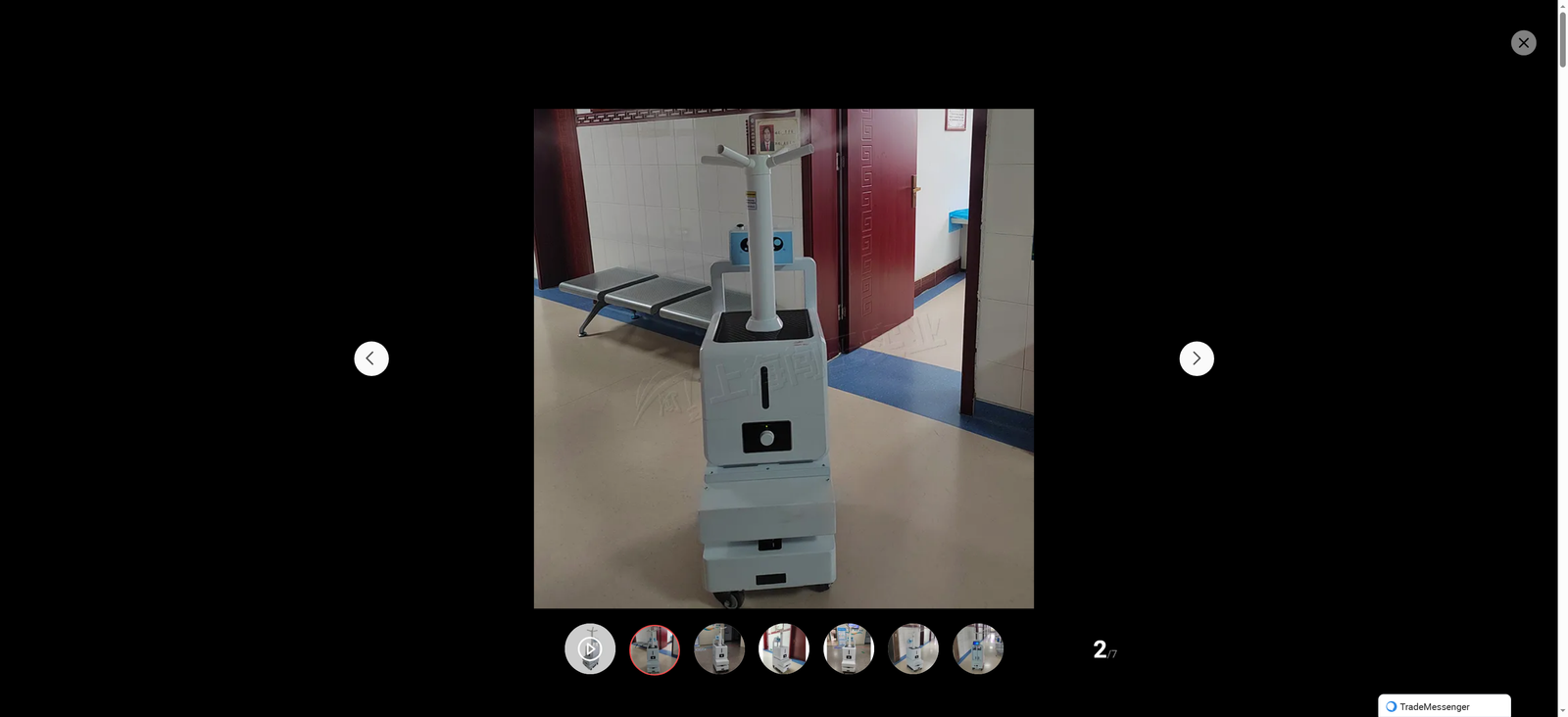
In the context of increasing attention to public health and the continuous upgrading of intelligent technology, automatic air disinfection intelligent atomizers and atomization disinfection robots have emerged as core equipment in the field of environmental sanitation. These devices integrate atomization technology, intelligent control, and autonomous movement capabilities, breaking the limitations of traditional manual disinfection and building a more efficient, comprehensive, and safe disinfection defense line for various scenarios. From hospitals and airports to office buildings and families, they are gradually reshaping people's understanding of environmental hygiene management.
Working Principles: The Synergy of Atomization Technology and Intelligent Control
The core of automatic air disinfection intelligent atomizers and atomization disinfection robots lies in the efficient combination of advanced atomization technology and intelligent systems. The intelligent atomizer serves as the "execution terminal" of disinfection, which can convert liquid disinfectants into ultra-fine aerosol particles (usually 2-5 microns in diameter) through ultrasonic vibration or high-pressure atomization technology . These tiny particles can quickly diffuse in the air, fully contact with suspended bacteria, viruses, and other microorganisms, and kill them through the oxidative properties of disinfectants such as sodium hypochlorite, hydrogen peroxide, or chlorine dioxide . At the same time, the aerosol particles can make dust particles in the air adsorb water and settle, achieving the dual effect of disinfection and air purification .
The atomization disinfection robot upgrades this technology to a mobile intelligent level. Equipped with laser SLAM navigation and visual V-SLAM fusion technology, the robot can autonomously plan paths, achieve centimeter-level positioning accuracy, and flexibly avoid obstacles through dual protection of obstacle detection sensors and mechanical anti-collision mechanisms . It can operate according to preset routes or remote control commands, covering large areas efficiently—some high-performance models can complete disinfection of 1,000 cubic meters in just 15 minutes and cover an area of up to 25,000 square meters . With a battery life of 5-6 hours and automatic charging function, it can realize 24-hour continuous operation without human intervention .
Core Advantages: Transcending Traditional Disinfection Methods
Compared with traditional manual disinfection and fixed disinfection equipment, automatic air disinfection intelligent atomizers and atomization disinfection robots have obvious competitive advantages.
Firstly, high efficiency and no dead corners. The ultra-fine aerosol particles generated by the intelligent atomizer can penetrate into narrow spaces such as corners, gaps, and air ducts that are difficult to reach by manual disinfection, ensuring comprehensive coverage of the disinfection area . The autonomous movement capability of the robot further expands the disinfection range, which is particularly suitable for large spaces such as airports, stations, and shopping malls.
Secondly, safety and reduced cross-infection. By replacing manual operations with intelligent equipment, direct contact between operators and disinfectants is avoided, and the risk of cross-infection in high-risk scenarios such as hospitals is significantly reduced . Moreover, environmentally friendly disinfectants such as chlorine dioxide can be decomposed into carbon dioxide and water after disinfection, leaving no toxic residues and ensuring the safety of personnel in the space during and after disinfection .
Thirdly, intelligent management and data visualization. Advanced atomization disinfection robots support remote mapping, deployment, and real-time monitoring of disinfection routes . Users can view disinfection records, coverage, and effect data through the APP or cloud platform, realizing traceable and manageable disinfection work. This intelligent management mode not only saves human resources but also improves the standardization of disinfection work.
Application Scenarios: Widely Covering Multiple Fields
Driven by strong market demand, automatic air disinfection intelligent atomizers and atomization disinfection robots have been widely used in multiple fields, showing strong scenario adaptability.
In the medical field, they have become essential equipment in hospitals, community health centers, and laboratories. They can perform high-level disinfection on high-frequency activity areas such as wards, operating rooms, and medical waste storage areas, and conduct terminal disinfection on key areas to effectively block the spread of pathogens . The disinfection effect can reach 6-log level, meeting the strict hygiene standards of the medical industry .
In public transportation and commercial spaces, airports, stations, hotels, and shopping malls have a large flow of people and complex air environments. Atomization disinfection robots can carry out regular or irregular mobile disinfection, quickly reducing the concentration of microorganisms in the air and creating a safe public environment for passengers and customers .
In industrial and food processing fields, food factories, pharmaceutical factories, and sterile workshops have extremely high requirements for environmental hygiene. Intelligent atomizers and disinfection robots can achieve precise disinfection without polluting products, ensuring compliance with industry production standards .
In household and daily scenarios, small intelligent atomizers are gradually entering families, offices, and kindergartens. They are easy to operate and can effectively kill bacteria and viruses in the air, providing a healthy living and working environment for families and children .
Market Trends: Steady Growth Driven by Technology and Demand
The global market for automatic air disinfection intelligent atomizers and atomization disinfection robots is showing a steady growth trend. According to research data, the global revenue of disinfection wireless atomizers was about 940 million US dollars in 2024, and it is expected to reach 1.552 billion US dollars by 2031, with a compound annual growth rate of 7.5% from 2025 to 2031 . In the Chinese market, the demand for such products in medical, commercial, and household fields is growing rapidly, and the market scale is expected to maintain a high growth rate in the next few years .
In terms of technological development, the future of atomization disinfection robots will tend to be more intelligent and integrated. The integration of AI multi-modal technology will enable robots to simultaneously cope with viruses and harmful organisms, further improving disinfection efficiency . At the same time, the linkage with smart building management systems will realize centralized control and data synchronization, making disinfection work an important part of intelligent building operations . In addition, the research and development of more environmentally friendly and efficient disinfectants and the optimization of atomization technology will further enhance the performance and safety of the equipment.
Conclusion
Automatic air disinfection intelligent atomizers and atomization disinfection robots represent the development direction of the modern sanitation industry. They not only solve the pain points of traditional disinfection methods such as low efficiency, incomplete coverage, and high risk but also provide strong support for public health prevention and control with technological innovation. With the continuous improvement of people's health awareness and the deep integration of intelligent technology, these devices will play a more important role in more fields, opening a new era of efficient, intelligent, and safe environmental sanitation management.