
Food Delivery Robot with Thermal Insulation for Hot Meal Transport
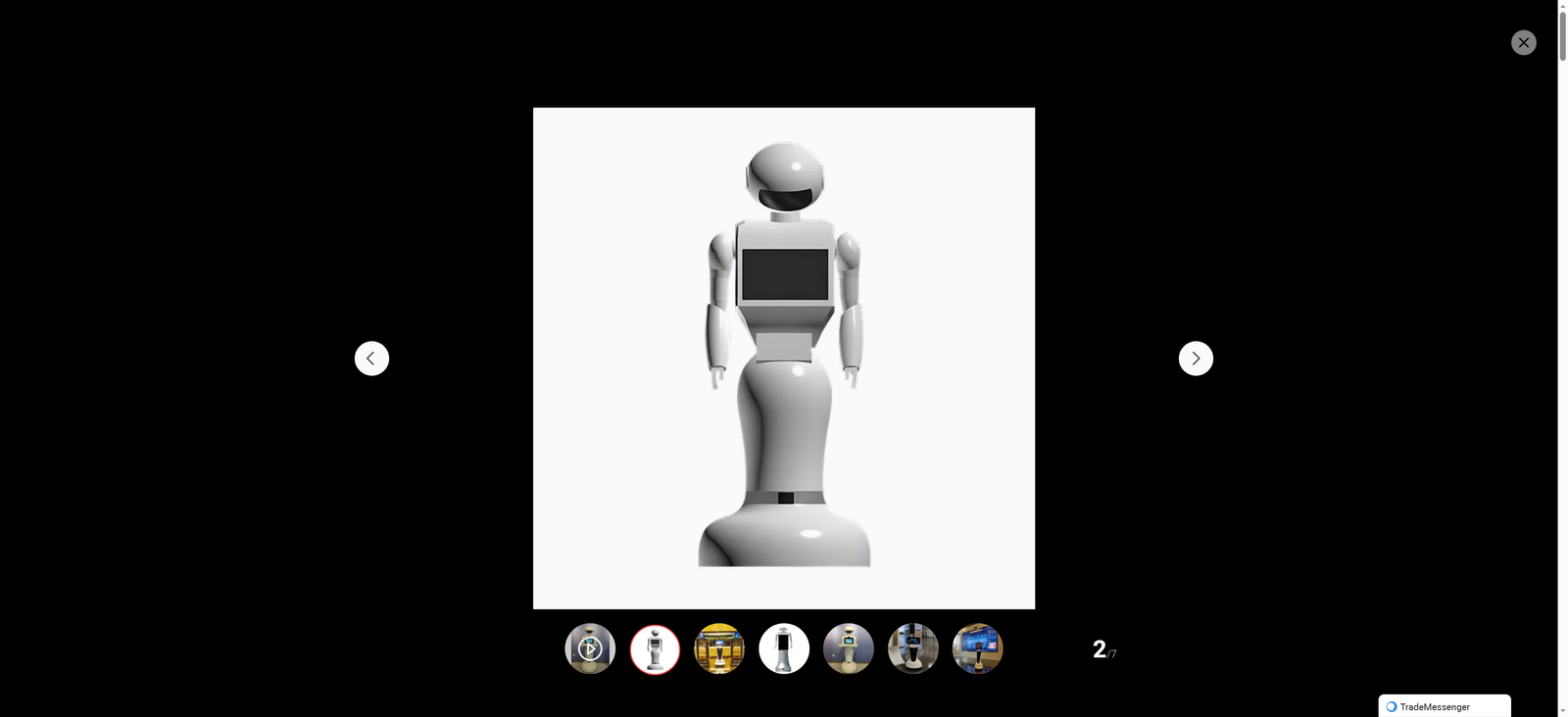
In the fast-paced modern catering industry, the demand for efficient, high-quality, and safe hot meal delivery continues to rise. As labor costs soar and consumers’ expectations for dining experience become increasingly stringent, traditional manual delivery can no longer fully meet the industry’s needs—long delivery times lead to heat loss, inconsistent temperature control affects food taste and safety, and repetitive labor increases the burden on employees. Against this backdrop, the food delivery robot with thermal insulation for hot meal transport has emerged as a game-changer, integrating intelligent navigation, efficient thermal insulation technology, and stable delivery capabilities to reshape the efficiency and quality of hot meal delivery.
The core advantage of this specialized delivery robot lies in its advanced thermal insulation system, which is meticulously designed to address the pain point of hot meal heat loss during transportation—a key factor that determines the quality of delivered food. Unlike ordinary delivery robots that only focus on mobility, the thermal insulation food delivery robot adopts a multi-layer composite insulation structure, combining phase change materials and nano-insulation layers to build an adaptive temperature regulation system. The inner layer is made of food-grade high-temperature resistant and heat-preserving materials that effectively lock in heat without releasing harmful substances, ensuring food safety while maintaining temperature. The middle layer uses high-density thermal insulation foam to block heat conduction, reducing heat loss caused by contact with the external environment. The outer layer is equipped with a waterproof and heat-insulating coating, which not only prevents external temperature changes from affecting the internal environment but also protects the robot’s internal components from damage due to high temperatures. Additionally, the robot’s storage compartment is designed with a sealed structure, minimizing heat loss through air circulation. Experimental verification shows that such a thermal insulation design can extend the hot meal insulation time to 1.8 times the industry average, ensuring that hot meals remain at an optimal eating temperature (55℃-65℃) during transportation—this temperature range not only preserves the original taste and aroma of the food but also meets food safety standards by avoiding bacterial growth caused by excessive temperature drop.
Beyond its excellent thermal insulation performance, the food delivery robot is equipped with intelligent navigation and stable movement systems to adapt to various complex delivery scenarios. For indoor scenarios such as restaurants, hotels, and hospital cafeterias, the robot uses laser radar, depth vision cameras, and UWB ultra-wideband positioning technology to achieve centimeter-level positioning accuracy, enabling autonomous path planning and dynamic obstacle avoidance. It can flexibly shuttle through crowded dining halls, avoid pedestrians and obstacles in real time, and accurately reach designated delivery locations, whether it is a customer’s table in a restaurant or a ward in a hospital. For outdoor scenarios such as university campuses and resort areas, the robot is equipped with GPS navigation and weather-resistant protection, capable of withstanding slight wind and rain while maintaining stable operation—though its outdoor use is optimized for short-distance delivery to avoid excessive heat loss caused by long-term exposure to extreme environments. Moreover, the robot supports single-point and multi-point delivery, allowing it to deliver hot meals to multiple locations in one trip, which significantly improves delivery efficiency. In a global chain restaurant, a single thermal insulation delivery robot can deliver 400-600 plates of food per day, with a working time of nearly 12 hours, equivalent to the workload of 2-3 human waiters.
In terms of practical application, the thermal insulation food delivery robot has been widely adopted in various fields, bringing tangible benefits to catering enterprises, employees, and consumers. For catering business owners, the robot effectively reduces labor costs—each robot can save 8,000-12,000 yuan in monthly labor costs on average, while improving delivery efficiency by 300% compared to manual delivery. It can work continuously without rest or leave, effectively addressing the problem of labor shortages during peak dining hours and reducing the risk of delivery delays. For employees, the robot takes over the repetitive and labor-intensive hot meal delivery work, reducing their daily walking distance and the frequency of carrying hot plates, thereby alleviating work pressure and reducing employee turnover rate. For consumers, the robot ensures that the hot meals they receive are warm, delicious, and safe, reducing waiting time and improving dining satisfaction. In addition, the robot is equipped with a wrong-take reminder function to prevent customers or employees from taking the wrong meals, ensuring delivery accuracy, and it can be connected to the restaurant’s order system to realize real-time order tracking, allowing consumers to know the delivery progress at any time.
The application of thermal insulation food delivery robots also aligns with the trends of intelligent upgrading and green development in the catering industry. In terms of intelligence, the robot can be connected to the catering enterprise’s management system, realizing seamless docking with order management, inventory management, and customer service systems. Merchants can monitor the robot’s working status, delivery progress, and thermal insulation effect in real time through the background, and adjust delivery tasks according to actual needs, improving the level of refined management. In terms of environmental protection, the robot adopts energy-saving power supply systems, optimizing power consumption through intelligent battery management to reduce energy waste—its thermal insulation system also reduces food waste caused by temperature loss, which is in line with the concept of “anti-food waste” and green catering. Furthermore, in emergency situations such as floods or debris-laden areas, specialized buoyant thermal insulation delivery robots can be deployed to transport hot meals to those in need, relying on their autonomous navigation and sealed thermal insulation compartments to ensure food quality even in harsh environments.
Looking to the future, with the continuous advancement of thermal insulation technology, artificial intelligence, and material science, the food delivery robot with thermal insulation for hot meal transport will be further upgraded and optimized. The thermal insulation system will become more lightweight and efficient, with intelligent temperature control functions that can adjust the insulation strategy according to different types of hot meals (such as soups, stir-fries, and steamed foods) to achieve personalized temperature control. The navigation system will be more intelligent, capable of adapting to more complex indoor and outdoor environments, and even realizing cross-scenario delivery. In addition, the robot will be integrated with more humanized functions, such as voice interaction to remind customers to take meals, and automatic return to the kitchen for disinfection after delivery, further improving the delivery experience and food safety level. It is expected that in the near future, such robots will not only be widely used in restaurants and hotels but also enter communities, office buildings, and other scenarios, becoming an indispensable part of daily hot meal delivery, and promoting the catering industry to move towards a more intelligent, efficient, and high-quality development direction.
In conclusion, the food delivery robot with thermal insulation for hot meal transport effectively solves the pain points of traditional hot meal delivery, such as heat loss, low efficiency, and high labor costs. It integrates thermal insulation technology and intelligent delivery capabilities to provide a comprehensive solution for the catering industry, bringing benefits to merchants, employees, and consumers alike. As a typical representative of the integration of intelligent technology and catering services, it not only promotes the transformation and upgrading of the catering industry but also enriches the forms of modern service industry, contributing to the development of a more intelligent and convenient life.