
Food Delivery Robot: Redefining Intelligent Catering and Hotel Services with Customized Commercial Solutions
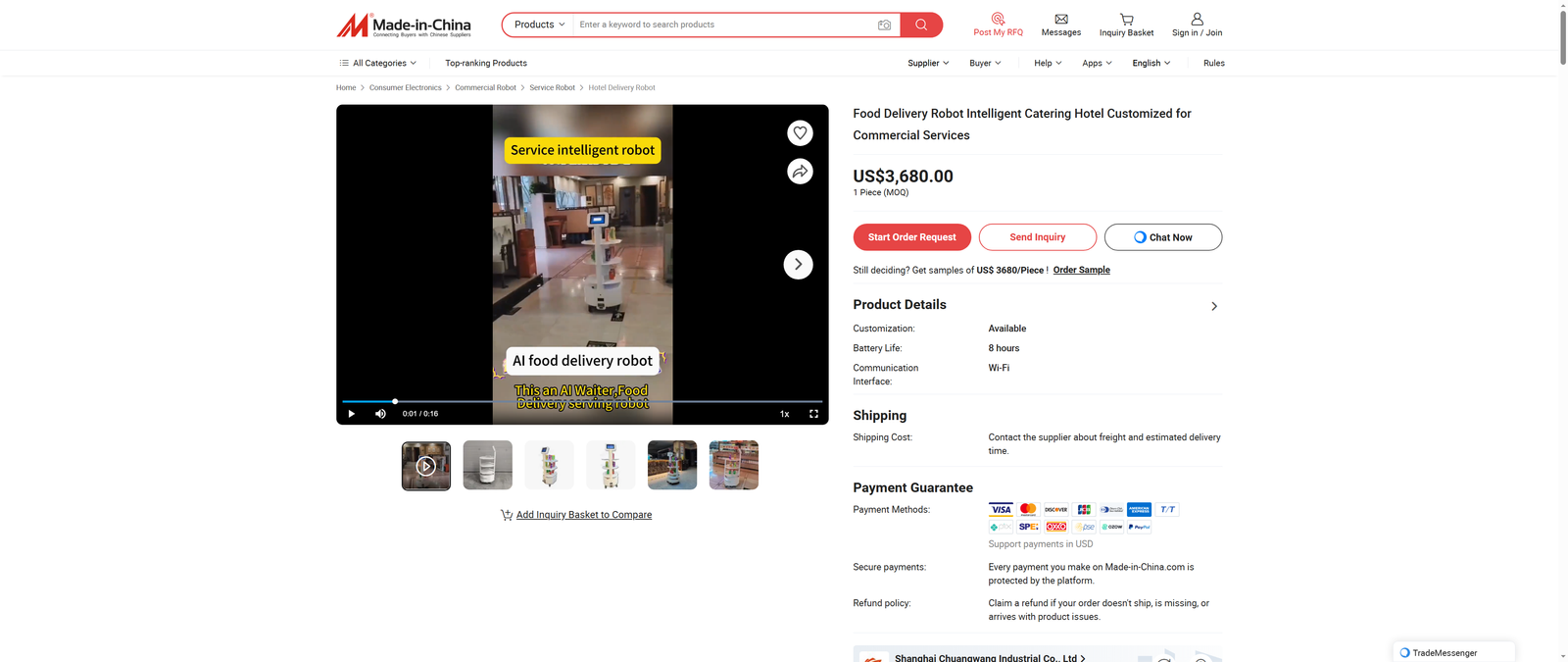
In the wave of digital transformation, the commercial service industry is undergoing a profound revolution. Especially in the catering and hotel sectors, where efficiency, experience, and cost control are core demands, food delivery robots have emerged as a key force driving intelligent upgrading. Unlike ordinary consumer-grade robots, commercial customized food delivery robots are designed to fit the complex scenarios, diverse needs, and high-frequency operations of catering and hotel services, injecting new vitality into the commercial service ecosystem.
The core value of food delivery robots in commercial services lies in their "customization" capability, which breaks the limitations of one-size-fits-all products and realizes a high degree of fit with catering and hotel business processes. For hotels, whether it is a high-end five-star hotel pursuing refined services or a mid-range business hotel focusing on efficient operations, food delivery robots can be customized to meet differentiated needs. High-end hotels often need robots to match their elegant service atmosphere—with a sleek and minimalist appearance, low-noise operation, and the ability to interact politely with guests in multiple languages. These robots can not only deliver meals, snacks, and drinks to guest rooms accurately but also undertake tasks such as delivering laundry, documents, and small items, reducing the workload of housekeeping staff while ensuring the privacy and comfort of guests. For mid-range business hotels, the focus is on high efficiency and cost-effectiveness. Customized robots are equipped with high-precision navigation systems that can quickly adapt to the layout of hotel corridors, elevators, and guest rooms, completing delivery tasks in the shortest time. They can also be connected to the hotel's PMS system, realizing automatic order reception, task assignment, and status feedback, greatly improving the efficiency of service collaboration.
In the catering industry, commercial food delivery robots show even more diverse customized application scenarios. From large-scale chain restaurants and buffets to small and medium-sized characteristic restaurants, robots can be tailored to meet different operational needs. In large chain restaurants with a high passenger flow, the biggest pain point is the shortage of waiters and the low efficiency of meal delivery during peak hours. Customized food delivery robots can be designed with large-capacity storage compartments, which can carry multiple tables of meals at one time. They can automatically avoid obstacles, take the optimal route, and deliver meals to the designated table accurately. Some high-end catering robots are also equipped with thermal insulation layers to keep the temperature of hot dishes and the freshness of cold dishes, ensuring the quality of food during delivery. For buffets, robots can be customized into "mobile food stations" that automatically cruise in the dining area, displaying and replenishing popular dishes in real-time, reducing the number of times guests walk around and improving the dining experience. For small and medium-sized characteristic restaurants, the appearance of robots can be customized according to the restaurant's theme—such as Chinese-style restaurants with classical patterns, Western-style restaurants with fashionable designs, or Internet-famous restaurants with cute shapes. These robots not only undertake meal delivery tasks but also become a unique decorative element and a "net red check-in point" for the restaurant, enhancing the brand's attractiveness.
Beyond meal delivery, commercial customized food delivery robots are also evolving towards multi-functional integration, becoming a comprehensive service terminal in catering and hotel scenarios. Many high-end models are equipped with touch screens, cameras, and voice interaction modules. Guests can query restaurant menus, hotel services, and surrounding information through the touch screen, or call customer service through voice interaction. In catering scenarios, robots can even guide guests to their seats, take orders simply, and remind guests of meal preparation progress. In hotel scenarios, they can answer common questions from guests, such as check-in and check-out procedures, breakfast time, and gym opening hours, reducing the work pressure of front desk staff. In addition, through the connection with the background big data system, food delivery robots can collect user behavior data—such as hotel guests' meal preferences, dining time, and service needs; catering customers' order frequency, favorite dishes, and dining duration. These data can provide valuable references for catering and hotel operators to adjust product structures, optimize service processes, and carry out precise marketing.
The promotion and application of commercial customized food delivery robots also bring significant economic and social benefits to the service industry. For operators, robots can replace part of the manual work, reducing labor costs, which is particularly important in the context of rising labor costs. At the same time, robots can work 24 hours a day without fatigue, improving service efficiency and extending service hours. For example, hotels can use robots to provide meal delivery services at night, meeting the needs of guests who order food late without arranging additional on-duty staff. For the service industry as a whole, food delivery robots promote the transformation of service modes from "labor-intensive" to "intelligent technology-driven", improving the overall service quality and operational efficiency of the industry. Moreover, the application of robots also reduces the contact between people, which is more in line with the health and safety needs of public places, especially in the post-epidemic era.
Of course, the development of commercial food delivery robots still faces some challenges, such as the high initial investment cost, the need for continuous optimization of navigation systems in complex scenarios, and the need for further improvement of human-computer interaction experience. However, with the continuous progress of artificial intelligence, sensor, and navigation technology, and the gradual maturity of the industrial chain, the cost of food delivery robots will gradually decrease, and their functions and performance will be further improved. More and more catering and hotel operators will realize the value of customized intelligent solutions and join the ranks of introducing food delivery robots.
In conclusion, food delivery robots customized for commercial services are not only a tool to improve efficiency and reduce costs in the catering and hotel industries but also a key carrier to upgrade service quality and create brand value. By deeply integrating with the business scenarios of catering and hotels, and meeting the differentiated needs of operators and users through personalized customization, food delivery robots are gradually redefining the service mode of the commercial service industry. In the future, with the in-depth development of intelligent technology, food delivery robots will play a more important role in the commercial service ecosystem, promoting the industry to move towards a more intelligent, efficient, and high-quality development direction.