
Food Delivery Robot: Customized Commercial Intelligent Self-Service Solution for Restaurants and Hotels
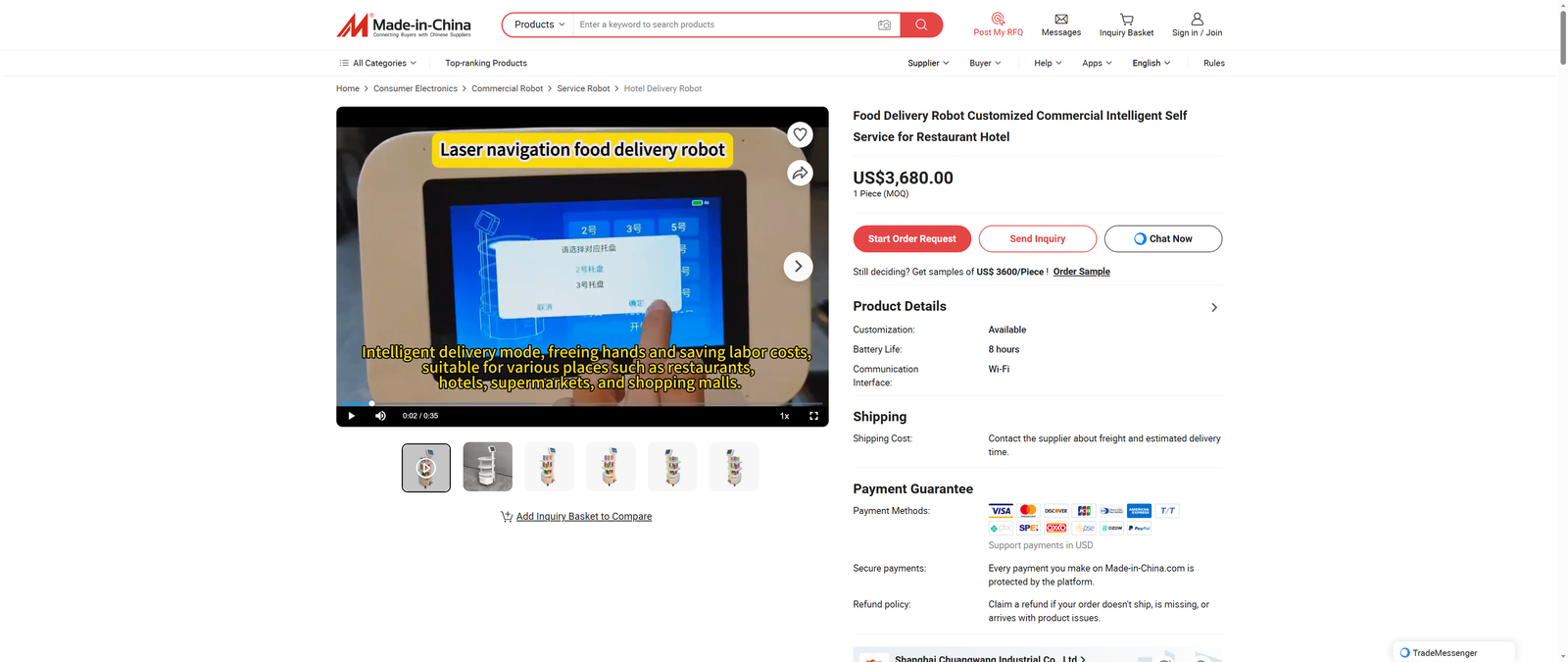
In the wave of digital transformation sweeping the commercial service industry, restaurants and hotels, as typical representatives of the service sector, are constantly seeking innovative ways to optimize operational efficiency, improve service quality, and enhance customer experience. Against this backdrop, food delivery robots, with their core advantages of customization, commercialization, intelligence, and self-service, have gradually become a "new standard configuration" in the catering and hotel industries, redefining the service model and injecting strong momentum into the high-quality development of the industry.
Food delivery robots are not just simple "automated delivery tools"; they are customized intelligent service terminals tailored to the specific needs of commercial scenarios such as restaurants and hotels. Different from ordinary industrial robots, commercial food delivery robots need to adapt to complex and dynamic service environments—dense customer flows, narrow passageways, variable dining layouts, and diverse service demands. Therefore, customization has become their core competitive advantage. For restaurants, whether it is a high-end western restaurant pursuing a minimalist and elegant style, a hot pot restaurant with a bustling and crowded layout, or a fast-food restaurant emphasizing efficient turnover, food delivery robots can be customized in terms of appearance design, load capacity, and functional modules. For example, high-end restaurants can choose robots with a sleek and fashionable appearance, matching the restaurant's decoration style, and equipped with a gentle voice broadcast function to avoid disrupting the quiet dining atmosphere; hot pot restaurants can customize robots with high-temperature resistance, large load capacity, and anti-slip food racks to meet the needs of delivering hot pots and side dishes; fast-food restaurants can configure robots with fast navigation and automatic queuing functions to improve the efficiency of meal delivery. For hotels, food delivery robots can be customized according to different service scenarios such as guest rooms, banquet halls, and cafes—equipped with card swiping and door opening functions to deliver meals, fruits, and daily necessities directly to the guest room door; equipped with a large-capacity storage compartment to meet the needs of banquet meal delivery; and even integrated with hotel information inquiry functions to provide guests with a one-stop service experience.
Intelligence is the core driving force for food delivery robots to realize self-service and efficient service. Relying on advanced technologies such as SLAM navigation, multi-sensor fusion, and artificial intelligence algorithms, food delivery robots can independently complete a series of service processes including path planning, obstacle avoidance, meal taking, and delivery without manual intervention, truly realizing self-service operation. In terms of navigation and positioning, the robot can quickly map the restaurant or hotel environment, accurately identify the location of dining tables, guest rooms, and pick-up points, and choose the optimal delivery path. Even in the case of sudden obstacles such as moving guests, waiters, or placed items, the robot can respond in real time, adjust the path flexibly, and avoid collisions, ensuring the safety and stability of the delivery process. In terms of intelligent interaction, food delivery robots are equipped with voice recognition, touch screen, and other interaction modules. Guests can call the robot through voice commands or touch the screen to complete meal ordering, meal calling, and other operations; waiters can manage multiple robots through the background system, assign delivery tasks, and monitor the robot's operating status, greatly reducing manual management costs. In addition, with the accumulation of service data, food delivery robots can also realize intelligent data analysis, such as counting the peak meal delivery time, the most popular dishes, and the frequency of guest room service, providing data support for restaurants and hotels to optimize menu settings, adjust staffing, and improve service strategies.
The commercial value of food delivery robots is reflected in their ability to effectively solve the pain points of operational management in restaurants and hotels, and realize a win-win situation for cost reduction, efficiency improvement, and service upgrading. For a long time, the catering and hotel industries have been facing problems such as high labor costs, difficulty in recruiting and retaining employees, and uneven service quality. Food delivery robots can replace manual labor to complete repetitive and tedious meal delivery work, reducing the demand for front-line waiters. Taking a medium-sized restaurant as an example, one food delivery robot can replace 2-3 waiters' meal delivery work, and the cost recovery can be realized in 6-12 months. In the long run, it can significantly reduce the labor cost of the restaurant. At the same time, robots can work 24 hours a day without rest, fatigue, or emotional fluctuations, ensuring stable and standardized service quality. Unlike manual service, which may have omissions, mistakes, or service attitude problems due to factors such as fatigue, robots can accurately complete each delivery task according to the set procedures, and maintain a consistent and friendly service state, improving customer satisfaction. In addition, the introduction of food delivery robots can also become a "new selling point" for restaurants and hotels. For young consumers who pursue novelty and intelligence, the experience of being served by robots is full of fun and technology, which can attract them to visit and share, forming a good word-of-mouth effect and helping businesses increase customer flow and revenue.
In the process of promoting the application of food delivery robots in restaurants and hotels, the concept of "intelligent self-service" is also constantly deepening and expanding. It is not only the self-service of the robot in the delivery link, but also the reconstruction of the entire service chain. For example, in some smart restaurants, food delivery robots are connected with the restaurant's ordering system, cash register system, and kitchen management system. After a guest orders a meal through the mobile phone or the on-site screen, the order information is automatically sent to the kitchen and the food delivery robot. After the kitchen prepares the meal, the robot automatically goes to the pick-up point to take the meal and deliver it to the corresponding table. The whole process is fully automated, realizing "no waiter in the store, self-service from ordering to meal taking". In hotels, food delivery robots can be linked with the hotel's PMS system. When a guest places an order for room service through the mobile app or the in-room phone, the robot can automatically receive the order, take the goods from the service desk, and deliver them to the guest room, and the service information is automatically recorded in the system, improving the efficiency of room service management.
Of course, the development of food delivery robots in the commercial field still faces some challenges, such as the high initial investment cost, the need for regular maintenance and update of the robot, and the need to adapt to more complex and personalized service scenarios. However, with the continuous progress of technology, the gradual reduction of robot production costs, and the continuous improvement of the industrial chain, these challenges will be gradually solved. More and more restaurants and hotels will realize the value of food delivery robots and join the ranks of intelligent transformation.
In conclusion, food delivery robots, with their customized design adapting to commercial scenarios, intelligent technology supporting self-service operation, and commercial value promoting industry upgrading, have become an important part of the intelligent transformation of restaurants and hotels. They are not only changing the traditional service model of the industry, but also leading the new trend of the service industry. In the future, with the integration of more advanced technologies such as 5G, the Internet of Things, and big data, food delivery robots will become more intelligent, humanized, and diversified, bringing more surprises to consumers and creating greater commercial value for restaurants and hotels. The era of intelligent self-service service led by food delivery robots has come, and it will write a new chapter for the high-quality development of the catering and hotel industries.