
In the wave of global digital transformation and the growing demand for contactless services, Autonomous Mobile Robots (AMRs) have emerged as a key force in revolutionizing the service industry. Among them, food delivery robots, specifically designed for restaurant and hotel scenarios, are rapidly transforming the traditional service model with their intelligent, contactless advantages. From bustling restaurant dining halls to high-end hotel lobbies, these intelligent "servers" are not only optimizing operational efficiency but also redefining the quality of customer experience.
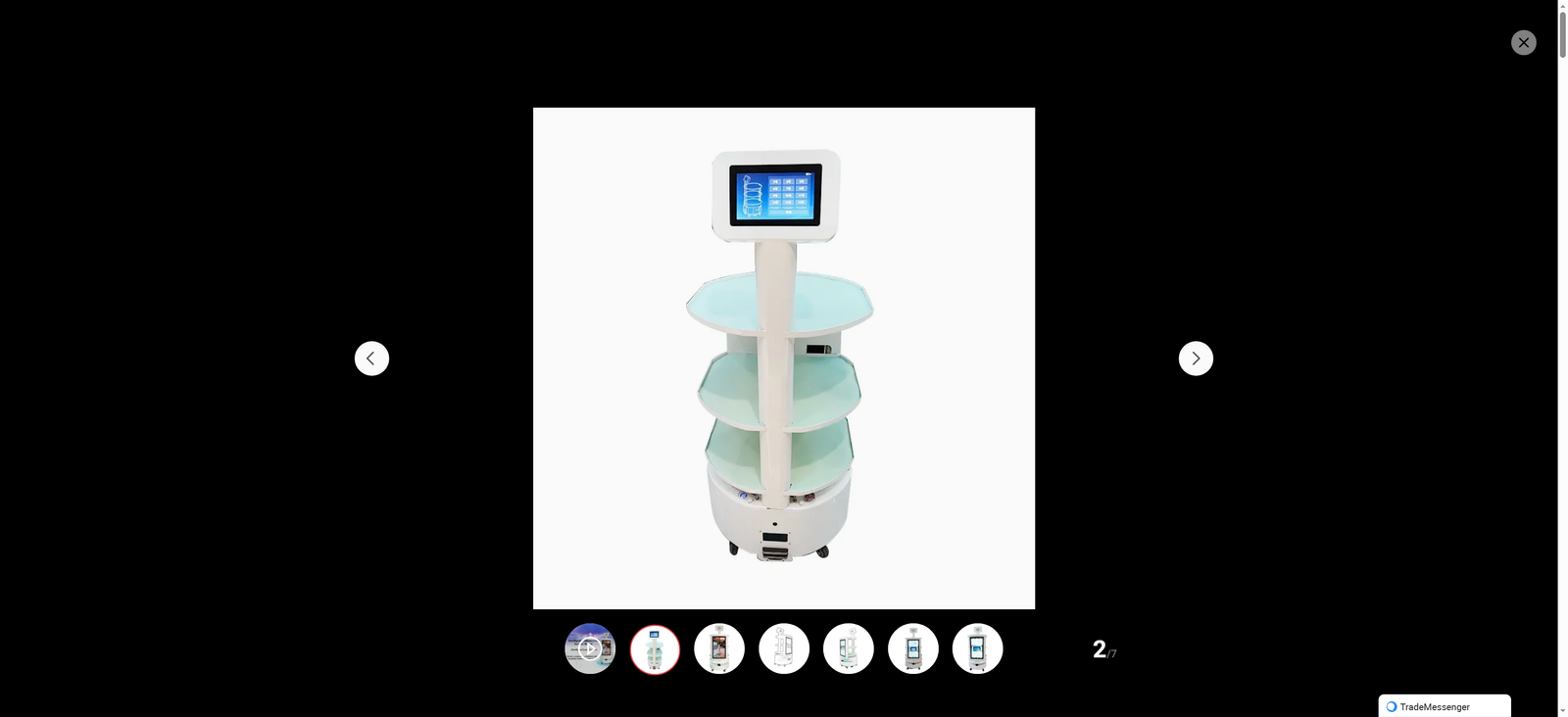
The core value of food delivery robots lies in their integration of autonomous mobility technology and intelligent service capabilities. As a typical application of Autonomous Mobile Robots, they are equipped with advanced sensors, SLAM (Simultaneous Localization and Mapping) technology, and obstacle avoidance systems, enabling them to navigate freely in complex indoor environments such as narrow restaurant aisles, crowded dining areas, and multi-floor hotel corridors. Unlike traditional manual service, these robots can accurately identify their location, plan the optimal delivery route, and flexibly avoid pedestrians, tables, and other obstacles, ensuring that food is delivered to the designated table or hotel room efficiently and safely.
In restaurant scenarios, food delivery robots are solving the long-standing pain points of the catering industry. With the continuous rise of labor costs and the frequent shortage of catering staff, many restaurants are facing operational pressures such as slow service speed and uneven service quality. Food delivery robots, as "24/7 non-stop servers", can take over the tedious and repetitive work of food delivery, allowing human staff to focus more on food preparation and personalized customer service. For example, during peak dining hours, a single food delivery robot can complete multiple rounds of delivery in a short time, greatly reducing the waiting time of customers and improving the turnover rate of tables. At the same time, the contactless delivery method of robots also meets the health and safety needs of customers in the post-pandemic era, reducing the risk of cross-infection caused by direct contact between people.
In hotel scenarios, food delivery robots further enhance the level of intelligent service and the sense of experience of guests. Hotels, especially high-end hotels, have always pursued personalized and efficient service. Food delivery robots can provide 24-hour on-demand delivery services for guests, such as delivering meals, snacks, drinks, and even daily necessities to guest rooms. Guests only need to place an order through the hotel's mobile app or in-room control system, and the robot can accurately deliver the items to the door of the guest room. This not only saves the time of hotel staff but also avoids the inconvenience caused by manual door-to-door delivery, protecting the privacy of guests to the greatest extent. In addition, the novel interactive experience brought by food delivery robots, such as voice prompts and intelligent navigation, also adds a sense of technology and fun to the stay of guests, becoming a new highlight of hotel services.
The development of food delivery Autonomous Mobile Robots is also driven by the continuous progress of intelligent technology. With the iterative update of artificial intelligence, Internet of Things, and big data technologies, food delivery robots are becoming more and more intelligent. They can not only complete basic delivery tasks but also realize functions such as intelligent order recognition, automatic charging, and data statistics. For example, some advanced food delivery robots can connect with the restaurant's POS system and hotel's PMS system, automatically receiving order information and updating the delivery status in real time. Through data statistics, merchants can also analyze the peak delivery period, the most popular dishes, and other information, providing data support for optimizing operational strategies.
Of course, the popularization and application of food delivery robots still face some challenges. For example, the high initial investment cost may make some small and medium-sized restaurants and hotels hesitate; the adaptability of robots in extreme environments (such as wet floors, complex stairs) needs to be further improved; and there is also a need for relevant industry standards to regulate the development of the industry. However, with the continuous maturity of technology and the gradual reduction of production costs, these problems will be gradually solved.
In conclusion, food delivery Autonomous Mobile Robots, as an important carrier of intelligent contactless services, are bringing profound changes to the restaurant and hotel industries. They are not only replacing manual labor in some links but also promoting the transformation and upgrading of the service industry towards intelligence, efficiency, and safety. In the future, with the continuous innovation of technology, food delivery robots will have more application scenarios and more powerful functions, becoming an indispensable part of intelligent life. The era of intelligent contactless service led by these "intelligent servers" has come.