
Factory Price Hotel Intelligent Delivery Robot: Revolutionizing Service with Obstacle Avoidance Technology
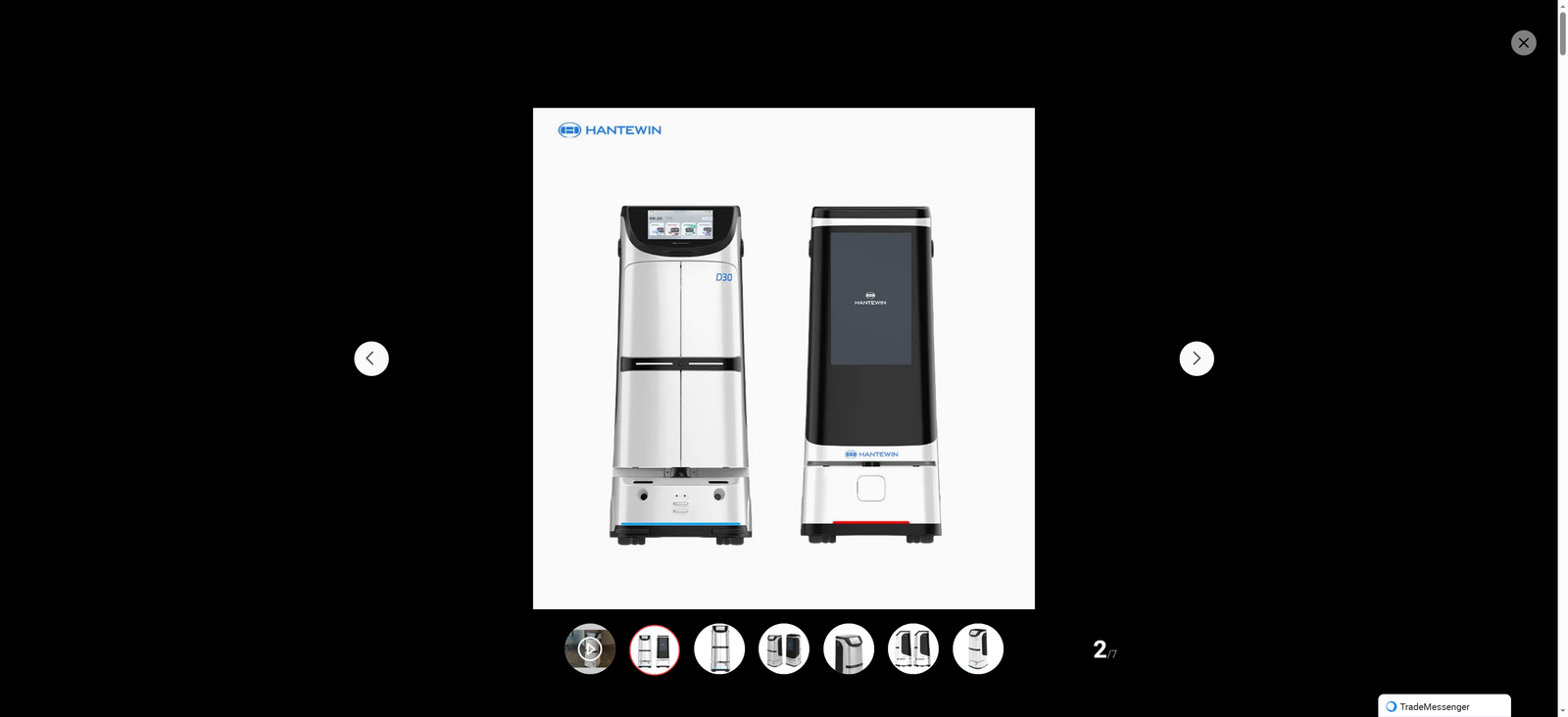
In the era of intelligent hotel operations, the hotel obstacle avoidance goods intelligent delivery robot waiter food delivery robot has emerged as a game-changer, redefining service efficiency and customer experience. With the advantage of factory price, this innovative equipment is no longer a luxury for high-end hotels but a cost-effective solution accessible to hotels of all scales, driving a new wave of service upgrading in the hospitality industry.
The core competitiveness of the hotel intelligent delivery robot lies in its advanced obstacle avoidance technology, which ensures smooth and safe operation in complex hotel environments. Unlike traditional manual delivery that is prone to delays and errors, modern delivery robots are equipped with a multi-sensor fusion system integrating laser radar, 3D vision sensors, and infrared detectors. This system enables centimeter-level positioning accuracy and 360-degree all-round environmental perception, allowing the robot to identify obstacles as small as 20 millimeters and respond in seconds. Whether navigating through narrow corridors, avoiding moving guests and staff, or crossing small ground seams and bulges, the robot can make intelligent decisions to slow down, detour, or stop smoothly, effectively solving the "prisoner's dilemma" of mutual avoidance with pedestrians and ensuring the stability of delivered items such as food and daily necessities.
Leading manufacturers have continuously optimized obstacle avoidance algorithms to adapt to the dynamic characteristics of hotel scenarios. For example, some high-performance models adopt magnetic track navigation combined with PID algorithms to maintain stable movement along preset routes, while others use VSLAM visual navigation technology to build real-time maps and adjust paths flexibly. The obstacle scanning frequency of these robots can reach up to 5400 times per minute, with a detection range exceeding 10 meters and a front detection angle of up to 192.64 degrees, achieving true 3D omnidirectional obstacle avoidance. This technical advantage ensures that the robot can operate efficiently even during peak hours with heavy pedestrian traffic, reducing human-machine congestion by 50% and improving overall operational stability by 20%.
Beyond excellent obstacle avoidance capabilities, factory-priced hotel delivery robots offer comprehensive functional advantages tailored to hotel needs. In terms of load capacity and capacity, there are diversified models available: slim versions with a body width of only 55 centimeters for narrow corridors in old hotels, and large-capacity models with a cargo space of 138 liters that can carry up to 40 kilograms, capable of delivering multiple orders or bulk items at once. The integration of intelligent systems is another highlight—most robots can seamlessly connect with hotel PMS systems and takeout platforms, automatically obtaining room numbers and order information to reduce manual input. Equipped with voice interaction modules, they support 9 languages and achieve 97% voice recognition accuracy within 5 meters in noisy environments, enabling natural communication with guests.
The factory price advantage has significantly lowered the threshold for hotels to adopt intelligent delivery equipment, making the investment return cycle more attractive. A single robot can replace 1.5 to 2 delivery staff, saving monthly labor costs of 5,000 to 8,000 yuan. With a factory price ranging from several thousand yuan to tens of thousands of yuan, the investment can usually be recovered in 1.5 to 2 years. For budget hotels focusing on cost control, this is a cost-effective way to upgrade services; for mid-to-high-end hotels, it frees up human resources to provide more personalized services, improving customer satisfaction by 0.8 to 1.2 points on average.
The application of hotel intelligent delivery robots is expanding from basic food and goods delivery to multiple scenarios such as luggage handling, cleaning assistance, and front desk guidance. International hotel groups like Hilton, Marriott, and Shangri-La have deployed such robots on a large scale, forming a collaborative operation model of "general-purpose special-purpose" robots. In KTVs and other entertainment venues attached to hotels, large-capacity delivery robots with advertising screens even realize the dual value of service and marketing.
As technology matures and prices become more accessible, factory-price hotel obstacle avoidance goods intelligent delivery robot waiter food delivery robots are becoming a standard configuration in the hospitality industry. They not only solve the pain points of labor shortage and inefficient delivery but also inject technological vitality into hotel services. For hotel operators, choosing a cost-effective intelligent delivery robot with reliable obstacle avoidance performance is no longer an option but a necessary step to enhance core competitiveness in the new era of intelligent services.