
Chemical Spray Sterilization Robot: The Intelligent Guardian of Public Health
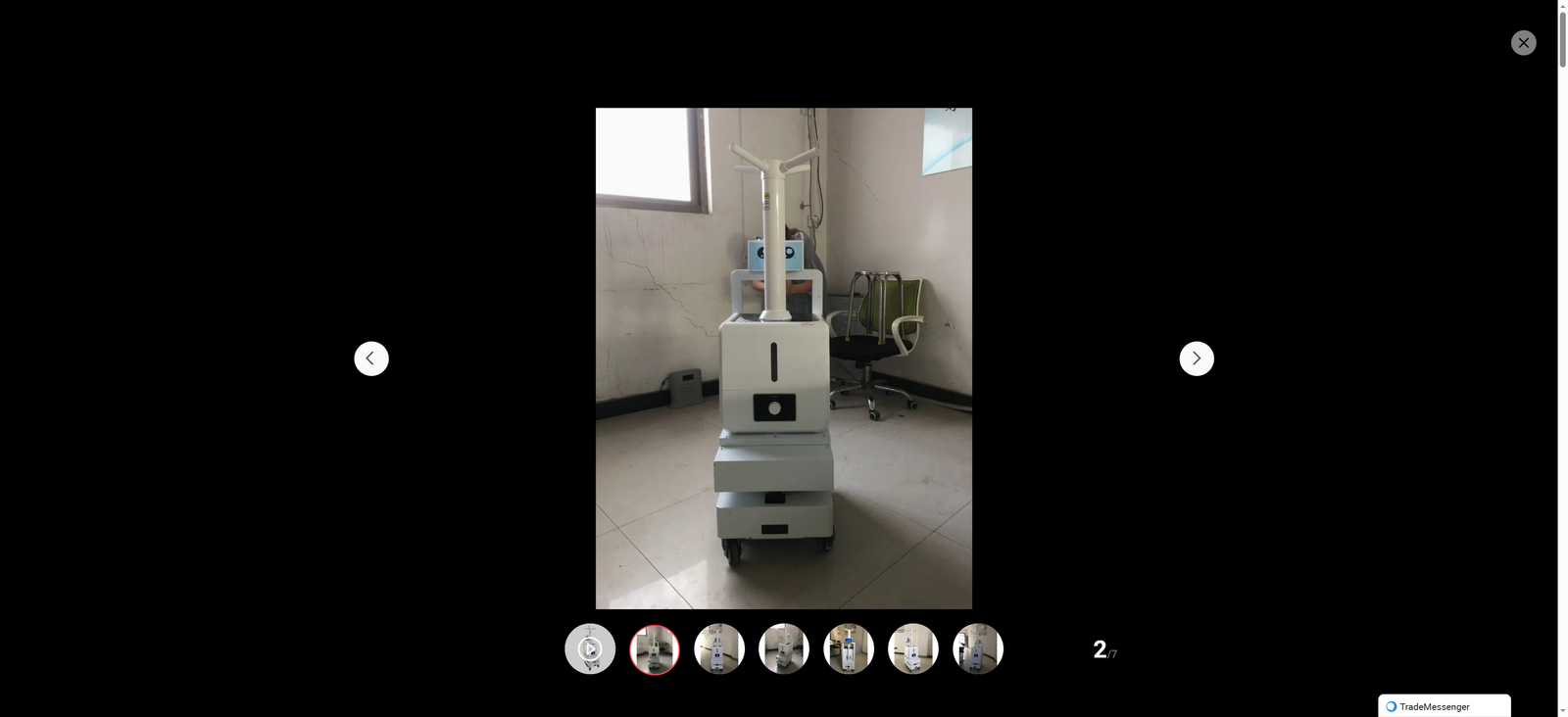
In the context of increasing attention to public health security, chemical spray sterilization robots (also known as mist spray disinfection robots) have emerged as a key intelligent device, revolutionizing traditional disinfection methods with advanced technology. By integrating chemical disinfection agents, atomization technology, and intelligent navigation systems, these robots achieve efficient, thorough, and contactless disinfection, becoming an indispensable line of defense in hospitals, airports, schools, and other high-demand scenarios.
Core Working Principles: Technology Drives Efficient Sterilization
The core value of chemical spray sterilization robots lies in their scientific integration of multiple technologies, ensuring precise and comprehensive disinfection effects. At the heart of the system is the mist spray module, which converts liquid disinfectants (such as hydrogen peroxide, chlorine dioxide, and hypochlorous acid) into tiny particles ranging from 1 to 15 micrometers through ultrasonic or high-pressure atomization technology. These ultra-fine mist particles possess strong diffusibility and permeability, capable of floating in the air and adhering to object surfaces, thereby eliminating bacteria, viruses, and spores that are difficult to reach manually.
To ensure disinfection efficiency, mainstream products adopt dual-nozzle or multi-nozzle designs with 50-degree left-right swing functions, enabling 360-degree three-dimensional space disinfection coverage. Equipped with plasma modules, some advanced models can accelerate the decomposition of disinfectants to generate free hydroxyl radicals, further enhancing virus inhibition and sterilization speed. The sterilization efficiency of these robots can reach up to 99.9999% (Log6 level), meeting the strictest hygiene standards of medical and food processing industries.
Intelligent navigation is another core technology that distinguishes these robots from traditional equipment. Using laser SLAM navigation and multi-sensor fusion positioning, they can autonomously plan paths, identify and avoid obstacles in real time, and adapt to complex environments such as narrow corridors and dynamic crowds. After completing tasks, the robots automatically return to charging stations for recharging, realizing 24-hour unattended operation.
Widely Applicable Scenarios: Guarding Multiple Fields
With their flexible and efficient performance, chemical spray sterilization robots have been widely applied in various fields, creating a safe and hygienic environment for production and life.
In the medical field, they are indispensable in operating rooms, ICUs, and isolation wards. Hospitals have high requirements for disinfection to prevent cross-infection. These robots can complete 1,000 cubic meters of space disinfection in 15 minutes, and their contactless operation avoids the risk of medical staff being infected by harmful substances during manual disinfection. Equipped with emergency stop buttons and real-time communication monitoring systems, they ensure absolute safety during operation.
In public transportation hubs such as airports, stations, and subways, where there is a high density of people and strong mobility, the robots efficiently disinfect waiting areas, carriages, and public toilets. With a large liquid storage capacity (up to 23.8L), they can work continuously for 10 hours without refilling, significantly reducing labor costs.
They also play an important role in schools, kindergartens, food factories, and breeding farms. In breeding farms, for example, intelligent spray sterilization robots can not only disinfect but also monitor air quality parameters such as ammonia and hydrogen sulfide in real time, helping to prevent the spread of animal diseases. In food factories and sterile workshops, their precise disinfection ensures product safety and meets industry hygiene certification requirements.
Comparative Advantages: Surpassing Traditional Manual Disinfection
Compared with traditional manual disinfection, chemical spray sterilization robots show obvious advantages in efficiency, cost, safety, and coverage, leading a new trend in disinfection work.
In terms of efficiency, manual disinfection relies on heavy equipment and has limited coverage, while intelligent robots can customize disinfection paths and schedules, with an atomization rate of up to 2000mL/h, covering 600 square meters in one operation—several times that of manual work. In terms of cost, large public places often require multiple cleaners for disinfection, while one robot can replace multiple workers, reducing long-term labor expenses.
Safety is another major highlight. Manual disinfection involves direct contact with disinfectants, which may cause skin and respiratory irritation, and there is a risk of cross-infection. The robots' unattended and contactless operation completely solves this problem. In terms of coverage, manual disinfection is prone to omissions in corners and hard-to-reach areas, while the robots' intelligent navigation and 3D obstacle avoidance capabilities ensure no dead ends, achieving full-space coverage.
Development Trends: Towards Intelligence and Diversification
Driven by market demand and technological innovation, the global market for chemical spray sterilization robots is growing rapidly, with a compound annual growth rate (CAGR) of 8.9%, and the market scale is expected to expand from 1.496 billion US dollars to 2.72 billion US dollars. Future development will focus on three directions: first, multi-functional integration, integrating disinfection with air purification, environmental monitoring, and material transportation to improve comprehensive application value; second, precise control optimization, using artificial intelligence algorithms to adjust disinfection concentration and speed according to environmental pollution levels, achieving efficient and economical operation; third, multi-machine collaboration, realizing unified scheduling of multiple robots through cloud platforms to adapt to larger-scale venues.
As a product of the combination of intelligent manufacturing and public health, chemical spray sterilization robots are not only a response to the normalization of epidemic prevention but also an important symbol of the intelligent upgrade of environmental governance. With the continuous advancement of technology and the expansion of application scenarios, these robots will play a more important role in guarding public health, creating a safer and more reliable living environment for humanity.