
Electric Food Delivery Vehicle Robots and Restaurant Waiter Service Robots: Transforming the Catering Industry with Intelligence
In the era of rapid technological advancement, artificial intelligence and robotics have penetrated deeply into every aspect of people’s lives, reshaping traditional industries and bringing unprecedented changes. The catering industry, a vital part of daily life, is undergoing a profound transformation driven by intelligent robots, among which electric food delivery vehicle robots and restaurant waiter service robots have become the core forces. These two types of robots complement each other, covering the entire service chain from in-store service to off-store delivery, solving long-standing pain points such as labor shortages, low efficiency, and inconsistent service quality, and leading the catering industry towards a more intelligent, efficient, and humanized future.
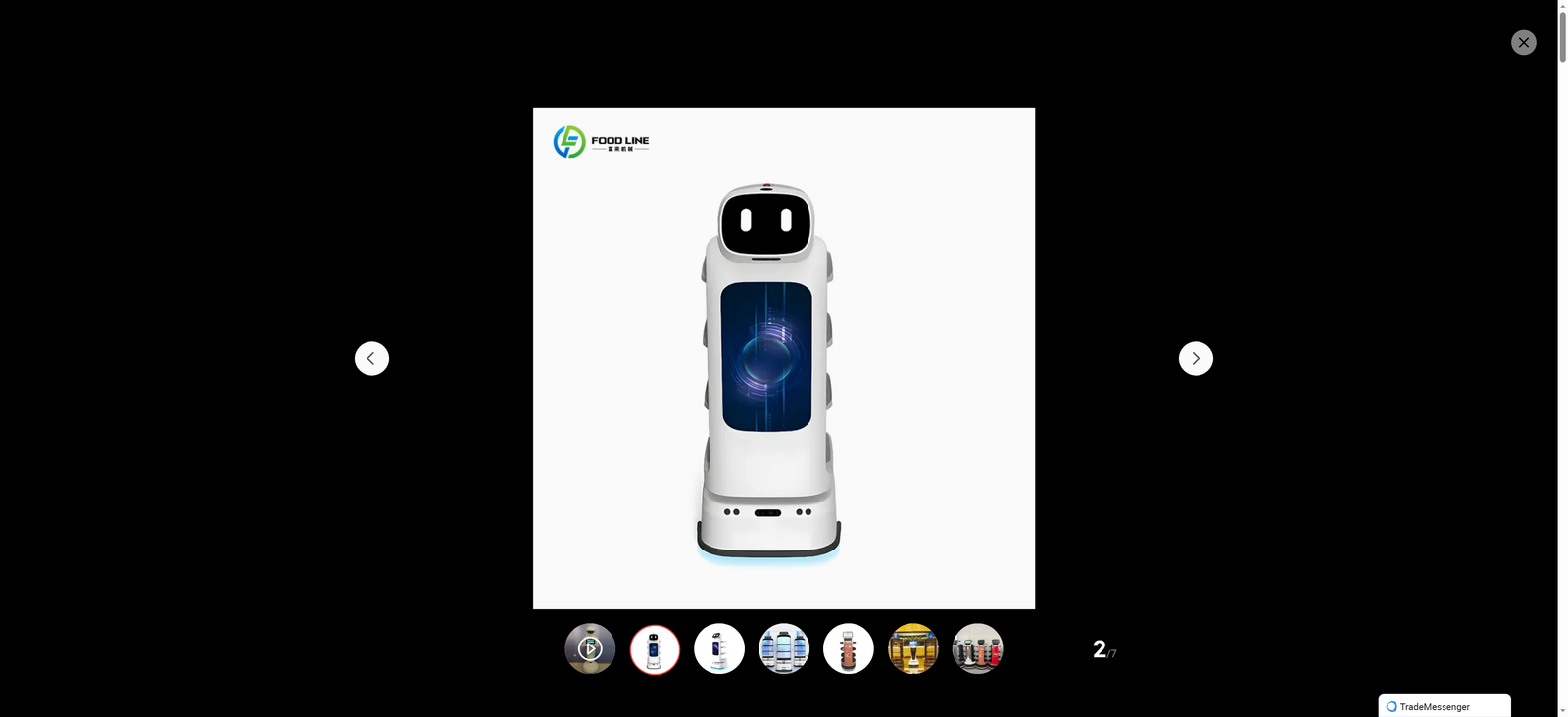
Restaurant waiter service robots, as the "intelligent butlers" in catering venues, have broken the limitations of traditional manual services and become an indispensable part of modern restaurants, hotels, and canteens. Unlike the tedious and repetitive work of human waiters, these intelligent robots are equipped with advanced technologies such as autonomous navigation, intelligent obstacle avoidance, and voice interaction, enabling them to complete a series of service tasks efficiently and accurately. For example, the Zhaocaibao restaurant marketing service robot independently developed by Orion Star can not only deliver meals continuously during peak hours but also attract customers actively during slack hours, realizing "one robot doing the work of two people". It can deliver meals to up to 4 tables at a time, with a dedicated slow-speed delivery mode to ensure the stability and safety of the food, and supports offline voice interaction with switchable female and child voices to enhance the user experience.
The functional diversity of restaurant waiter service robots further enriches the dining experience and optimizes restaurant operations. Many high-performance models, such as the Qinglang Intelligent T10 robot, have a maximum load capacity of 40 kilograms and a four-layer tray design, which can carry multiple meals at the same time, and their compact body can easily pass through narrow passages of 59 centimeters, adapting to the complex environment of various restaurants. These robots can not only complete basic tasks such as meal delivery, drink delivery, and plate recycling but also take on intelligent marketing and customer reception work: they can actively greet customers, recommend signature dishes and promotional activities, guide customers to their seats, and even play birthday or holiday blessings according to the scene. Equipped with high-definition displays, they can also show meal information and play customized advertisements, realizing the dual value of service and marketing.
In terms of technical support, restaurant waiter service robots rely on mature intelligent systems to ensure stable operation. They adopt SLAM technology and Vslam intelligent positioning, which can achieve centimeter-level navigation and positioning without pasting labels, greatly improving deployment efficiency. The 360-degree panoramic perception system, composed of laser radar, visual sensors, and cameras, enables them to accurately detect the surrounding environment, distinguish people and objects, and avoid collisions, pressure feet, and falls in real time. In addition, the multi-machine collaboration function allows multiple robots to operate simultaneously, plan the optimal route in real time, and avoid "traffic jams", which significantly improves the overall service efficiency of the restaurant. For restaurant operators, introducing such robots can effectively reduce labor costs—compared with manual services, robots have lower long-term operation costs, do not need rest, and can work continuously for a long time, while also solving the problem of labor shortage in the catering industry.
While restaurant waiter service robots optimize the in-store experience, electric food delivery vehicle robots extend the intelligent service of the catering industry to the off-store terminal, solving the pain points of traditional food delivery such as low efficiency, high cost, and difficult management. As an upgraded version of traditional food delivery tools, electric food delivery vehicle robots integrate electric drive, intelligent navigation, and real-time positioning technologies, which are environmentally friendly, efficient, and safe, and have become an important force in the last-mile delivery of catering.
The core advantage of electric food delivery vehicle robots lies in their efficient and stable delivery capacity and strong adaptability to the environment. Different from manual delivery that is affected by traffic jams, weather, and physical strength, these robots can plan the optimal delivery route according to real-time traffic conditions, avoid traffic congestion, and ensure that the food is delivered to the customer’s hands in the shortest time while maintaining temperature and freshness. They are powered by electricity, which is clean and environmentally friendly, without exhaust emissions, and conforms to the concept of green development. At the same time, they have a large load capacity and long battery life—some models can achieve a续航 of 9-12.5 hours, which can meet the needs of continuous delivery during peak meal hours. For takeaway platforms and catering merchants, electric food delivery vehicle robots can reduce delivery costs, improve delivery efficiency, and reduce the risk of delivery delays and food damage, while also reducing the labor intensity of delivery staff and improving the safety of delivery work.
In terms of intelligent management, electric food delivery vehicle robots can be connected to the merchant’s background system and takeaway platform in real time, enabling merchants and platforms to monitor the robot’s location, delivery progress, and remaining power in real time, and manage delivery tasks uniformly. Customers can also check the delivery status of their orders at any time, improving the transparency and satisfaction of delivery services. In addition, some advanced electric food delivery vehicle robots are also equipped with intelligent interaction functions, which can send delivery reminders to customers, confirm the delivery status, and even complete the delivery signature through voice or touch interaction, further optimizing the customer’s takeaway experience.
The combined application of electric food delivery vehicle robots and restaurant waiter service robots has built a full-link intelligent service system for the catering industry, promoting the industry to move towards digitalization and intelligence. In the catering industry, which is facing increasing competition and rising labor costs, these two types of robots have become an important weapon for merchants to improve competitiveness: they not only reduce operational costs and improve service efficiency but also bring a novel and convenient dining and takeaway experience to customers, helping merchants attract more customers and achieve sustainable development. According to industry data, the market size of China’s catering service robots is expected to reach 5 billion yuan in 2025, with a compound annual growth rate of more than 30%, which fully reflects the broad development prospects of intelligent robots in the catering industry.
Of course, the popularization and application of electric food delivery vehicle robots and restaurant waiter service robots also face some challenges: the initial investment cost is relatively high, the technical maintenance needs professional personnel, and there are still certain limitations in dealing with complex scenarios (such as extreme weather, complex building structures, and special customer needs). However, with the continuous progress of technology and the continuous improvement of the industrial chain, these problems will be gradually solved. In the future, with the integration of artificial intelligence, big data, and Internet of Things technologies, these robots will become more intelligent and humanized: they will be able to learn customer preferences and provide personalized recommendations, adapt to more complex application scenarios, and even collaborate with human staff more closely to complete more complex service tasks.
In conclusion, electric food delivery vehicle robots and restaurant waiter service robots are not substitutes for human labor, but partners who work with humans to promote the transformation and upgrading of the catering industry. They use intelligent technology to solve the pain points of traditional catering services, improve operational efficiency, optimize customer experience, and inject strong vitality into the high-quality development of the catering industry. With the continuous deepening of intelligent transformation, these two types of robots will be more widely used in various catering scenarios, changing the way people dine and takeaway, and creating a more convenient, efficient, and environmentally friendly catering new ecology.