
Contactless UV Disinfection Robot with 360-Degree Sterilization: Redefining Hygiene Safety in the Intelligent Era
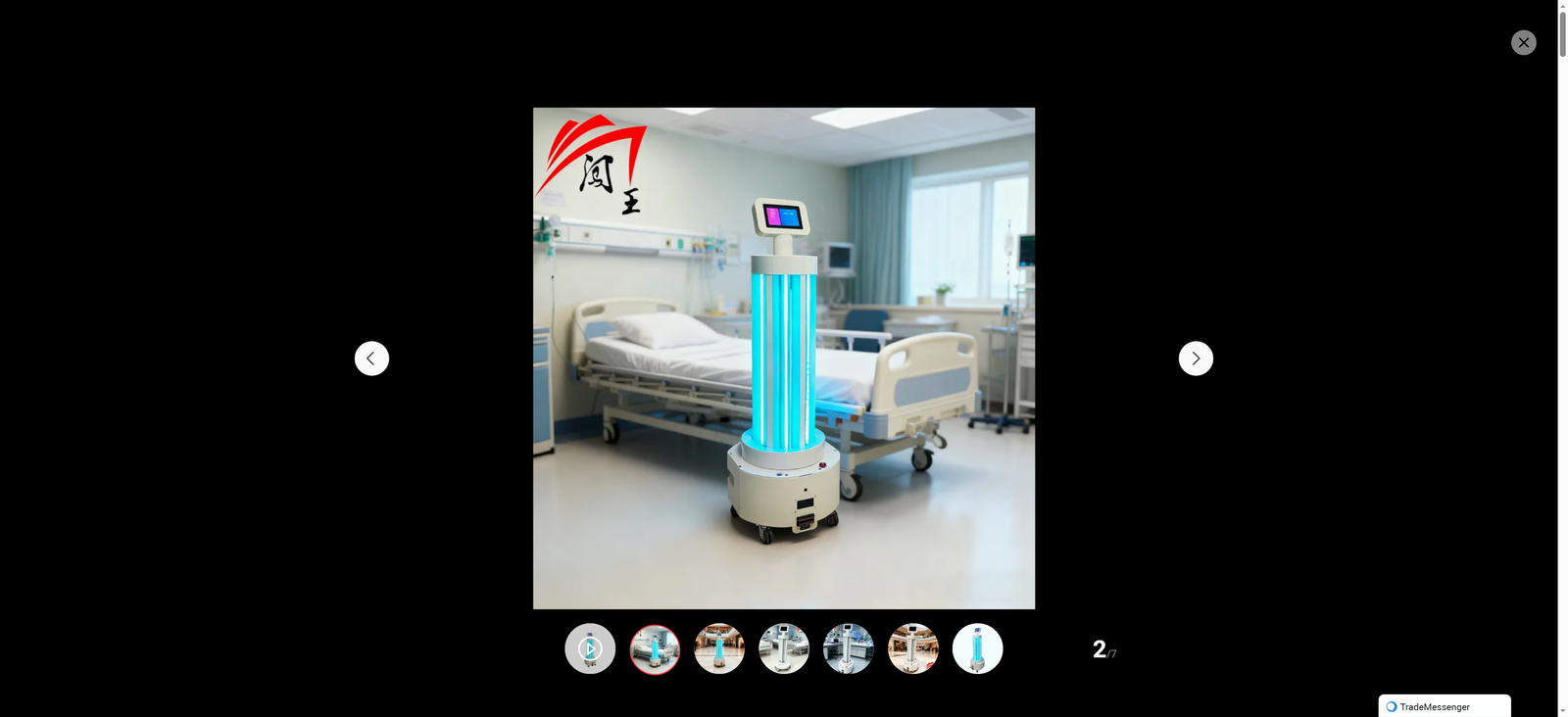
In an era where public health security has become a top priority for all sectors, the demand for efficient, safe, and contactless disinfection solutions is growing exponentially. Traditional disinfection methods, such as manual wiping or chemical fogging, often suffer from limitations like incomplete coverage, high labor costs, potential health hazards, and inconsistent efficacy. Against this backdrop, the contactless UV disinfection robot with 360-degree sterilization has emerged as a game-changer, integrating cutting-edge UV-C technology, intelligent navigation, and autonomous operation to deliver a comprehensive and reliable hygiene solution for diverse scenarios.
At the core of this innovative robot lies its 360-degree full-coverage sterilization capability, which addresses the critical flaw of blind spots in conventional disinfection. Equipped with high-performance UV-C lamp tubes (typically operating at 200-280nm, the most effective wavelength for germicidal purposes), the robot emits ultraviolet radiation that penetrates the DNA and RNA of microorganisms—including bacteria, viruses, and fungi—destroying their reproductive capacity and rendering them inactive permanently. Unlike fixed UV disinfection equipment that can only cover limited areas, the robot’s multi-directional UV lamp layout ensures that every corner, crevice, and surface—whether horizontal, vertical, or irregular—is uniformly exposed to the disinfecting light, achieving a sterilization rate of up to 99.99% in targeted spaces. For instance, a 90-square-meter area can be fully disinfected in just 10 minutes, significantly outperforming manual cleaning in both efficiency and thoroughness.
The contactless design is another defining advantage that sets this robot apart, especially in high-risk environments. By eliminating the need for human intervention during operation, it not only reduces the labor intensity of cleaning staff but also minimizes their exposure to harmful pathogens and chemical disinfectants—which often cause respiratory irritation, skin burns, or other health issues. Operators can control the robot remotely via a mobile app or set pre-programmed disinfection tasks, allowing it to work independently in unoccupied spaces such as hospitals, airports, or offices during off-hours. Additionally, the robot is equipped with intelligent human induction sensors: if a person enters the disinfection area unexpectedly, it will automatically stop UV emission and resume operation once the area is clear, ensuring maximum safety for personnel.
Intelligent navigation and autonomous operation further enhance the practicality and versatility of the contactless UV disinfection robot. Integrating advanced VSLAM and laser SLAM navigation technologies, the robot can flexibly map spaces up to 8000 square meters, achieving high-precision autonomous obstacle avoidance and path planning. With a compact design (some models have a width of only 38cm), it can easily navigate narrow corridors, crowded waiting areas, or complex indoor spaces without getting stuck, making it suitable for a wide range of scenarios. The robot also features an autonomous charging system: when its power is low, it will automatically return to the charging station to replenish energy, enabling 7*24 hours of uninterrupted disinfection work and truly realizing self-management without manual supervision.
From healthcare facilities to public spaces, from commercial buildings to educational institutions, the contactless UV disinfection robot with 360-degree sterilization is transforming hygiene management across industries. In hospitals—where infection control is a matter of life and death—the robot is widely used in operating rooms, wards, ICUs, and laboratories, effectively reducing the risk of healthcare-associated infections (HAIs) and lightening the burden on medical staff. Major hospitals such as Guangdong Provincial People’s Hospital and Wuhan Union Hospital have deployed such robots to strengthen their infection prevention systems. In public transportation hubs like airports and railway stations, the robot sanitizes waiting areas, security checkpoints, and passenger cabins, creating a safer travel environment for commuters. For hotels, shopping malls, and office buildings, it enhances customer and employee confidence by providing visible, efficient disinfection services, while also reducing long-term operational costs associated with manual cleaning and chemical disinfectant refills. Even in schools and food processing enterprises, the robot ensures a sterile environment for students and production, meeting strict hygiene standards with ease.
As the global focus on public health continues to intensify and intelligent technology advances, the contactless UV disinfection robot is poised to play an even more critical role in the future of hygiene safety. Industry forecasts show that the global UV disinfection robot market will grow at a rapid pace in the coming years, driven by increasing demand for autonomous disinfection solutions, technological innovations in UV-C LED technology, and supportive government policies for smart public health infrastructure. Future iterations of the robot are expected to integrate multi-modal disinfection technologies (such as UV-C dry mist), enhance data-driven management capabilities (including real-time disinfection records and remote monitoring), and become more compact, energy-efficient, and affordable.
In conclusion, the contactless UV disinfection robot with 360-degree sterilization represents a perfect combination of UV-C germicidal technology and intelligent automation. It solves the pain points of traditional disinfection methods by offering full coverage, contactless operation, 24/7 availability, and high efficiency—all while ensuring safety and cost-effectiveness. By redefining how we approach hygiene management, this innovative robot is not just a tool for disinfection; it is a guardian of public health, empowering industries to build safer, cleaner, and more resilient environments for everyone. As we move towards a more intelligent future, it will undoubtedly remain a cornerstone of proactive infection prevention and hygiene excellence.