
Compact Intelligent Smart Food Delivery Robot: A Game-Changer for Small Restaurants and Boutique Hotels
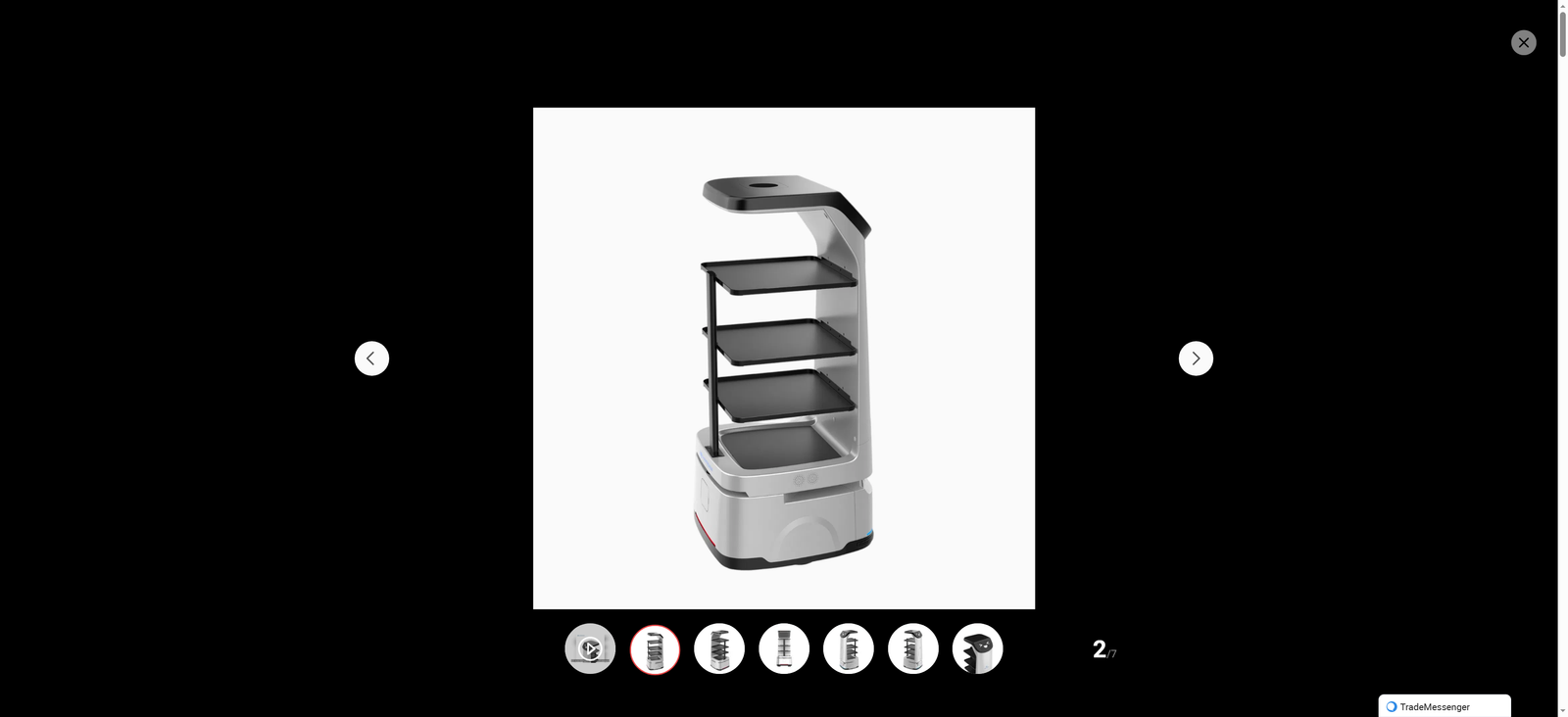
In the highly competitive landscape of small restaurants and boutique hotels, operational efficiency, service quality, and cost control are the core pillars of sustainable development. Faced with the industry's long-standing "three highs and one low" dilemma—high rent, high labor costs, high ingredient costs, and low profit margins—business owners are constantly seeking innovative solutions to break through bottlenecks . The emergence of compact intelligent smart food delivery robots has precisely addressed these pain points, evolving from a "gimmick" into a rigid demand for operations, injecting new vitality into the refined operation of small-scale catering and hospitality establishments.
Unlike the large-scale delivery robots designed for grand restaurants and chain hotels, compact intelligent models are tailored to the spatial characteristics of small venues. Most small restaurants and boutique hotels feature narrow corridors, complex layouts with multiple partitions, and limited maneuvering space. These robots, with an overall size often controlled within 540×360×1216mm, boast a zero-rotation radius and a small swing radius, enabling them to flexibly navigate through narrow passages and easily turn around in limited spaces . Their compact design does not compromise load capacity—equipped with 3-4 detachable layers of trays, each capable of bearing 10-15kg, they can efficiently transport multiple dishes, tableware, or hotel amenities at once, fully meeting the daily delivery needs of small venues.
Intelligence is the core competitiveness of these delivery robots, and their performance in complex indoor environments has been significantly enhanced through technological iteration. The adoption of multi-sensor fusion SLAM navigation technology has become the industry standard, integrating laser radar, depth cameras, inertial measurement units (IMU), and odometers . This combination solves the problem of positioning loss or drift caused by glass partitions, highly reflective floors, and empty corridors in small venues, achieving centimeter-level precision when docking at tables or hotel room doors. Moreover, predictive obstacle avoidance algorithms enable the robots to analyze the movement trajectories of pedestrians in real time, predict their positions in the next few seconds, and make timely detour or deceleration decisions, avoiding frequent stops and congestion in busy peak hours . For small businesses with limited staff, this intelligent navigation system ensures stable and efficient delivery without requiring manual guidance.
The practical functions of compact intelligent food delivery robots are highly aligned with the operational needs of small restaurants and boutique hotels, creating tangible value in cost reduction and efficiency improvement. In terms of labor cost control, a single robot can complete 400-600 food deliveries per day, doubling the efficiency of manual delivery . For small restaurants where the monthly salary of a delivery staff ranges from 4,000 to 5,000 yuan, the cost of renting or purchasing a robot can be recovered within 12-18 months, significantly reducing long-term labor expenditures . In boutique hotels, the robots can take on tasks such as delivering room service, toiletries, and laundry, freeing up front desk and housekeeping staff to focus on improving customer experience. Additionally, features like 15-hour continuous battery life and automatic return charging ensure uninterrupted operation throughout business hours, while detachable trays facilitate quick cleaning and meet hygiene standards in the catering and hospitality industries .
Beyond operational efficiency, these robots also bring added value in brand building and customer experience enhancement. For small restaurants targeting young customers, the intelligent interaction capabilities of the robots—powered by large language models (LLM)—enable them to engage in multi-round conversations, answer questions about dishes, ingredients, and promotions, and even provide personalized greetings . This transforms the robots from mere "delivery tools" into "brand ambassadors," creating a unique technological experience that boosts customer stickiness. In boutique hotels that emphasize elegance and exclusivity, the quiet and smooth operation of the robots—supported by car-grade chassis suspension systems that reduce vibration and prevent soup spills—ensures that the delivery process does not disrupt the quiet environment of the hotel, maintaining the high-end service quality . The "contactless delivery" feature also caters to post-pandemic health needs, enhancing customer trust in the business .
The market has witnessed the gradual popularization of compact intelligent food delivery robots in small venues, with brands launching cost-effective models tailored to this segment. For example, Orion Star's Fortune Leopard series features a multi-modal large model interaction system and five-dimensional fusion navigation, adapting to complex environments in small restaurants with low positioning label dependence . Keenon's T5 series, known for stability and durability, uses mature laser SLAM technology and an open tray design, making it a reliable choice for pure delivery scenarios . These products offer flexible cooperation models such as "rent-first-then-buy," lowering the entry threshold for small businesses .
As technology advances and costs decline, compact intelligent smart food delivery robots are no longer a luxury but a practical tool for small restaurants and boutique hotels. They not only solve the core pain points of labor shortage and high costs but also help small businesses achieve refined operations and differentiated competition. In the future, with the integration of more advanced AI technologies and personalized functions, these robots will continue to empower the development of small-scale catering and hospitality industries, reshaping the service landscape with intelligence and efficiency.