
The New Engine of Smart Services: Commercial Autonomous Intelligent Delivery Robots Reshape Package Logistics and Hotel Distribution
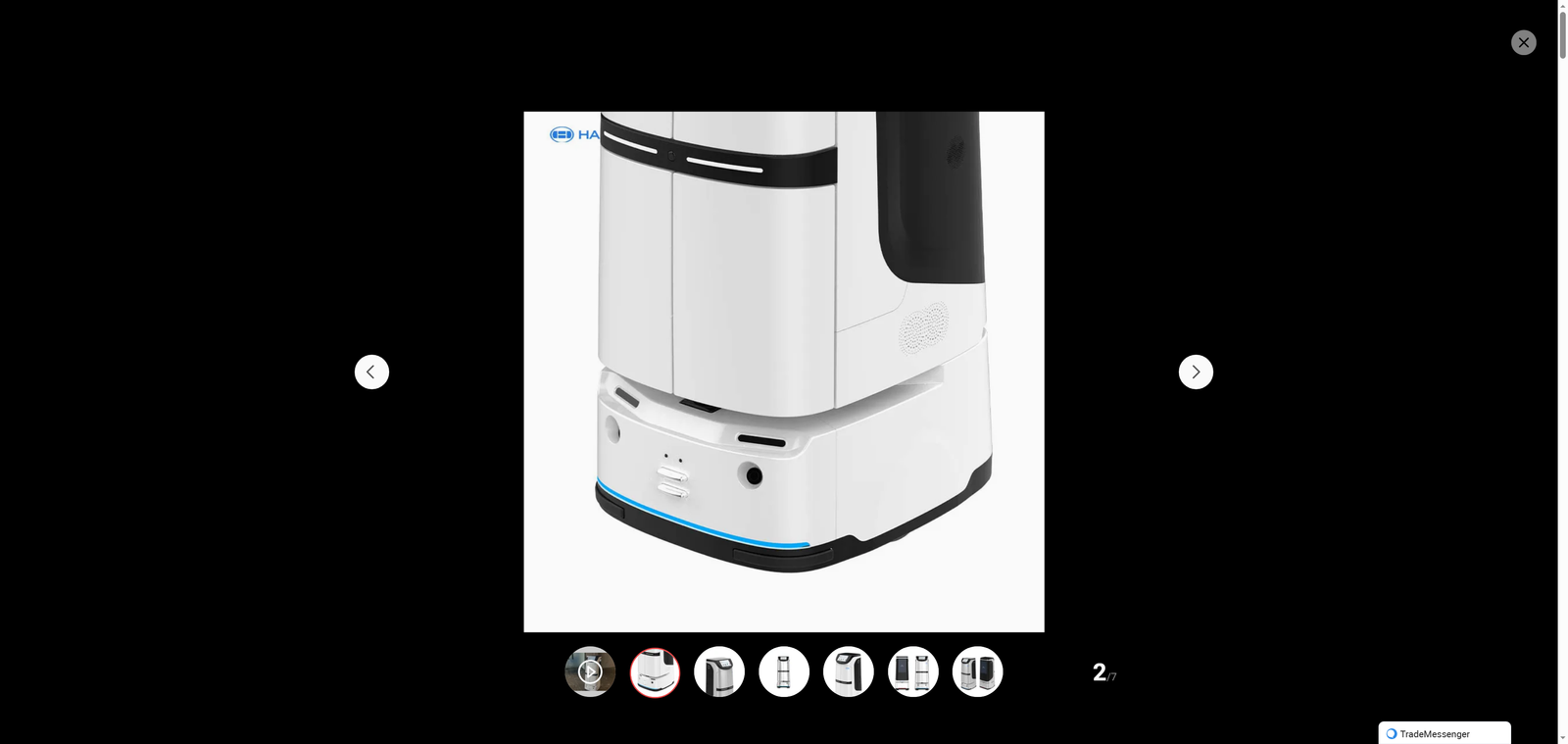
With the rapid development of digital economy and the accelerating pace of smart city construction, the demand for efficient, accurate and low-cost delivery services in commercial scenarios is growing exponentially. Among them, package logistics distribution and hotel item delivery, as two core links of commercial services, are facing the pain points of high labor costs, low distribution efficiency and difficulty in ensuring service consistency. Against this background, Commercial Use Package Logistics Distribution Hotel Item Autonomous Intelligent Delivery Robot (hereinafter referred to as "commercial autonomous delivery robot") has emerged as the times require. It integrates advanced technologies such as artificial intelligence, automatic driving and Internet of Things, and is gradually becoming a new engine to reshape the commercial delivery industry and promote the upgrading of smart services.
Commercial autonomous delivery robots are not just simple "mobile delivery boxes", but intelligent terminal equipment with independent perception, decision-making and execution capabilities. Different from traditional manual delivery, these robots can adapt to complex commercial environments, including crowded logistics warehouses, narrow hotel corridors, and busy urban streets, and complete the whole process of delivery tasks without manual intervention. In essence, they are the product of the deep integration of commercial service needs and intelligent technology, which is changing the traditional delivery mode with the advantages of "24-hour uninterrupted service, zero error rate, and low operation cost".
In the field of package logistics distribution, commercial autonomous delivery robots are becoming a key force to solve the "last kilometer" problem. In recent years, with the booming development of e-commerce, the number of express packages has increased sharply, and the pressure of terminal distribution has become increasingly prominent. Manual distribution is not only limited by factors such as working hours and physical strength, but also easy to cause package loss, delay and other problems due to human error. Commercial autonomous delivery robots can effectively make up for these shortcomings. Equipped with high-precision positioning modules, laser radar and visual sensors, they can accurately plan the optimal delivery route in real time, avoid obstacles flexibly, and realize door-to-door delivery of packages. For example, in large logistics parks, robots can complete the transfer and sorting of packages between warehouses, improving the efficiency of goods turnover; in residential areas and commercial districts, they can replace couriers to deliver packages to the door of users, reducing the labor intensity of couriers. At the same time, the robot can be connected with the logistics management system in real time, so that merchants and users can query the location and delivery progress of packages at any time, realizing the whole process visualization of logistics distribution. This not only improves the efficiency of package distribution, but also enhances the user experience, and promotes the transformation of the logistics industry from "labor-intensive" to "technology-intensive".
In the hotel industry, commercial autonomous delivery robots are injecting new vitality into the upgrading of smart services. As a window of commercial services, hotels have always taken "improving service quality and enhancing guest experience" as the core goal. However, in traditional hotel services, item delivery (such as towels, mineral water, takeout, and packages) usually relies on hotel attendants, which is not only inefficient, but also may affect the rest of guests due to untimely delivery. Commercial autonomous delivery robots can perfectly solve these problems and become the "intelligent butler" in the hotel. Guests only need to place an order through the hotel APP, WeChat mini program or room phone, and the robot can receive the order quickly, take the corresponding items from the designated location, and accurately send them to the guest's room door. During the delivery process, the robot can automatically take the elevator, swipe the card to open the door, and send a reminder to the guest through voice broadcast. After completing the delivery task, it can return to the base automatically for charging, realizing the full-process intelligent operation. In addition, the robot can also undertake the work of delivering documents and materials between hotel departments, improving the internal work efficiency of the hotel. For hotels, the application of autonomous delivery robots not only reduces the labor cost of hotel attendants, but also improves the timeliness and standardization of service, and creates a new label of "smart hotel" for the hotel, which helps to enhance the core competitiveness of the hotel.
The rapid development of commercial autonomous delivery robots is inseparable from the strong support of core technologies. In terms of perception and positioning, the combination of laser radar, visual sensor, ultrasonic sensor and GPS positioning technology enables the robot to accurately perceive the surrounding environment, identify obstacles, pedestrians and traffic signals, and ensure the safety and accuracy of movement. In terms of intelligent decision-making, relying on artificial intelligence algorithms and big data analysis, the robot can quickly plan the optimal delivery route according to the order information, environmental changes and other factors, and adjust the route in real time when facing unexpected situations. In terms of motion control, the high-precision motion control system enables the robot to move stably in complex environments, realize precise parking and goods handling. At the same time, with the continuous development of 5G technology, the robot's data transmission speed and response efficiency have been further improved, laying a solid technical foundation for the large-scale application of commercial autonomous delivery robots.
Of course, the commercial application of autonomous intelligent delivery robots still faces some challenges. On the one hand, the cost of robots is relatively high at present, which makes some small and medium-sized logistics enterprises and hotels flinch. On the other hand, there are still deficiencies in the relevant laws and regulations and industry standards of autonomous delivery robots, and there are certain disputes in terms of liability identification in the event of safety accidents. In addition, the adaptability of robots to extreme environments (such as heavy rain, heavy snow, and high temperature) still needs to be further improved. However, with the continuous progress of technology and the gradual improvement of the industrial chain, these problems will be solved one by one.
Looking to the future, commercial autonomous intelligent delivery robots will have a broader application prospect. With the continuous reduction of production costs and the continuous improvement of technical level, they will be widely used in more commercial scenarios, such as shopping malls, office buildings, hospitals and other places, to provide more diversified intelligent delivery services. At the same time, with the deep integration of technologies such as artificial intelligence, big data and Internet of Things, commercial autonomous delivery robots will become more intelligent and humanized. They can not only complete delivery tasks, but also provide information consultation, customer reception and other value-added services, becoming an important part of the smart commercial service system.
In conclusion, commercial autonomous intelligent delivery robots, as a new type of intelligent equipment integrating multiple advanced technologies, are bringing revolutionary changes to package logistics distribution and hotel item delivery. They not only solve the pain points of traditional delivery services, but also promote the upgrading and transformation of the commercial service industry. With the joint promotion of technology, market and policy, commercial autonomous delivery robots will surely become a new growth point of the digital economy, and make important contributions to building a smarter, more efficient and more convenient commercial service system.