
In the era of smart tourism and digital transformation, the hotel industry is undergoing a profound revolution driven by technological innovation. Among the various smart devices reshaping hotel operations and guest experiences, commercial unmanned food delivery robots and smart reception service robots have emerged as core pillars. These two types of robots not only optimize the efficiency of hotel services but also inject a new sense of technology and convenience into the traditional hospitality model, redefining the standards of modern hotel services.
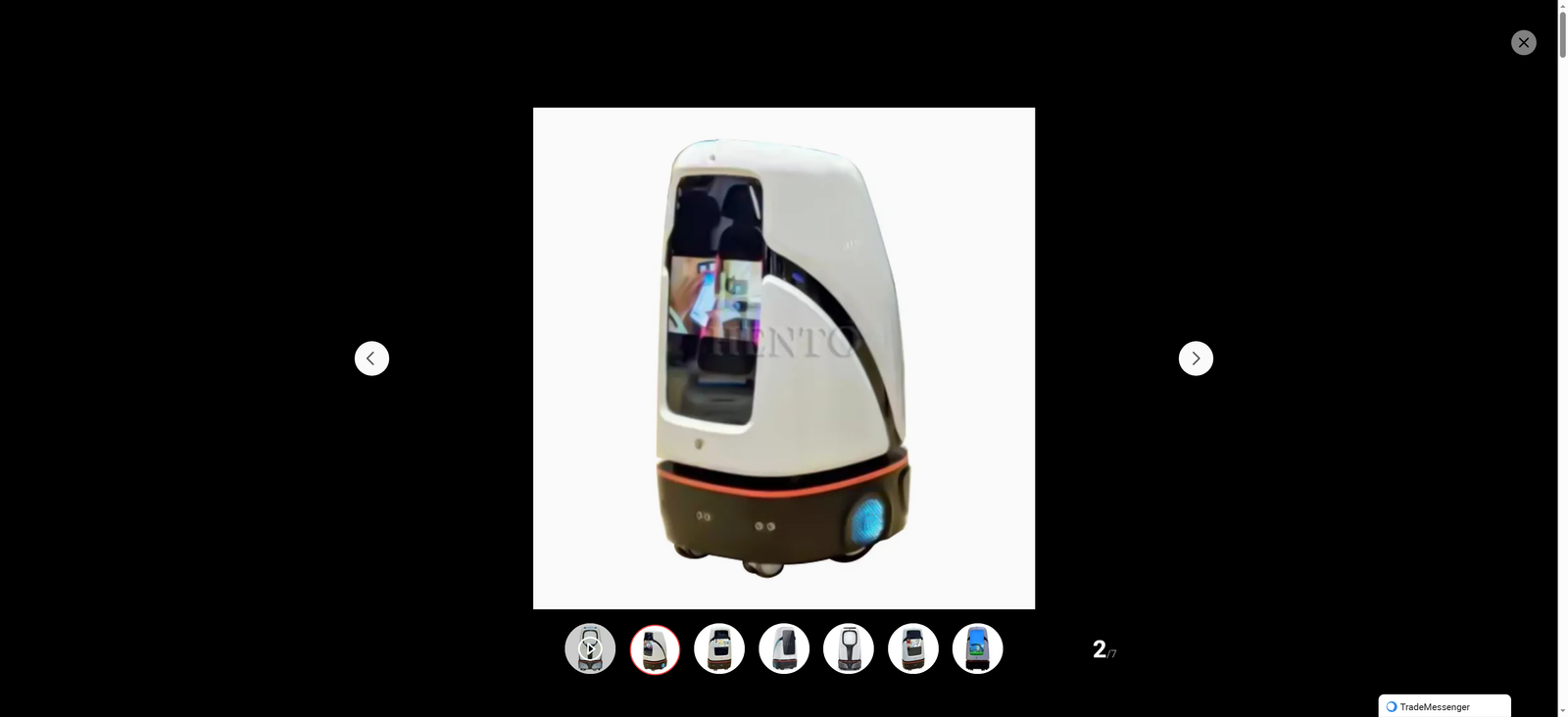
Smart reception service robots serve as the "first impression" of a smart hotel, breaking through the limitations of traditional manual reception. Unlike the traditional check-in process that often involves long queues and tedious procedures, guests can complete a series of operations such as identity verification, room reservation confirmation, key card issuance, and luggage storage through the interactive screen of the smart reception robot in just a few minutes. Equipped with advanced speech recognition and natural language processing technologies, these robots can communicate with guests in multiple languages, answering questions about hotel facilities, surrounding attractions, transportation routes, and catering services in real time. For example, when a foreign guest asks about the location of the hotel's gym or the opening hours of the breakfast buffet, the robot can quickly give accurate and friendly responses, eliminating language barriers and improving the efficiency of information transmission. In addition, smart reception robots can also record guest preferences and upload them to the hotel's customer relationship management system, laying the foundation for personalized services in subsequent stays.
Commercial unmanned food delivery robots complement the smart reception service by solving the pain points of traditional hotel food delivery services. In traditional hotels, food delivery (such as room service, afternoon tea, or takeout) relies on manual labor, which is prone to problems such as delayed delivery due to busy staff, wrong delivery of orders, and privacy concerns of guests. Unmanned food delivery robots, equipped with high-precision positioning systems and obstacle avoidance sensors, can independently plan the optimal delivery route, navigate through elevators, corridors, and other public areas of the hotel, and accurately reach the door of the guest's room. Guests only need to scan the QR code on the robot with their mobile phones to open the cargo compartment and take their items, realizing a contactless delivery process. This not only improves the efficiency and accuracy of food delivery—reducing the error rate of manual orders and shortening the delivery time—but also meets the guests' demand for privacy and health and safety, especially in the post-pandemic era where contactless services are highly valued. Moreover, unmanned food delivery robots can work 24 hours a day without rest, effectively reducing the hotel's labor costs and solving the problem of insufficient staff during peak hours such as meal times or holidays.
The combined application of commercial unmanned food delivery robots and smart reception service robots has created a closed-loop of smart services in hotels, bringing a win-win situation for both hotels and guests. For hotels, the introduction of these two types of robots optimizes the service process, reduces operational costs, and enhances the hotel's brand image of being "smart and high-end", helping to gain a competitive advantage in the fierce market competition. For guests, the whole-process smart service from check-in to in-room dining not only saves time and energy but also experiences the fun and convenience brought by technology, improving the overall satisfaction of the stay. For instance, a business traveler can complete check-in through the smart reception robot as soon as they arrive at the hotel, then order a meal through the hotel's mobile app, and receive the food delivered by the unmanned robot in the room in a short time, allowing them to focus more on their work without being distracted by tedious service procedures.
Looking to the future, with the continuous advancement of technologies such as artificial intelligence, Internet of Things, and big data, commercial unmanned food delivery robots and smart reception service robots in hotels will have more room for development. They will become more intelligent and humanized—for example, smart reception robots may be able to recognize guests' emotions through facial expressions and provide more personalized greeting services, while unmanned food delivery robots may be equipped with temperature control compartments to meet the storage needs of different types of food. At the same time, the application scenarios of these robots will be further expanded, covering more aspects of hotel services such as laundry delivery, item delivery, and floor patrol. It is foreseeable that smart robots will become an indispensable part of the hotel industry, promoting the continuous upgrading of hotel services towards a more efficient, convenient, and personalized direction.
In conclusion, commercial unmanned food delivery robots and smart reception service robots are not just a technological showcase in the hotel industry, but a practical driver of service transformation. They integrate technology into every link of hotel services, bringing a new model of smart hospitality. As the demand for high-quality and smart services continues to grow, hotels that actively embrace these technological innovations will be better able to meet the changing needs of guests and achieve sustainable development in the digital age.