
The New Era of Intelligent Service: Commercial Delivery Robots Reshape the Landscape of Catering and Hotel Industries
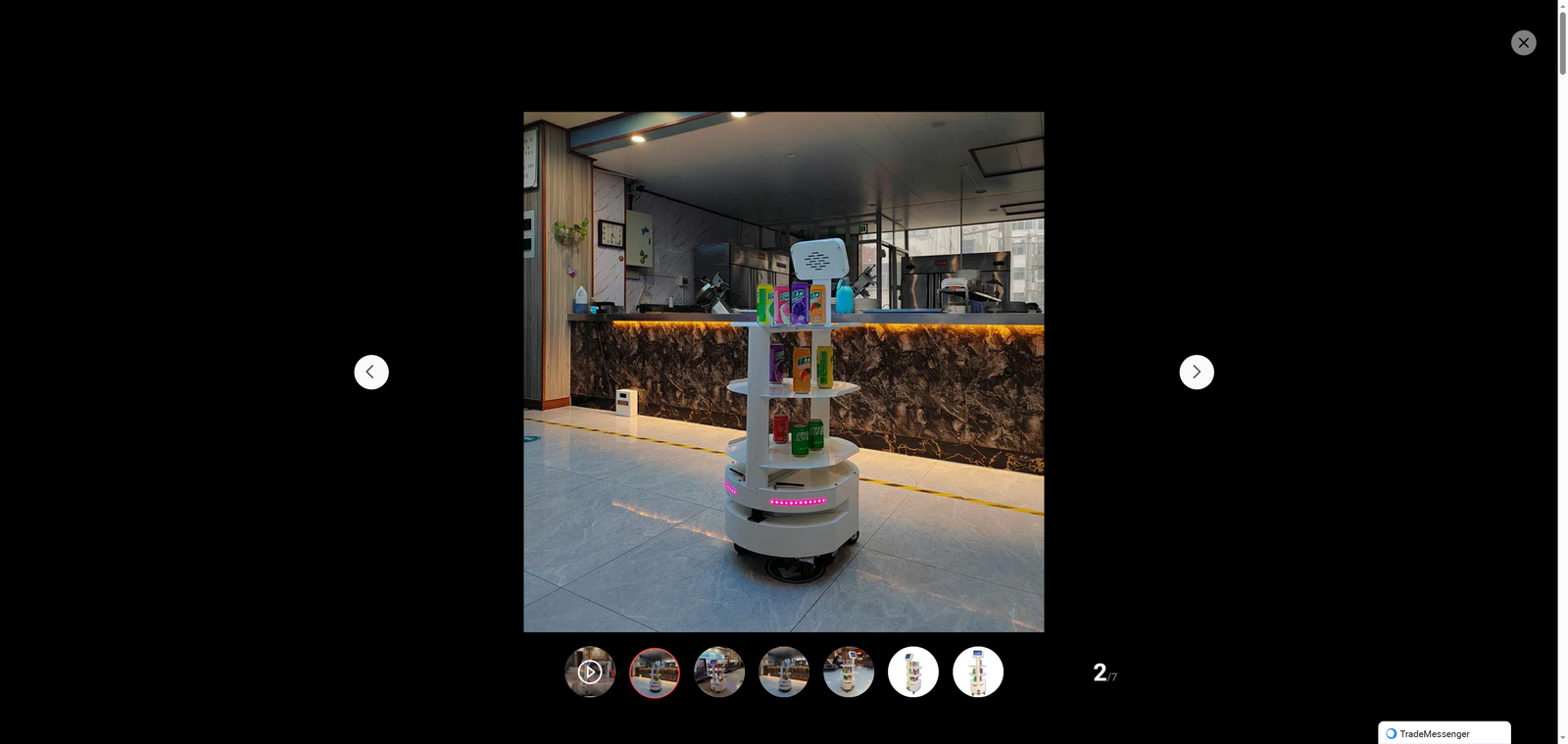
With the rapid advancement of artificial intelligence and intelligent manufacturing, commercial delivery robots have gradually stepped out of the laboratory and into daily life, becoming a new force in reshaping the service industry. Among them, intelligent food delivery robots (also known as delivery waiters) have become the "new employees" in restaurants and hotels, breaking the traditional service model with their efficient, stable and intelligent characteristics, and injecting a strong impetus into the digital transformation of the catering and hotel industries.
Commercial delivery robots, as the name suggests, are intelligent equipment designed for commercial scenarios to complete delivery tasks independently. Different from ordinary industrial robots, they are more focused on human-computer interaction, environmental adaptation and service intimacy, especially in restaurants and hotels where people flow is large, scenes are complex and service demands are diverse. These robots have shown unique advantages that are difficult to replace by human labor.
In the catering industry, the emergence of intelligent food delivery robots has effectively solved the pain points of traditional restaurants such as labor shortage, high labor costs and uneven service quality. In the peak dining period, when waiters are busy running between the front desk and the dining tables, the food delivery robot can accurately receive the order information from the kitchen, take the dishes stably, and navigate to the designated table through the built-in high-precision positioning system, avoiding obstacles flexibly along the way. It does not need to rest, does not make mistakes due to fatigue, and can maintain a stable delivery efficiency for a long time. For example, in some large chain restaurants, a single food delivery robot can replace the work of 2-3 waiters, greatly reducing the labor cost of the restaurant. At the same time, the robot is equipped with a friendly voice interaction module, which can take the initiative to greet customers, remind them to take meals, and even answer simple questions about the dishes, bringing a new and interesting dining experience to customers. This kind of "intelligent humanized" service model not only improves the operational efficiency of the restaurant, but also enhances the brand image and customer satisfaction.
In the hotel industry, commercial delivery robots also play an increasingly important role, becoming a symbol of high-end and intelligent hotel services. From delivering daily necessities such as mineral water and towels to guests' rooms, to sending documents and packages, the delivery robot can complete the whole process independently with just a simple operation by the front desk staff or guests through the mobile app. Compared with hotel attendants, the robot can provide 24-hour uninterrupted service, breaking the time limit of traditional service. At the same time, it can accurately reach the designated floor and room through the elevator linkage system and indoor navigation, ensuring the privacy and safety of guests' information and items. For high-end hotels, the introduction of intelligent delivery robots not only improves the service efficiency and reduces the labor burden, but also adds a sense of technology and fashion to the hotel, meeting the growing demand for intelligent experience of modern consumers. Many guests even take the initiative to take photos with the robots and share them on social media, which has become a new "net red check-in point" for hotels.
The rapid popularization of commercial delivery robots is not only due to the mature application of core technologies such as artificial intelligence, big data and automatic navigation, but also due to the strong demand for digital transformation in the catering and hotel industries. In the context of the post-epidemic era, people pay more attention to contactless service, and delivery robots just meet this demand. They can reduce direct contact between people, reduce the risk of cross-infection, and provide a safer service environment for customers and employees. In addition, with the continuous upgrading of robot technology, the functions of commercial delivery robots are becoming more and more abundant. Some high-end models can not only complete delivery tasks, but also realize functions such as table cleaning, order taking and customer guidance, becoming a multi-functional intelligent service terminal.
Of course, the development of commercial delivery robots is still facing some challenges. For example, in some old restaurants and hotels with narrow spaces and complex layouts, the navigation accuracy of robots needs to be further improved; the cost of high-end delivery robots is relatively high, which makes some small and medium-sized businesses flinch; in addition, the acceptance of intelligent robots by individual elderly customers also needs to be enhanced. However, with the continuous progress of technology and the expansion of market scale, these problems will be gradually solved. It is foreseeable that the cost of commercial delivery robots will continue to decrease, and their adaptability to scenes will become stronger and stronger, and they will be more widely used in more commercial scenarios.
The arrival of the era of intelligent service is an inevitable trend of social development, and commercial delivery robots, as an important carrier of intelligent service, are quietly changing the way people live and consume. In restaurants and hotels, these intelligent "delivery waiters" are no longer cold machines, but have become an important part of the service team, with efficiency and temperature coexisting. In the future, with the deep integration of artificial intelligence and the service industry, commercial delivery robots will show more powerful functions and value, leading the catering and hotel industries to enter a more intelligent, efficient and high-quality new development stage. We have reason to believe that intelligent delivery robots will become a common sight in people's daily life, bringing more convenience and surprises to our life.