
Lidar Navigation-Powered Automatic Food Tray Delivery System: Redefining Smart Buffet Services
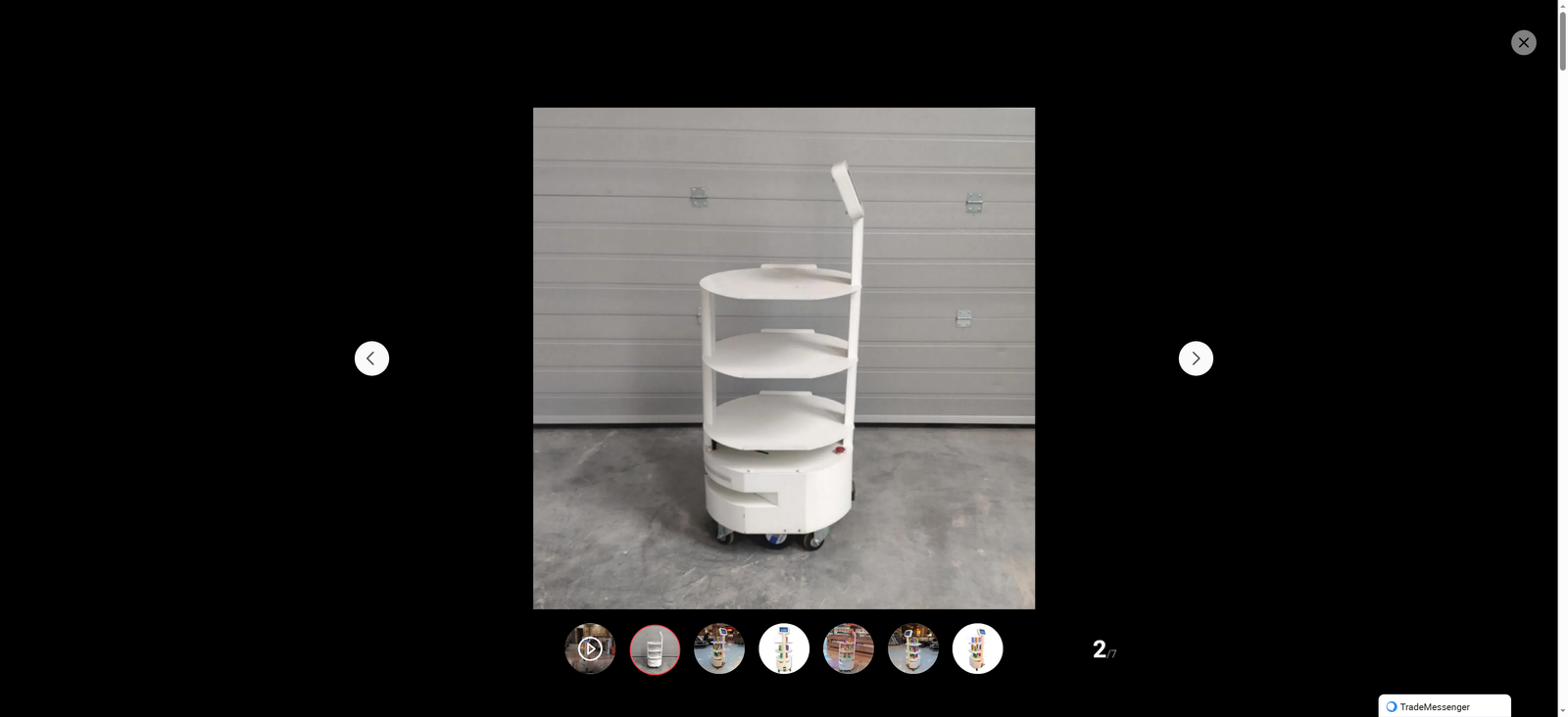
In the era of intelligent catering transformation, buffet restaurants are facing unprecedented opportunities and challenges. With the rising labor costs, increasing consumer demand for service efficiency and food safety, and the pursuit of innovative dining experiences, traditional manual service models are gradually showing limitations. Against this backdrop, the Buffet Serving Robot with Lidar Navigation Automatic Food Tray Delivery System has emerged as a core solution, integrating cutting-edge technologies to reshape the operational logic and customer experience of smart buffets.
The Core Driving Force: Lidar Navigation Technology
As the "eyes" of buffet serving robots, lidar navigation technology is the key to realizing autonomous and efficient food delivery. Unlike traditional navigation methods such as QR code positioning or visual navigation, lidar navigation relies on 2D or 3D laser sensors to emit laser beams, collect real-time environmental information, and generate high-precision point cloud data with accurate angle and distance parameters <superscript:5. By comparing and matching point cloud data at different moments, the robot can accurately calculate its own position and attitude changes, completing autonomous positioning, map construction, and path planning without manual intervention.
This technology boasts remarkable advantages in complex buffet environments. It is not affected by changes in light intensity or ground texture, ensuring stable operation even in crowded dining areas, around food stations, or near moving customers <superscript:6. Equipped with multi-sensor fusion algorithms (combining lidar with infrared and ultrasonic sensors), the robot can detect dynamic obstacles in real time—whether it is a child running past, a waiter pushing a cart, or a misplaced chair—and quickly respond by stopping, detouring, or issuing voice alerts. This not only guarantees the safety of food trays during delivery but also avoids collisions that may affect the dining experience.
System Composition and Operational Advantages of Automatic Food Tray Delivery
The automatic food tray delivery system, integrated with lidar navigation, forms a closed-loop service chain covering food distribution, tray recycling, and intelligent scheduling, tailored to the characteristics of buffet operations.
In terms of food delivery, the system is equipped with large-capacity, detachable food trays. Taking the DINERBOT T9 robot as an example, it can carry a load of up to 40 kg, easily transporting multiple trays of hot dishes, cold dishes, or desserts during peak hours <superscript:7. The shock absorption design of the tray ensures stable movement, preventing food spillage even on slightly uneven floors. After the kitchen prepares the dishes, the system receives order information through IoT connection, and the robot automatically plans the optimal route to deliver the food to designated dining areas or customer tables, reducing customer waiting time and improving the timeliness of food supply.
In tray recycling, the robot can automatically identify used plates and tableware, collect them efficiently, and return to the recycling area autonomously. This not only reduces the workload of staff who previously spent a lot of time on repetitive recycling tasks but also improves the hygiene of the dining environment by minimizing the accumulation of used tableware <superscript:6. The detachable tray design facilitates quick cleaning and disinfection, complying with strict food safety standards in catering operations.
In intelligent scheduling, the system supports multi-robot collaboration through a built-in scheduling platform. During peak dining hours, multiple serving robots can coordinate their routes to avoid congestion, optimize task allocation, and maximize delivery efficiency <superscript:4. When the battery level is low, the robot will automatically return to the charging dock for recharging, with a single charge supporting 8-15 hours of continuous operation—fully meeting the daily service needs of buffet restaurants <superscript:4superscript:6.
Practical Application and Industry Transformation Value
The application of this smart system has been verified in global buffet brands, bringing tangible economic and operational benefits. For instance, Keenon Robotics introduced the DINERBOT T9 to South Korea's leading sushi buffet franchise QooQoo, where the robot optimized plate retrieval and food delivery tasks, allowing staff to focus on providing high-quality personalized services such as dish introduction and customer consultation <superscript:7. In domestic markets, self-service restaurants equipped with similar systems have reported a 50% reduction in labor costs related to food delivery and tray recycling, while customer satisfaction has increased significantly due to improved service efficiency and novel interaction experiences <superscript:2.
Beyond cost reduction and efficiency improvement, the system also enhances the brand image of buffet restaurants. The sleek and intelligent robot appearance, combined with the interesting trackless delivery process, creates a unique technological atmosphere that attracts young consumers and becomes a marketing highlight <superscript:2. Additionally, the system collects operational data in real time—such as the frequency of food delivery, popular dishes, and peak dining periods—providing data support for buffet operators to optimize menus, adjust food supply, and improve overall operational efficiency <superscript:3.
Future Trends and Development Prospects
With the continuous advancement of artificial intelligence, IoT, and sensor technologies, the buffet serving robot lidar navigation system is moving towards more intelligent and integrated development. Future iterations may integrate AI voice interaction, allowing robots to introduce dishes, recommend specials, or respond to customer inquiries while delivering food <superscript:6. The combination of big data analytics will enable predictive scheduling—anticipating peak periods and adjusting robot deployment in advance to further optimize service efficiency.
Moreover, the standardization and popularization of lidar navigation technology will reduce the cost of smart equipment, making it accessible to more small and medium-sized buffet restaurants. As policy support for intelligent catering intensifies and consumer acceptance of smart services grows, this system will become a standard configuration in the buffet industry, driving the entire catering sector towards a more efficient, hygienic, and innovative future <superscript:1superscript:3.
In conclusion, the buffet serving robot lidar navigation automatic food tray delivery system is not just a technological upgrade but a profound transformation of the buffet service model. By integrating precision navigation, automatic delivery, and intelligent management, it addresses the core pain points of the buffet industry, balances operational efficiency and customer experience, and paves the way for the era of fully smart buffets.