
The New Era of Intelligent Services: Humanoid Robots Shine in Banks, Hotels and Malls
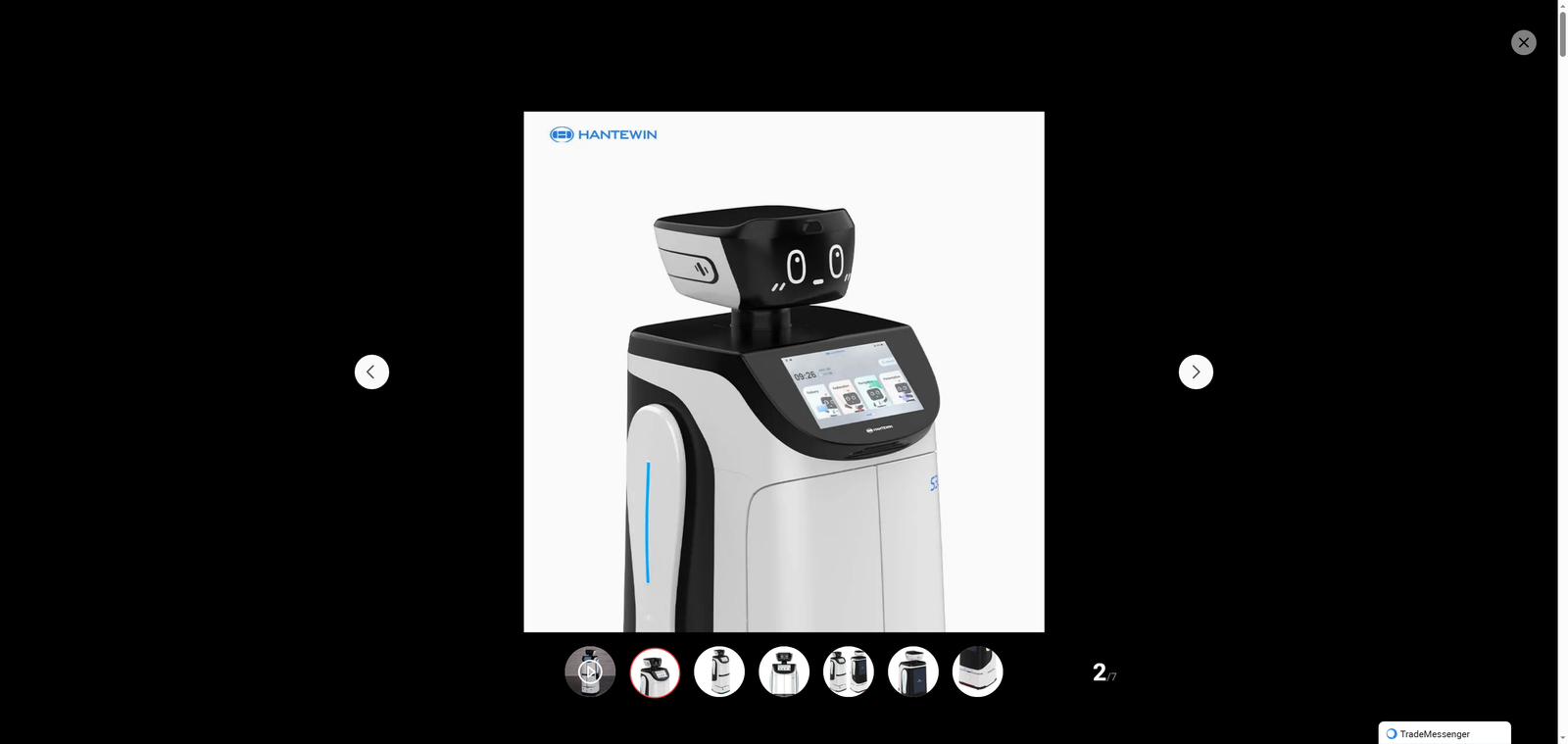
With the rapid development of artificial intelligence, big data and robotics technology, intelligent humanoid service robots have gradually stepped out of the laboratory and into various public service scenarios. Among them, bank greeting reception robots and humanoid service robots tailored for hotels and shopping malls have become a new symbol of intelligent services, reshaping the service model, improving service efficiency and enhancing user experience with their professional, efficient and humanized characteristics. They are no longer cold machines, but become important members of the service team, injecting new vitality into the development of the service industry.
Banks, as important financial service windows, have always pursued efficient, standardized and intimate service quality. The introduction of greeting reception robots has solved many pain points in traditional bank services. In the lobby of the bank, the humanoid robot with a friendly appearance and standardized etiquette can take the initiative to greet customers when they enter the door, and use clear and gentle language to ask about their needs, such as account opening, deposit and withdrawal, loan consultation, financial product understanding and other businesses. For common business processes, the robot can quickly provide detailed explanations, guide customers to the corresponding service windows or self-service terminals, and avoid customers wandering around in the lobby due to unclear processes, which greatly saves customers' time.
In addition, bank greeting reception robots also have the function of intelligent consultation. They store a large amount of financial knowledge, business regulations and product information, and can answer customers' questions accurately and in a timely manner. For example, when customers ask about the interest rate of time deposits, the threshold of credit loans, the risk level of financial products, etc., the robot can give professional answers based on the preset database, and even push relevant product information to customers according to their needs, providing preliminary service support for customers' financial decisions. At the same time, the robot can also collect customer feedback in real time, record the common problems and needs of customers, and provide valuable data references for banks to optimize service processes and adjust product strategies.
For hotels, which take "humanized service" as the core competitiveness, intelligent humanoid service robots have become a new bright spot to enhance the hotel's grade and service level. From the moment customers walk into the hotel lobby, the humanoid service robot can complete a series of services such as greeting, check-in guidance and luggage delivery. When customers arrive at the front desk, the robot can assist the front desk staff to verify customer information, print check-in forms, and even guide customers to their rooms independently, introducing the hotel's facilities and services along the way, such as restaurant locations, fitness centers, laundry services, etc., making customers feel the warmth and care of the hotel at the first time.
In the process of customers staying in the hotel, the humanoid robot can also provide 24-hour on-demand services. Customers only need to make a request through the room phone or the hotel APP, and the robot can quickly deliver items such as mineral water, towels and snacks to the room, avoiding the trouble of customers waiting for the service staff to come to the door. In addition, the robot can also provide services such as tourist guidance and surrounding catering recommendations for customers, helping customers better understand the local customs and customs, and improving the overall stay experience. For hotels, the application of humanoid robots not only reduces the workload of service staff, saves labor costs, but also improves the efficiency and standardization of services, and establishes a more intelligent and fashionable brand image for the hotel.
Shopping malls, as a comprehensive consumption scene integrating shopping, catering, entertainment and leisure, have the characteristics of large passenger flow, diverse customer needs and complex service scenarios. Intelligent humanoid service robots play an important role in optimizing the shopping experience and improving the operation efficiency of shopping malls. In the shopping mall, the robot can act as a "intelligent guide", according to the customer's shopping needs, accurately guide the customer to the location of the target store, and introduce the promotion activities, brand characteristics and product information of the store in detail. For example, when a customer wants to buy a piece of clothing, the robot can not only guide them to the clothing area, but also recommend popular styles and preferential activities of relevant brands according to the customer's preferences, helping customers make shopping decisions quickly.
At the same time, shopping mall humanoid robots also have the functions of intelligent navigation, lost and found, and emergency help. If customers get lost in the large shopping mall, the robot can quickly plan the best route according to the customer's destination and guide them to leave; if customers lose their items, the robot can record the relevant information of the lost items and notify the shopping mall's service center, helping customers find their items as soon as possible; in case of emergency, customers can seek help from the robot, and the robot can quickly connect to the shopping mall's security center and medical service point, ensuring the personal and property safety of customers. In addition, the robot can also collect customer consumption habits and shopping preferences through interaction with customers, and provide data support for shopping malls to adjust store layout, introduce brand merchants and formulate promotion strategies, helping shopping malls achieve more precise operation and management.
It is worth noting that the application of intelligent humanoid service robots in banks, hotels and shopping malls is not to replace human services, but to complement and enhance human services. Robots are responsible for repetitive, tedious and standardized service work, freeing up human resources to focus on more professional, complex and humanized service links, such as providing personalized financial planning for customers, solving special needs of hotel guests, and handling complex after-sales problems in shopping malls. The combination of human-machine collaboration not only improves service efficiency, but also ensures the temperature of services, realizing a win-win situation of service quality and operation efficiency.
With the continuous progress of technology, intelligent humanoid service robots will be more intelligent and humanized in the future. They will have more accurate speech recognition, more flexible action control and more in-depth emotional interaction capabilities, and can better understand and meet the individual needs of customers. In banks, they may become professional financial consultants to provide one-on-one financial services for customers; in hotels, they may become intimate butlers to provide customized services for guests; in shopping malls, they may become personalized shopping partners to create exclusive shopping experiences for customers.
In short, bank greeting reception robots and intelligent humanoid service robots for hotels and shopping malls are important representatives of the intelligent transformation of the service industry. They are changing the service mode and consumption experience with their unique advantages, and promoting the service industry to move towards a more efficient, intelligent and high-quality development direction. In the new era of intelligence, these humanoid robots will continue to play an important role, writing a new chapter for the development of the service industry.