
Autonomous Food Delivery Robot with Obstacle Avoidance - Perfect for Hotels
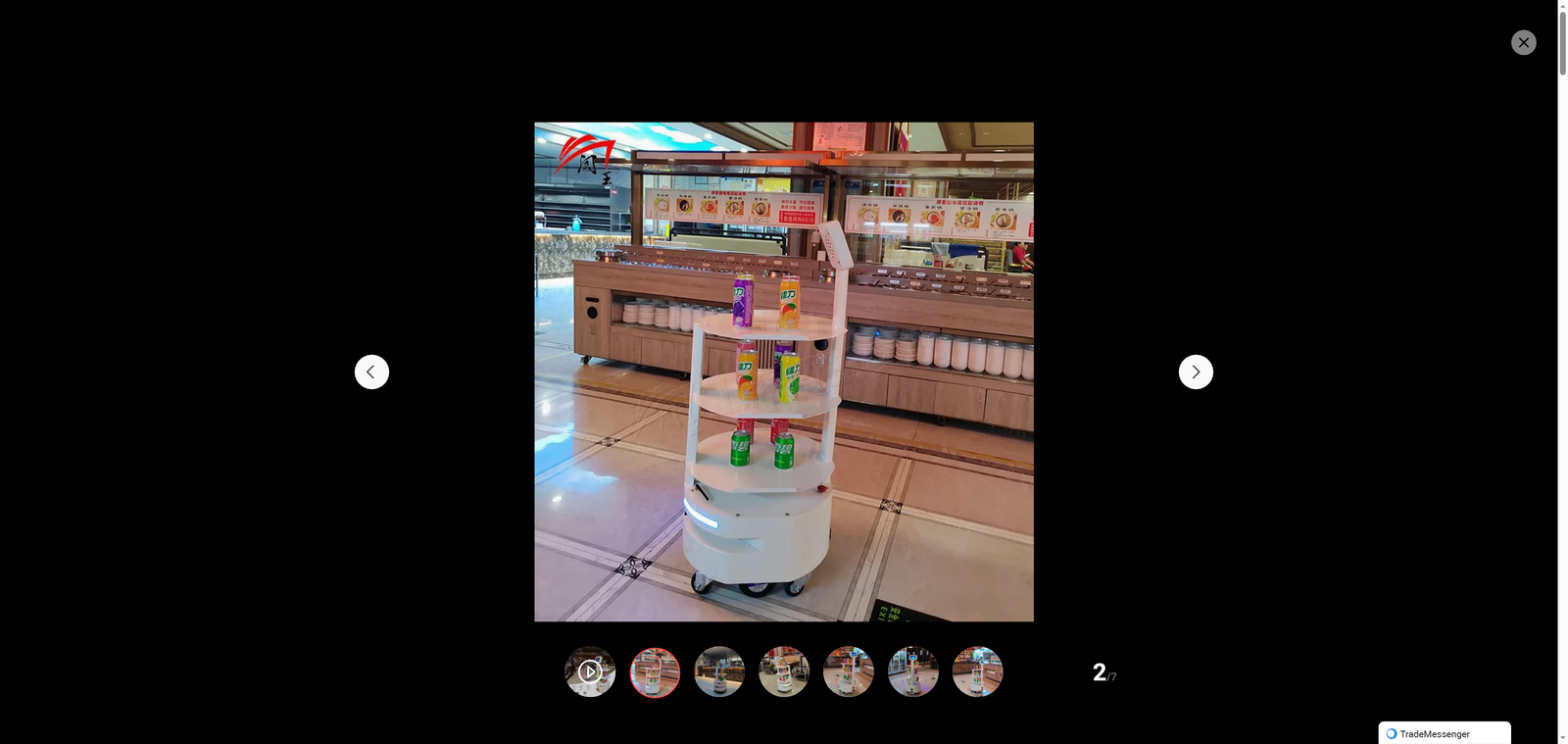
In the era of intelligent hospitality, hotels are constantly seeking innovative solutions to enhance service efficiency, improve guest experience, and reduce operational costs. Among the emerging smart devices, the autonomous food delivery robot with obstacle avoidance function has emerged as a game-changer, perfectly matching the diverse needs of hotel operations and becoming an indispensable new "employee" in modern hotels. This article will explore how this intelligent robot reshapes the service ecology of hotels and why it is the ideal choice for the hospitality industry.
Hotels, as spaces with dense human flow, complex paths, and high service timeliness requirements, have long faced challenges in food delivery services. Traditional manual delivery often encounters problems such as delayed delivery due to busy staff, wrong orders caused by human error, and difficulty in meeting the 24-hour service needs of guests. Moreover, in large-scale hotels with multiple floors, long corridors, and frequent pedestrian movement, manual delivery not only consumes a lot of labor costs but also has potential safety hazards such as collisions in crowded areas. The autonomous food delivery robot with obstacle avoidance function is precisely designed to solve these pain points, bringing a new model of efficient, safe, and intelligent service to hotels.
The core advantage of this robot lies in its advanced obstacle avoidance system, which is the key to its smooth operation in complex hotel environments. Equipped with multiple high-precision sensors, including laser radar, ultrasonic sensors, and visual cameras, the robot can comprehensively perceive the surrounding environment in real-time. It can accurately identify various obstacles such as pedestrians, luggage carts, cleaning tools, and elevator doors, and quickly calculate the optimal avoidance path in milliseconds. Whether it is a crowded lobby during peak hours, a narrow corridor with temporary obstacles, or an elevator with frequent entry and exit of guests, the robot can flexibly respond, avoid collisions, and ensure the safe delivery of food. Unlike traditional robots that can only move along fixed routes, this obstacle avoidance robot has strong adaptability and can adjust its path according to the real-time environment, greatly improving the stability and reliability of delivery services.
In addition to excellent obstacle avoidance performance, the autonomous food delivery robot also has a series of functional designs tailored for hotel scenarios, further enhancing its practical value. First of all, it realizes full-process autonomous operation, from receiving orders from the restaurant, picking up food, taking the elevator independently, to arriving at the guest room door and reminding guests to pick up meals. The whole process does not require manual intervention, which greatly reduces the workload of hotel service staff. Staff can be transferred to more high-value services such as guest reception and experience consultation, improving the overall service quality of the hotel. Secondly, the robot is equipped with a smart order management system, which can seamlessly connect with the hotel's PMS system and restaurant order system. It can automatically sort orders, optimize delivery routes, and avoid repeated trips, improving delivery efficiency. For guests, they only need to place an order through the room phone, WeChat mini-program, or in-room intelligent terminal, and they can receive the food delivered by the robot in a short time, enjoying a fast and convenient service experience.
The application of autonomous food delivery robots also brings significant economic benefits and brand value to hotels. In terms of cost control, although the initial investment in robots is required, in the long run, it can effectively reduce labor costs, reduce the loss caused by manual errors, and save operating costs for hotels. Especially for large hotels, resort hotels, or hotels with 24-hour catering services, the robot can work continuously without rest, fatigue, or mistakes, achieving higher cost performance than manual delivery. In terms of brand building, introducing intelligent robots can show the hotel's pursuit of technological innovation and humanized service, enhance the hotel's intelligent image, and become a unique selling point to attract young guests and business guests. Many guests are willing to share their experience of interacting with robots on social media, which brings spontaneous publicity to the hotel and improves brand influence.
Practical cases have proved the remarkable effect of autonomous food delivery robots in hotel applications. A five-star resort hotel in a coastal city introduced 10 autonomous food delivery robots with obstacle avoidance function last year. After half a year of operation, the hotel's food delivery efficiency has increased by 40%, the labor cost of the catering department has decreased by 25%, and the guest satisfaction score for food delivery services has risen from 8.2 to 9.5. Guests highly praise the robot's fast delivery speed, safe operation, and interesting interaction experience. Some business guests said that the intelligent delivery service makes their stay more convenient and efficient, while family guests with children are attracted by the cute appearance and intelligent interaction of the robot, adding more fun to their trip. In addition, during the peak tourist season, when the hotel staff is in short supply, the robots can still maintain stable service quality, effectively solving the problem of insufficient human resources.
With the continuous progress of artificial intelligence and sensor technology, the autonomous food delivery robot with obstacle avoidance function will be more intelligent and humanized in the future. It may realize more accurate path planning, more natural human-computer interaction, and even connect with other intelligent devices in the hotel to form a complete intelligent service chain. For example, the robot can automatically adjust the temperature of the food storage compartment according to the type of food, ensure the taste of the food; it can also recognize the guest's identity through face recognition and provide personalized service recommendations. These upgrades will further expand the application scenarios of robots in hotels and bring more surprises to guests.
In conclusion, the autonomous food delivery robot with obstacle avoidance function is perfectly suitable for hotel scenarios with its advanced obstacle avoidance technology, efficient autonomous operation, and humanized functional design. It not only solves the pain points of traditional hotel food delivery services but also brings significant economic benefits and brand value to hotels, helping the hospitality industry move towards a more intelligent and high-quality development direction. For hotels that want to enhance their core competitiveness and improve guest experience, introducing autonomous food delivery robots is undoubtedly a wise choice.