
The Rise of AI Mobile Intelligent Delivery Robots: Transforming Service Scenarios with Automatic Obstacle Avoidance
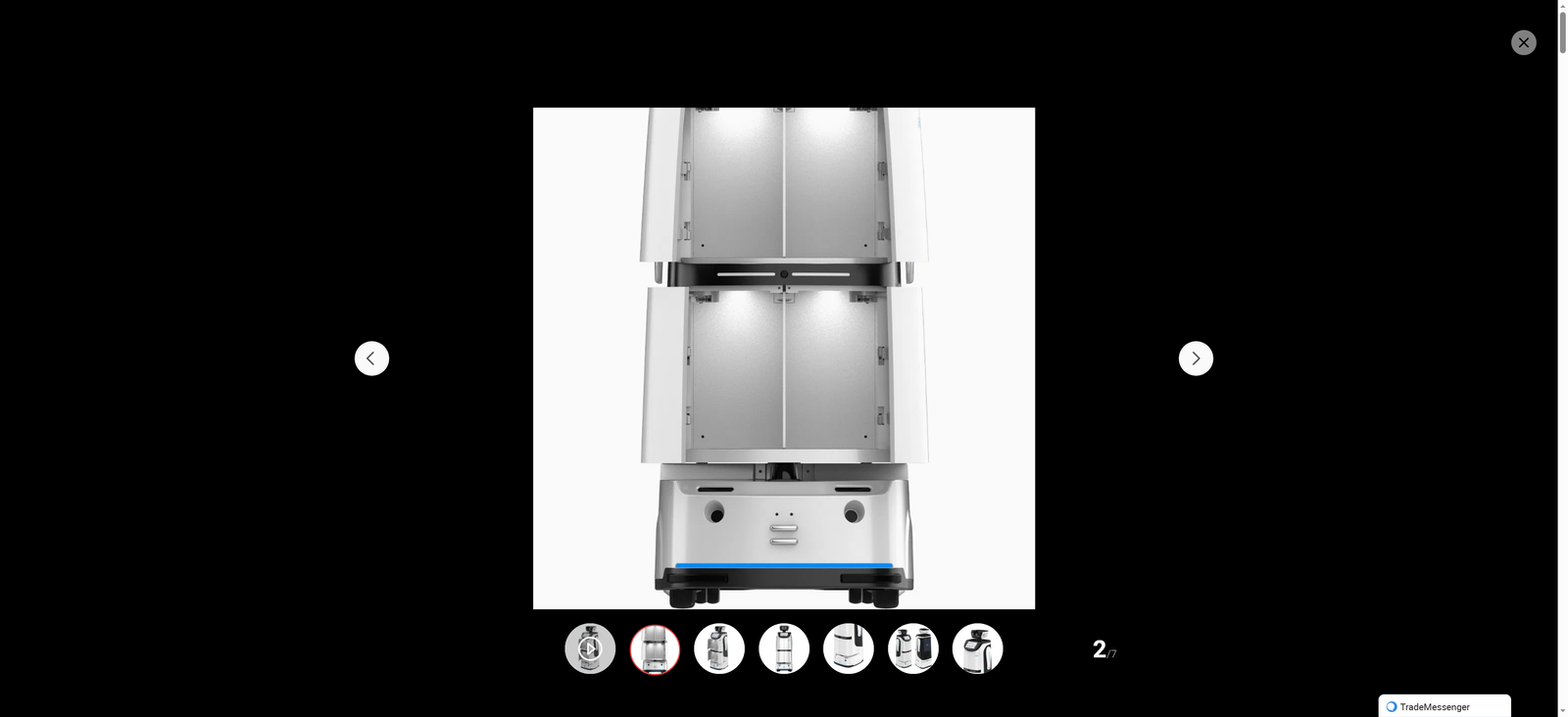
In the wave of intelligent transformation, AI mobile delivery robots equipped with automatic obstacle avoidance technology have emerged as a disruptive force, reshaping service models in medical institutions, restaurants, hotels, and offices. These intelligent devices integrate advanced artificial intelligence algorithms, precision sensing systems, and flexible mobility capabilities, breaking through the limitations of traditional manual delivery and injecting new vitality into various industries.
Core Technology: Automatic Obstacle Avoidance as the Cornerstone of Stable Operation
The automatic obstacle avoidance function is the core competitiveness of AI mobile intelligent delivery robots, ensuring their safe and efficient movement in complex environments. Unlike traditional robots with simple path planning, modern delivery robots adopt a multi-sensor fusion scheme, combining lidar, visual cameras, ultrasonic sensors, and infrared detectors to achieve 360-degree full-range environmental perception. Lidar provides high-precision distance measurement and spatial mapping, enabling the robot to identify obstacles with a range of several meters and construct real-time environmental models; visual cameras simulate human vision to recognize specific objects such as pedestrians, furniture, and glass walls, improving the accuracy of obstacle classification; ultrasonic sensors and infrared detectors make up for the blind spots of lidar and cameras, especially in narrow spaces or low-light environments, ensuring no missed detection of small obstacles.
Supported by AI algorithms, the robot can quickly analyze environmental data, predict the movement trajectory of dynamic obstacles (such as walking pedestrians and moving carts), and adjust its own path in real time. Whether it is a sudden pedestrian in a crowded restaurant, a medical cart moving in a hospital corridor, or office supplies scattered on the floor, the robot can flexibly detour, decelerate, or stop, avoiding collisions while maintaining the stability of the delivered items. This level of intelligent obstacle avoidance not only reduces the risk of equipment damage and item loss but also eliminates potential safety hazards in public spaces.
Scenario Application: Empowering Multiple Industries with Tailored Solutions
Medical Institutions: Safe and Efficient Logistics Support
In hospitals, where time is life and hygiene is critical, AI mobile delivery robots have become reliable assistants. They are widely used in delivering drugs, medical supplies, test samples, and meals to wards, operating rooms, and inspection departments. The automatic obstacle avoidance function ensures that the robots can smoothly navigate through busy corridors, avoid collisions with medical staff and patients, and deliver urgent medical supplies to the target location in the shortest time. Moreover, the robots can be equipped with sterile cabins to maintain the cleanliness of drugs and samples, reducing the risk of cross-infection caused by manual delivery. Some advanced medical delivery robots also integrate with the hospital's information system, enabling automatic order receiving, path optimization, and delivery confirmation, greatly improving the efficiency of hospital logistics management.
Restaurants: Optimizing Dining Experience and Reducing Labor Costs
Restaurants, especially large catering chains and food courts, often face problems such as heavy delivery tasks, high labor intensity, and unstable service quality during peak hours. AI mobile delivery robots effectively solve these pain points. They can automatically receive orders from the front desk or kitchen, carry meals accurately to the designated table, and return to the kitchen automatically after delivery. The automatic obstacle avoidance technology allows the robots to move freely among dining tables, avoid collisions with diners and waiters, and even adjust their speed according to the flow of people. For consumers, the arrival of delivery robots adds a sense of novelty to the dining experience; for restaurant operators, the robots replace manual delivery work, reduce labor costs, and improve the efficiency and stability of meal delivery, ensuring that diners can get their meals in a timely manner even during peak hours.
Hotels: Elevating Service Quality with Intelligent Butler Services
Hotels are pursuing personalized and efficient services to enhance customer satisfaction, and AI mobile delivery robots have become a new highlight of hotel services. They can provide 24-hour delivery services, such as sending toiletries, drinks, and laundry to guest rooms. Guests only need to place an order through the room service system, and the robot will automatically navigate to the corresponding floor and room, notify the guest by voice, and complete the delivery. The automatic obstacle avoidance function ensures that the robot can safely pass through hotel lobbies, elevators, and corridors, avoiding collisions with guests and hotel staff. In addition, some high-end hotels equip the robots with voice interaction functions, allowing guests to inquire about hotel services, weather, and other information through the robot, realizing the integration of delivery and consulting services, and greatly improving the intelligence level of hotel services.
Offices: Streamlining Internal Logistics and Improving Work Efficiency
In modern office buildings, the delivery of documents, express packages, office supplies, and meals has become a daily routine, which consumes a lot of employees' time and energy. AI mobile delivery robots can take over these tedious tasks, realizing automatic delivery between different departments and floors. The robots can connect with the office's internal management system, accurately identify the delivery target, and complete the delivery through elevators and corridors with the help of automatic obstacle avoidance technology. For example, employees can send important documents to colleagues in other departments through the robot without leaving their seats; the administrative department can use the robot to distribute office supplies to each department, improving the efficiency of internal logistics. This not only saves employees' time, allowing them to focus on more important work but also reduces the error rate of manual delivery, ensuring the safety and timeliness of document and item delivery.
Future Trends: Continuous Innovation to Expand Application Boundaries
With the continuous advancement of AI technology, sensor technology, and battery technology, AI mobile intelligent delivery robots with automatic obstacle avoidance functions will usher in broader development space. In terms of performance, the obstacle avoidance accuracy and response speed of robots will be further improved, enabling them to adapt to more complex and dynamic environments, such as crowded shopping malls and busy airports. In terms of function integration, robots will combine more advanced technologies such as voice recognition, face recognition, and autonomous charging, realizing more intelligent and humanized services. For example, robots can recognize the faces of regular customers and provide personalized delivery services; they can automatically return to the charging station for charging when the power is low, ensuring 24-hour continuous operation.
In addition, the application scenarios of delivery robots will continue to expand, covering more fields such as logistics and distribution, retail, and elderly care. In the logistics industry, robots can be used for last-mile delivery in communities, solving the problem of difficult and inefficient terminal delivery; in the retail industry, robots can provide in-store guidance and product delivery services, enhancing the shopping experience of consumers; in the elderly care industry, robots can deliver meals, drugs, and daily necessities to the elderly, providing convenient services for the elderly living alone.
Conclusion
AI mobile intelligent delivery robots, with automatic obstacle avoidance technology as the core, are profoundly changing the service models of medical, catering, hotel, office and other industries. They not only improve service efficiency, reduce labor costs, but also bring a more intelligent and convenient experience to people's work and life. As technology continues to innovate and mature, these intelligent robots will become an indispensable part of the intelligent society, creating greater value for various industries and promoting the continuous development of social productivity.