
5G-Enabled & Cloud-Based Smart Delivery Robots: Reshaping the Future of Logistics
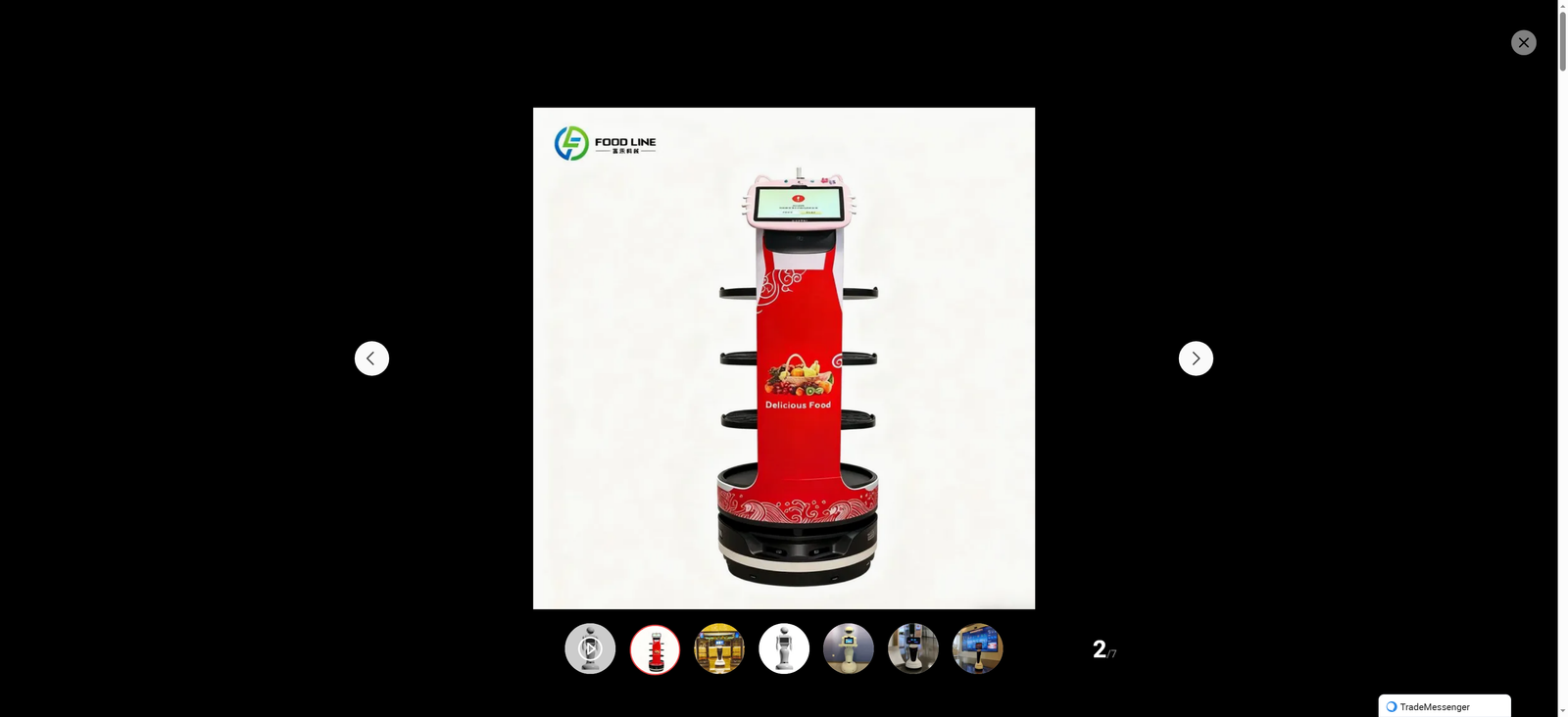
In the era of digital transformation, the integration of 5G technology and cloud computing has become a core driving force for innovation in the logistics industry. Among the emerging intelligent solutions, 5G-enabled and cloud-based smart delivery robots stand out as a disruptive force, breaking through the limitations of traditional manual delivery with their high efficiency, stability, and intelligence. From hotels and industrial parks to campuses and medical institutions, these robots are quietly reshaping the operational logic of end-to-end delivery services.
5G: The Core Engine Empowering Real-Time Intelligent Operations
The unique advantages of 5G technology—high speed, low latency, and massive connectivity—have solved the key pain points that once restricted the development of delivery robots. Unlike the lag and instability of 4G networks, 5G enables smart delivery robots to achieve millisecond-level data transmission, ensuring real-time communication between the robot and the control center. This low-latency performance is crucial for complex scenarios such as peak-hour transportation and dynamic obstacle avoidance.
Take the application in hotels as an example. Suzhou Gusu Moxy Hotel, a brand targeting Gen Z travelers, has introduced 5G smart robots developed by China Telecom's Tianyi IoT. Supported by 5GWiFi dual-transmission and selection technology, these robots maintain stable operation in complex environments such as lobbies, elevators, and corridors, with redundant links enhancing data transmission efficiency. As a result, the hotel's guest request response time has been reduced by approximately 30%, and peak delivery efficiency has increased by 120%, realizing 24/7 uninterrupted service coverage <superscript>1. In outdoor scenarios such as industrial parks and urban roads, 5G's high mobility support allows robots to adapt to real-time changes in traffic flow and road conditions, with remote control response delays reduced to less than 10 milliseconds, achieving fully unmanned operation even in rush hours and harsh weather <superscript>3.
Cloud-Based Architecture: Building a Collaborative Brain for Global Scheduling
Cloud computing serves as the "brain" of smart delivery robots, enabling centralized management, intelligent scheduling, and scalable expansion of the entire delivery system. Through cloud platforms, operators can realize remote monitoring, task assignment, and data analysis of multiple robots, breaking the information silos of single-machine operation and building a collaborative delivery network.
The cloud-based smart scheduling system demonstrates remarkable advantages in multi-scenario applications. In smart parks, the cloud brain collects data from hundreds of dimensional features in real time, realizing intelligent order dispatching and path planning for multiple robots, and completing tens of thousands of delivery tasks with zero manual intervention <superscript>3. For enterprises, the cloud platform supports fast access to multi-vendor and multi-type robot terminals through self-developed IoT modules, providing flexible service models such as replenishment, return, and replacement. This light-asset and light-operation model helps businesses reduce deployment costs while improving operational efficiency, making intelligent transformation accessible to more small and medium-sized enterprises <superscript>1.
In addition, cloud computing empowers robots with continuous iterative capabilities. By uploading operational data to the cloud, AI algorithms can be continuously optimized through big data analysis, improving the robots' navigation accuracy, obstacle avoidance capabilities, and scenario adaptation. For instance, the navigation accuracy of smart delivery robots has been upgraded from 95% to 98% through cloud-based algorithm iteration, and their obstacle avoidance performance has been enhanced by 30%, significantly reducing delivery failure rates <superscript>2.
Multi-Scenario Empowerment: Unleashing the Commercial Value of Intelligent Delivery
With the dual empowerment of 5G and cloud computing, smart delivery robots are no longer limited to simple goods transportation but have evolved into multi-functional service terminals, penetrating into various industries and creating huge commercial value.
In the hotel and catering industry, robots not only undertake room delivery tasks but also serve as intelligent butlers, providing services such as check-in guidance and security patrols. Equipped with cloud-edge collaborative image recognition algorithms, they can identify corridor debris, smoke, and fire hazards in real time and push alerts to the front desk, realizing the integration of delivery and safety management <superscript>1. In industrial parks and campuses, robots efficiently complete the delivery of documents, meals, and materials, reducing labor costs by 30% for operators while improving delivery timeliness and accuracy <superscript>2. In medical institutions, contactless delivery of drugs and samples minimizes cross-infection risks, which has become an important part of smart hospital construction after the pandemic.
Future Outlook: Towards a More Intelligent and Integrated Logistics Ecosystem
The global market for smart delivery robots is growing at an alarming rate. It is expected that the global market size of smart park robot delivery will reach 6.5 billion US dollars in 2025, with a year-on-year growth rate of 30% <superscript>2. As 5G infrastructure continues to improve and cloud computing technology becomes more mature, smart delivery robots will achieve deeper integration with technologies such as AI, IoT, and autonomous driving.
In the future, these robots will have stronger full-scenario adaptability, supporting seamless operation between indoor and outdoor environments, and even realizing interconnection with urban public transportation systems. The cloud platform will further evolve into an open ecosystem, integrating upstream and downstream resources in the logistics industry to provide one-stop intelligent delivery solutions. For businesses, embracing 5G-enabled and cloud-based smart delivery robots is not only a way to reduce costs and increase efficiency but also a strategic layout to gain a competitive edge in the digital age.
From hotel corridors to industrial parks, from campus roads to hospital wards, 5G-enabled and cloud-based smart delivery robots are quietly changing the way we live and work. With continuous technological innovation, they will undoubtedly become a key pillar of the future intelligent logistics ecosystem, driving the industry towards a more efficient, intelligent, and sustainable future.