
3-Layer Tray Automated Food Delivery Robot: The Intelligent AGV/AMR Reshaping Service Efficiency
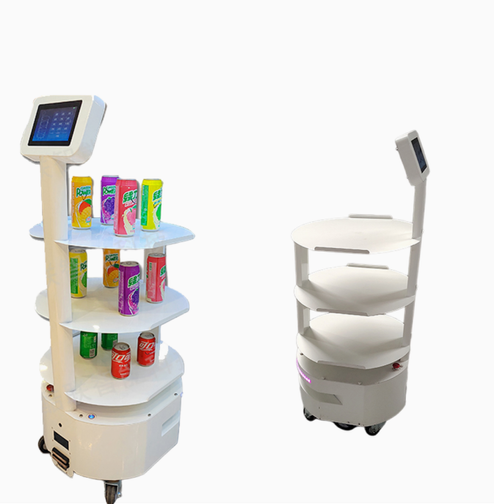
In the wave of intelligent transformation sweeping the food service and hospitality industries, automated food delivery robots integrated with AGV/AMR technologies have emerged as a game-changer. Among these innovations, the automated food delivery robot equipped with a 3-layer tray and intelligent voice prompt function stands out, seamlessly combining load capacity, autonomous navigation, and human-computer interaction. It not only addresses the pain points of labor shortages and inefficient delivery but also injects a new dimension of intelligence into scenarios such as restaurants, hotels, and canteens.
To understand the core value of this robot, it is essential to clarify the technological distinction between AGV and AMR—two foundational technologies driving its operation. Automated Guided Vehicles (AGVs) rely on predefined paths such as magnetic strips or embedded wires for navigation, excelling in stable, repetitive tasks in structured environments. Autonomous Mobile Robots (AMRs), by contrast, leverage advanced sensors, lidar, and AI algorithms to perceive their surroundings, build maps in real-time, and dynamically adjust routes to avoid obstacles without relying on fixed infrastructure . The latest generation of food delivery robots integrates the stability of AGV and the flexibility of AMR, enabling them to adapt to dynamic environments like crowded restaurants while maintaining delivery accuracy.
The 3-layer tray design is a pivotal functional upgrade that elevates the robot’s practicality. Unlike single-layer or double-layer counterparts, the 3-layer structure optimizes vertical space utilization without compromising operational flexibility. Crafted from high-hardness sheet metal or corrosion-resistant composite materials, each tray can bear a load of 15-20 kg, with a total capacity of up to 45 kg, easily accommodating multiple dishes, beverages, and tableware . The adjustable spacing between layers allows customization for different item sizes—from tall drink cups to large dinner plates—making it suitable for diverse catering scenarios, including hot pot restaurants, buffets, and high-end dining establishments. This design significantly reduces the number of delivery trips, boosting efficiency by 30%-50% during peak hours compared to manual service.
Intelligent voice prompt technology further enhances the robot’s user-friendliness and service experience. As a core human-computer interaction module, it replaces cumbersome manual reminders with clear, timely audio cues. When arriving at the target table, the robot automatically broadcasts messages such as “Hello, your food is here. Please take it carefully” to notify diners, eliminating the need for staff to accompany deliveries . For multi-table delivery tasks, it can synchronize voice prompts with indicator lights to distinguish orders for different tables, minimizing confusion. Additionally, the voice system supports basic interactive commands, allowing staff to dispatch tasks or adjust routes through voice control, streamlining operational coordination.
Behind the seamless operation of these robots lies a sophisticated technical ecosystem. The perception layer integrates lidar (with a detection range of up to 25 meters), 3D cameras, and ultrasonic sensors to achieve 360° environmental awareness, enabling precise avoidance of dynamic obstacles such as walking diners or moving chairs . The decision-making layer adopts SLAM (Simultaneous Localization and Mapping) algorithms to build high-precision indoor maps during initial deployment, supporting centimeter-level positioning and optimal path planning . In multi-robot scenarios, a central dispatching system coordinates tasks to prevent congestion, realizing efficient multi-point delivery. The robots also feature autonomous charging capabilities—when battery levels drop below a threshold, they automatically return to charging piles without human intervention, ensuring 24-hour continuous operation .
The market penetration of these robots is fueled by compelling industry drivers. Labor shortages and rising wages in the hospitality sector have pushed businesses to seek cost-effective alternatives; automated delivery robots reduce labor costs by 20%-40% annually while maintaining consistent service quality . Post-pandemic hygiene demands have also accelerated adoption, as contactless delivery minimizes human interaction and reduces the risk of cross-contamination . Major catering brands such as Haidilao and Xibei have already deployed such robots, witnessing improvements in both operational efficiency and customer satisfaction . Beyond restaurants, they are increasingly used in hotels for room service, hospitals for meal delivery to wards, and office buildings for cafeteria services, demonstrating strong scenario adaptability.
Looking ahead, the evolution of 3-layer tray automated food delivery robots will be driven by technological innovation and market demand. Integration with 5G and edge computing will enhance real-time data transmission and navigation responsiveness, while the combination of large language models and embodied intelligence will enable more complex voice interactions—such as understanding commands like “Deliver this soup to the guest by the window” . The market size of restaurant delivery robots is projected to grow at a CAGR of 23.84% from 2024 to 2032, reaching USD 95.0 billion by 2032, a trend that underscores the immense potential of these intelligent devices .
In conclusion, the automated food delivery robot with 3-layer tray and intelligent voice prompt—powered by AGV/AMR technologies—is more than a mere delivery tool. It represents a fusion of space optimization, autonomous navigation, and human-centric design, redefining operational efficiency in the food service industry. As technology matures and costs decline, these robots will become indispensable components of smart catering ecosystems, bridging the gap between automation and personalized service, and paving the way for a more efficient, hygienic, and intelligent future of service.