
Full-Intelligent Communication and Distribution Service Robots: Empowering Multiple Scenarios with Technology
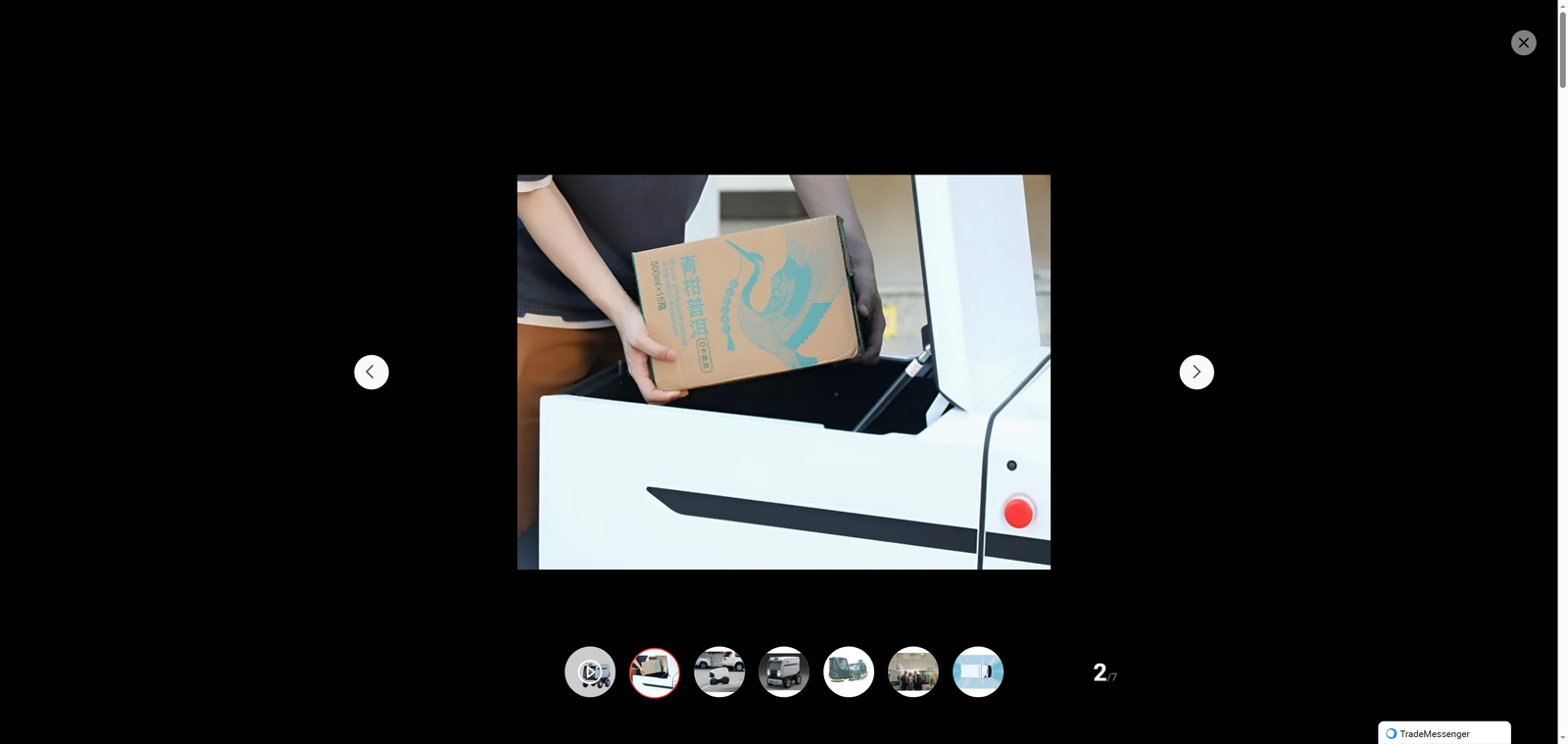
With the rapid advancement of artificial intelligence, Internet of Things and intelligent control technologies, service robots have gradually stepped out of the laboratory and integrated into every corner of social life. Among them, the full-intelligent communication and distribution service robot, with its dual advantages of efficient distribution and intelligent interaction, has become a "technological assistant" that cannot be ignored in airports, hotels, homes, supermarkets, universities and other scenarios. It is not only changing the way of service supply, but also redefining the new ecology of intelligent life and work.
The airport, as a window of urban transportation and a hub of personnel flow, has always faced the challenges of heavy service tasks, high work intensity and diverse passenger needs. The full-intelligent communication and distribution service robot has become a powerful supplement to airport services. Equipped with high-precision positioning navigation, voice recognition and multi-modal communication modules, the robot can accurately identify passenger needs through voice interaction—whether it is inquiring about flight information, guiding the way to boarding gates, luggage storage areas or restrooms, or distributing drinking water, masks, boarding passes and other materials, it can complete the tasks efficiently. Compared with manual services, robots can work 24 hours a day without fatigue, greatly reducing the work pressure of airport staff, while providing passengers with real-time, accurate and personalized services, improving the overall travel experience of passengers and enhancing the service image of the airport.
In the hotel industry, where "personalized service" and "efficient service" are the core competitiveness, full-intelligent communication and distribution service robots are reshaping the service process. From the moment guests check in, the robot can greet them proactively through voice, guide them to the room, and introduce hotel facilities and service items. During the stay, guests only need to issue voice commands through the hotel APP or the intercom device in the room, and the robot can quickly deliver mineral water, snacks, towels, laundry and other items to the room door. It also has the function of intelligent communication—guests can consult about surrounding catering, scenic spots, transportation and other information, and the robot can give detailed answers based on the built-in database. The application of robots not only reduces the labor cost of hotels, avoids the delay and error caused by manual distribution, but also brings a novel and intelligent living experience to guests, helping hotels gain more competitive advantages in the fierce market competition.
Entering the home scene, full-intelligent communication and distribution service robots have become a new type of "family member" that connects family life and improves the quality of life. For families with the elderly, children or disabled people, the robot can play an important role in daily care and material distribution—sending medicine on time, delivering meals to the room, taking water, distributing daily necessities, etc., reducing the burden of family care. At the same time, the robot has a full-intelligent communication function, which can chat with family members, tell stories to children, play music for the elderly, and even connect with smart home devices. Through voice commands, it can control the switch of lights, air conditioners, curtains and other devices, realizing the intelligent linkage of home life. In addition, the robot can also monitor the home environment in real time, send reminders when abnormal situations occur, and bring a sense of security to the family. It is no longer just a distribution tool, but a comprehensive intelligent assistant that integrates care, companionship and security.
The supermarket, as a place where people purchase daily necessities, has the characteristics of large passenger flow, many kinds of goods and heavy distribution tasks. The full-intelligent communication and distribution service robot has brought new changes to the operation mode of supermarkets. In the shopping process, customers can consult the robot about the location of goods, product introduction, preferential information and other content through voice interaction. The robot can guide customers to the corresponding shelf accurately, saving customers' shopping time. For large supermarkets or hypermarkets, the robot can also undertake the tasks of goods replenishment, inventory checking and commodity distribution in the store—automatically transport goods from the warehouse to the shelf area, count the inventory of goods in real time, and send the data to the background management system, helping supermarket staff improve work efficiency and reduce the error rate of manual inventory. In addition, the robot can also distribute promotional leaflets, guide customers to check out and other services, creating a more convenient and efficient shopping environment for customers and improving the operational efficiency of supermarkets.
The university campus, as a gathering place of knowledge and talents, has a diverse service demand covering teaching, life and management. The full-intelligent communication and distribution service robot has become an important part of the intelligent campus construction. In terms of teaching services, the robot can distribute teaching materials, test papers, experimental equipment and other items to classrooms, offices and laboratories, reducing the workload of teachers and logistics staff. In terms of student life, the robot can deliver express packages, takeout, daily necessities to dormitories, and provide students with voice consultation services—such as inquiring about campus activities, course arrangements, library borrowing information, etc. On the campus road, the robot can also act as a guide, leading visitors to visit the campus and introducing the school's history, culture and teaching facilities. Moreover, the robot can also cooperate with the campus security system to carry out patrol work, monitor the campus environment and ensure campus safety. The application of robots not only enriches the service forms of the campus, but also creates a good intelligent atmosphere for teachers and students, promoting the construction of a modern and intelligent campus.
From airports to universities, from hotels to homes, full-intelligent communication and distribution service robots are gradually penetrating into all aspects of social life, with their unique advantages of intelligence, efficiency, 24-hour service and zero error, solving the pain points of service in various scenarios and bringing great convenience to people's life, work and study. Behind this, it is the joint support of multiple technologies such as artificial intelligence, voice recognition, positioning navigation and Internet of Things. With the continuous progress of technology, the functions of full-intelligent communication and distribution service robots will be more perfect—their communication ability will be closer to human beings, their distribution efficiency will be further improved, and they will be able to adapt to more complex scenarios.
In the future, full-intelligent communication and distribution service robots will no longer be simple service tools, but will become an important part of the intelligent society, connecting people, things and services, and building a more efficient, convenient and warm intelligent life system. They will continue to empower various industries, promote the transformation and upgrading of the service industry, and write a new chapter of technological change for social development.