
AI-Powered Smart Delivery Robots: Reshaping the Future of Restaurant Services
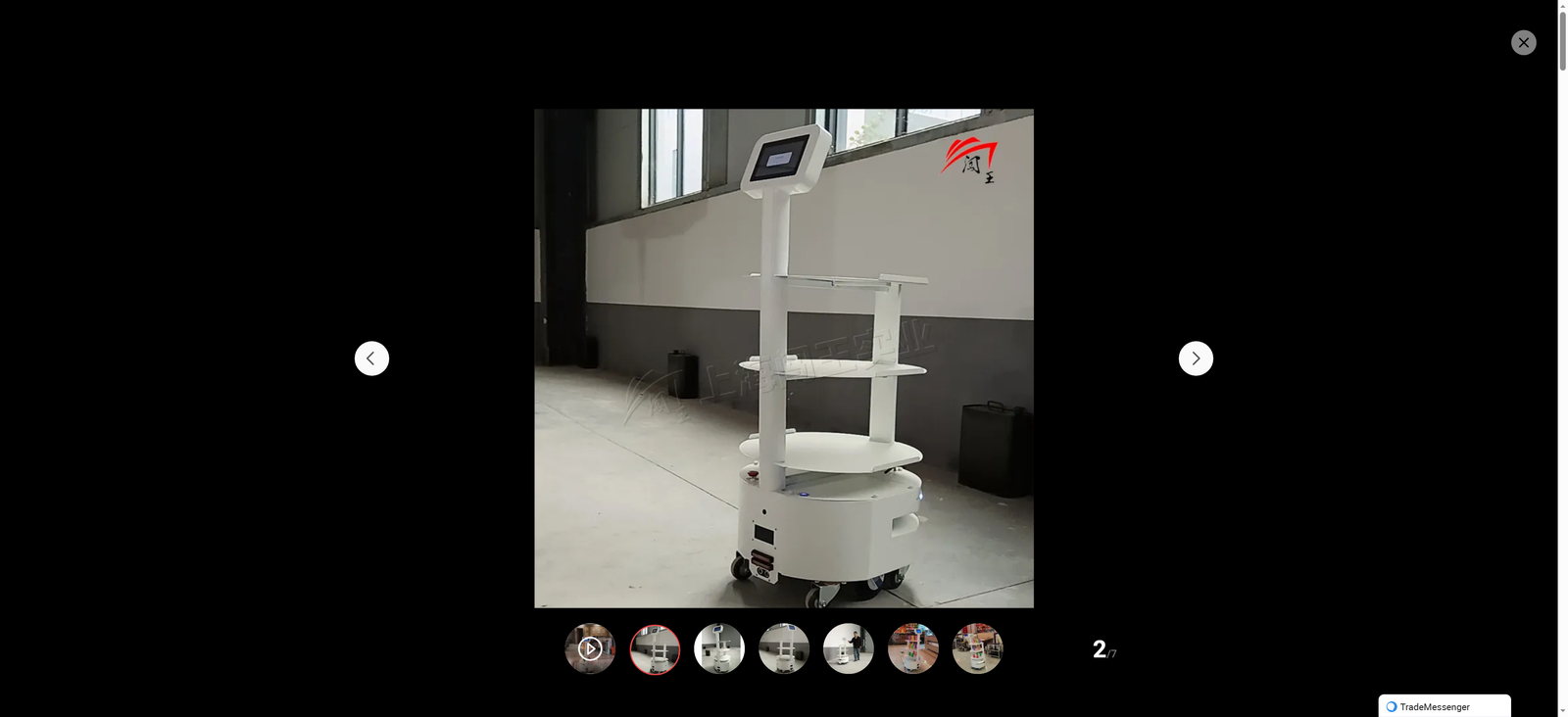
In the era of digital transformation, the catering industry is undergoing a profound revolution driven by artificial intelligence and robotics. AI professional supply smart delivery robots, especially restaurant-specific food delivery robots, have evolved from novel gadgets to indispensable operational backbones. These intelligent machines integrate cutting-edge technologies to solve long-standing pain points in the industry, redefining service efficiency, safety, and customer experience.
At the core of smart delivery robots lies a sophisticated technological ecosystem that enables autonomous and reliable operation. Advanced SLAM (Simultaneous Localization and Mapping) technology, fused with multi-sensor integration, forms the "eyes and brain" of these robots. By combining laser radar, depth cameras, inertial measurement units (IMU), and odometers, they achieve centimeter-level positioning accuracy even in complex restaurant environments with glass partitions, crowded aisles, or reflective floors . This allows them to navigate seamlessly between the kitchen and dining tables, avoiding obstacles proactively through predictive algorithms that anticipate pedestrian movements and adjust paths 0.5 seconds in advance, eliminating the risk of collisions and congestion . Complementing this navigation system is the auto-charging function—when battery levels drop below 10%, robots autonomously locate and move to the nearest charging station, ensuring 7x24-hour uninterrupted service without manual intervention .
For restaurants grappling with the "three highs and one low" dilemma—high rent, high labor costs, high ingredient costs, and low profit margins—smart delivery robots have emerged as a game-changing solution . Traditional manual delivery can only handle around 200 orders per day per staff member, while mature robotic models can double or triple that capacity to 400-600 orders . Beyond boosting efficiency, these robots significantly reduce labor expenses by taking over repetitive, labor-intensive tasks such as food delivery, plate recycling, and even basic customer greeting . For instance, the PuduBot 2, a best-selling commercial service robot, supports multiple modes including delivery, recycling, and cruise, adapting to diverse restaurant needs with its low-center-of-gravity chassis and shock-absorbing suspension system that prevents soup spills during transport . Large chain brands like Haidilao have already adopted such robots on a large scale, leveraging their stability and durability to streamline operations .
The value of AI-powered delivery robots extends far beyond operational efficiency, enriching the customer experience with intelligent interactions. Modern robots integrated with large language models (LLMs) can engage in natural multi-round conversations, answering customer queries about dishes, ingredients, and promotions . Some models, like Orion Star's Zhaocai Leopard series, use self-developed large models to generate personalized marketing scripts based on customer characteristics, transforming from "delivery tools" into "marketing assistants" . Emotional interaction features further enhance customer engagement—Pudu Robotics' BellaBot, with its cat-like bionic design and expressive feedback, has become a hit among family and young customers, driving social media sharing and brand exposure . In post-pandemic times, these robots also address health concerns by enabling contactless delivery, reducing cross-infection risks in both restaurants and hospitals .
The global market for autonomous food delivery robots is witnessing explosive growth, reflecting the widespread recognition of their value. Valued at USD 3.2 billion in 2023, the market is projected to soar to USD 24.4 billion by 2033 with a compound annual growth rate (CAGR) of 22.7% . The Asia-Pacific region is expected to lead this growth, fueled by rapid adoption in China and India's booming catering markets . Technological advancements continue to expand the robots' application boundaries—from indoor restaurant delivery to cross-floor service in hotels and even outdoor last-mile delivery . Integration with IoT systems, elevator control technology, and third-party platforms further enhances their scalability, enabling seamless connection with existing restaurant management systems .
As AI technology matures and robot costs decline, smart delivery robots are no longer a luxury for large enterprises but a accessible upgrade for small and medium-sized restaurants. They represent more than just a technological innovation; they symbolize the catering industry's shift toward digitization, intelligence, and sustainability. By taking over repetitive tasks, they free up human staff to focus on high-value services such as personalized customer care and culinary innovation. In the near future, with the integration of more advanced AI, computer vision, and fleet scheduling systems, these robots will become even more intelligent, adaptive, and integrated into the fabric of daily restaurant operations.
In conclusion, AI professional supply smart delivery robots are transforming the restaurant industry from the ground up. Combining efficiency, safety, and intelligence, they address core operational challenges while creating new value for both businesses and customers. As the market continues to grow and technology evolves, these robots will undoubtedly become the new standard in the catering industry, paving the way for a more efficient, intelligent, and customer-centric dining ecosystem.