
Advanced UV-C Disinfection Robot: Autonomous Sanitization for Modern Spaces
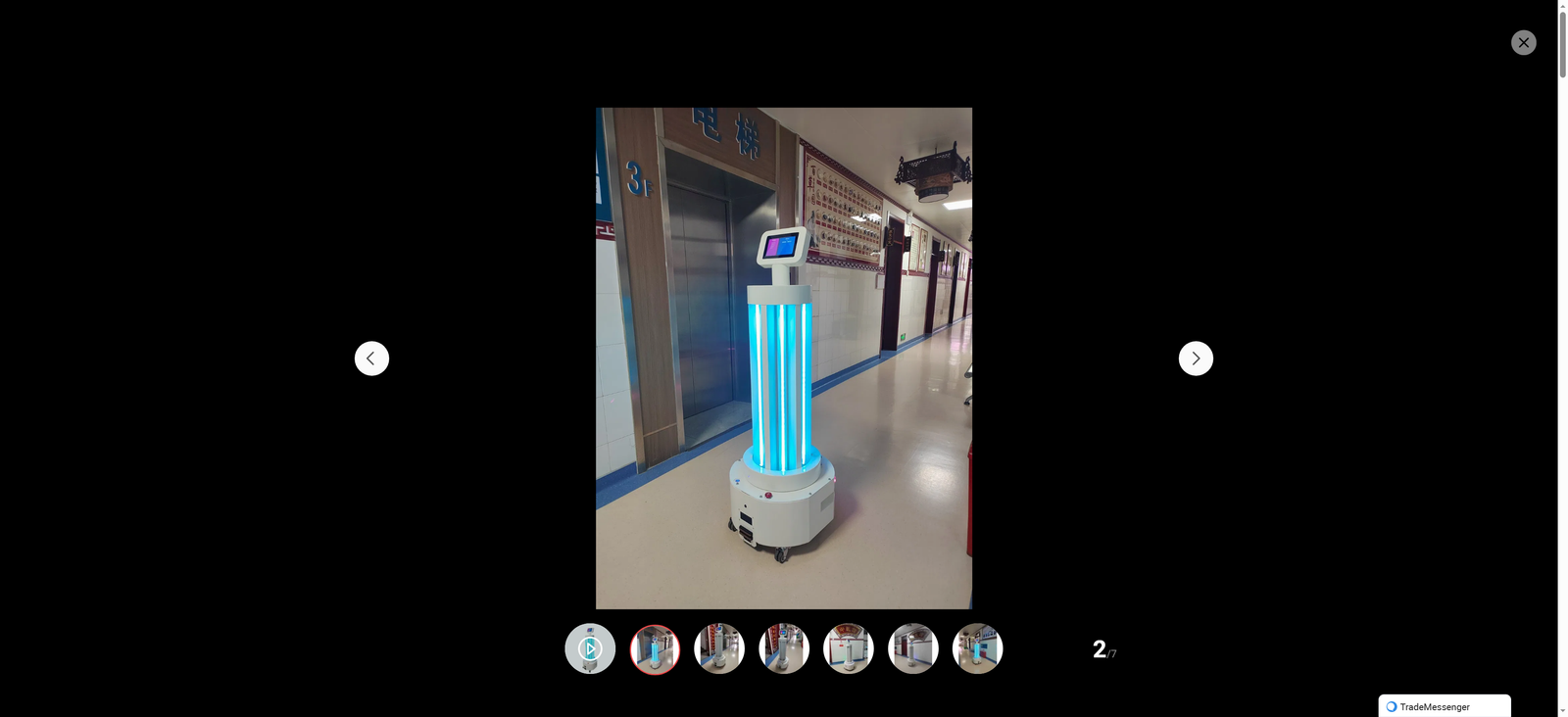
In an era where public health safety is paramount, traditional disinfection methods are increasingly struggling to meet the rigorous demands of modern spaces. Manual chemical-based sanitization is plagued by inconsistencies, worker fatigue, and exposure risks to hazardous substances, while static disinfection systems fail to adapt to complex environments. Enter the advanced UV-C disinfection robot—a technological breakthrough that merges ultraviolet-C radiation technology with autonomous navigation systems, redefining the standards of hygiene in diverse settings. This innovative solution not only eliminates pathogens efficiently but also ensures safety, consistency, and cost-effectiveness, making it an indispensable tool for healthcare facilities, commercial spaces, and public areas.
The Science Behind UV-C Disinfection: Efficiency Without Residue
At the core of these robots lies ultraviolet-C radiation, a segment of the UV spectrum with wavelengths ranging from 200 to 280 nanometers. Unlike chemical disinfectants that leave harmful residues or require tedious ventilation, UV-C light inactivates microorganisms by disrupting their DNA and RNA structures, rendering them unable to reproduce and spread infection . Decades of research have confirmed its efficacy against a broad spectrum of pathogens, including bacteria, viruses, and fungi, achieving a microbial reduction rate of up to 99.99% . This level of efficiency is particularly critical in high-risk environments, where even minor gaps in disinfection can lead to widespread contamination.
A key advantage of UV-C technology is its operational sustainability. Unlike chemical sanitizers that incur recurring supply costs, UV-C robots only require electricity and occasional lamp replacement, significantly reducing long-term operational expenses . For facilities with frequent disinfection needs, this translates to substantial cost savings while minimizing environmental impact—a dual benefit that aligns with modern sustainability goals.
Autonomous Navigation: Precision and Adaptability in Complex Spaces
The true innovation of advanced UV-C disinfection robots lies in their autonomous capabilities, powered by a synergy of cutting-edge technologies. At the forefront is Simultaneous Localization and Mapping (SLAM) technology, which enables robots to build real-time environmental maps while navigating unfamiliar spaces . Integrated with LiDAR, ultrasonic sensors, and high-definition cameras, these systems ensure robust obstacle detection, smooth navigation, and complete area coverage—eliminating the risk of missed spots that plague manual cleaning.
To address the inherent safety risks of UV-C radiation to humans (including severe skin and ocular damage), leading robots are equipped with AI-powered human detection systems . These systems trigger instantaneous UV deactivation within 0.35 seconds of detecting human presence, ensuring absolute safety during operation . Advanced models take this further by supporting autonomous elevator calls, cross-floor navigation, and custom path planning, allowing them to disinfect multi-level buildings without human intervention . Whether navigating narrow hospital corridors, bustling airport terminals, or sprawling office campuses, these robots adapt seamlessly to diverse layouts, delivering consistent disinfection performance every time.
Multi-Scenario Applications: Transforming Hygiene Across Industries
The versatility of advanced UV-C disinfection robots has driven their adoption across a wide range of sectors, addressing unique hygiene challenges in each. In healthcare facilities—the largest application segment—these robots play a pivotal role in reducing hospital-acquired infections (HAIs). For example, deployment in major hospitals has been shown to lower infection rates by up to 42%, while ensuring faster room turnover and consistent UV-C dosing . Erik Christenson, CEO of Heart of America Medical Center, notes that such technology reinforces patient confidence by demonstrating a commitment to top-tier hygiene standards .
Beyond healthcare, educational institutions, airports, retail spaces, and offices are embracing this technology. In schools, robots disinfect classrooms and high-touch surfaces after hours, creating a safer environment for students and staff . Airports use them to sanitize bathrooms, baggage claim areas, and checkpoints, meeting stringent hospitality and hygiene standards . Retailers deploy them in checkout lanes and aisles to enhance occupational safety, while offices leverage their chemical-free operation to improve workplace wellness and employer branding . Even specialized settings like food warehouses and sports venues benefit—MIT’s collaborative robot with Ava Robotics, for instance, disinfects 4,000 square feet of warehouse space in 30 minutes, protecting essential workers .
Market Growth and Future Trends: A Hygiene Revolution in the Making
The global UV-C disinfection robot market is experiencing exponential growth, fueled by rising public health awareness, post-pandemic hygiene demands, and technological advancements. Valued at $2.34 billion in 2025, the market is projected to reach $8.62 billion by 2033 with a CAGR of 17.70% . This growth is driven not only by healthcare demand but also by expanding applications in commercial and public sectors, as organizations recognize the long-term value of autonomous disinfection.
The future of UV-C disinfection robots points toward greater智能化 (intelligence), connectivity, and multifunctionality. Emerging models integrate IoT capabilities for remote monitoring and scheduling, allowing facility managers to oversee disinfection tasks via cloud platforms . AI algorithms will enable predictive disinfection, targeting high-risk areas based on foot traffic data. Additionally, modular designs may combine UV-C technology with air purification and temperature screening, creating all-in-one hygiene solutions . As costs continue to decrease—with affordable prototypes now available for small facilities that cannot justify $50,000 commercial units —adoption will become more widespread, democratizing access to advanced hygiene technology.
Conclusion: Redefining Hygiene for a Safer Future
Advanced UV-C disinfection robots represent a paradigm shift in how modern spaces approach sanitization. By combining the proven efficacy of UV-C radiation with autonomous navigation and AI-powered safety systems, these robots eliminate the limitations of traditional methods, delivering consistent, efficient, and safe disinfection. From hospitals to schools, airports to offices, they are transforming hygiene standards across industries, protecting lives while reducing operational costs.
As technology evolves and market adoption accelerates, UV-C disinfection robots will no longer be a luxury but a necessity for modern spaces. They stand as a testament to how innovation can address critical public health challenges, paving the way for a cleaner, safer future where hygiene is seamlessly integrated into daily operations.