
2025 Autonomous Delivery Intelligent Robotic Food Delivery Robot: Reshaping Hotel Service New Ecology
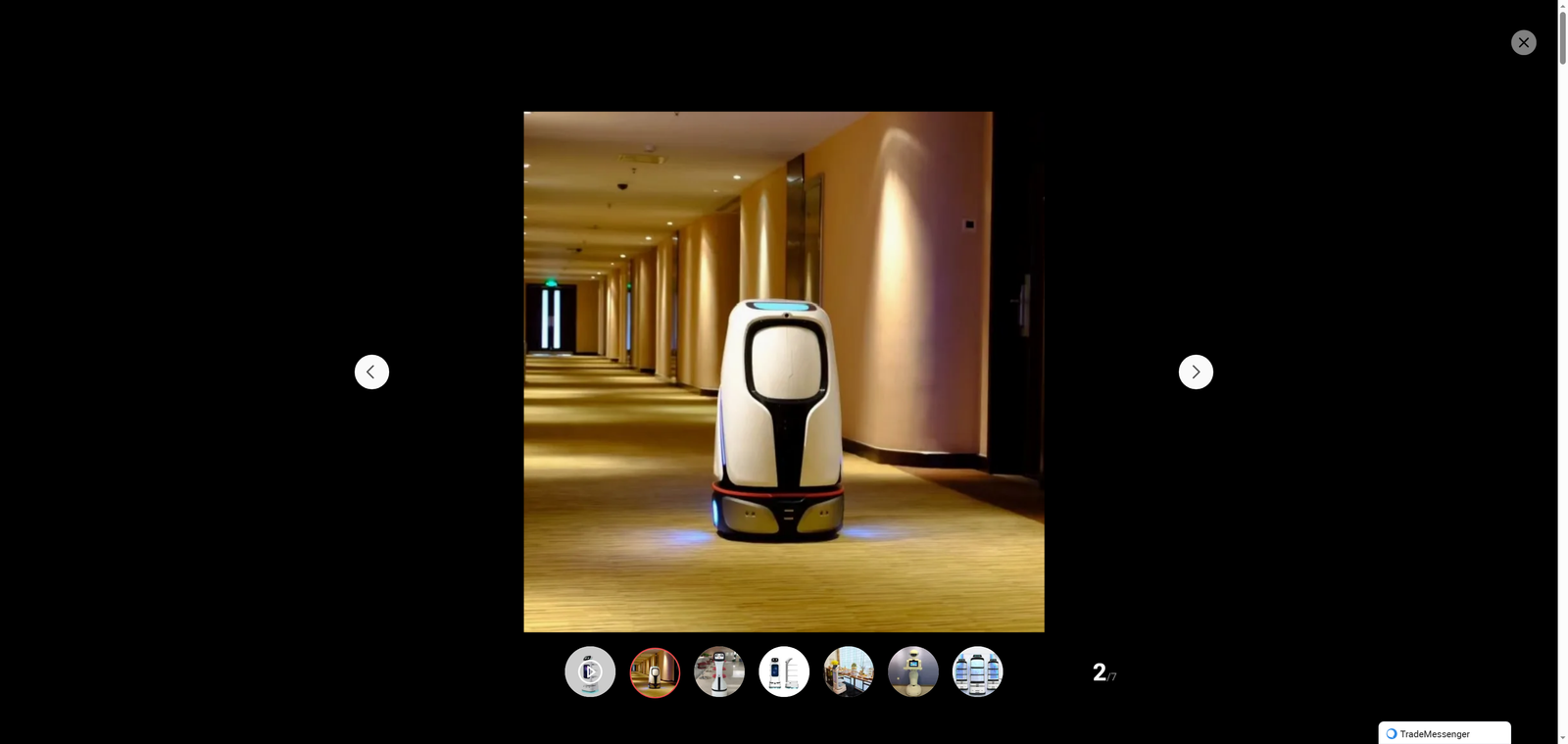
In 2025, with the deep integration of artificial intelligence, Internet of Things and big data technologies, the hotel industry is ushering in a profound service transformation. Among them, the autonomous delivery intelligent food delivery robot has gradually evolved from a "novelty tool" to a "standard configuration" in hotel operations, becoming a key force in optimizing service efficiency, reducing operating costs and enhancing customer experience. This intelligent equipment, which shuttles flexibly between hotel lobbies, corridors and guest rooms, is quietly rewriting the traditional service model and building a new ecology of hotel services in the intelligent era.
The 2025 hotel autonomous food delivery robot has achieved a qualitative leap in core technology, breaking through the limitations of early products in navigation accuracy, load capacity and interaction experience, and laying a solid foundation for large-scale application in hotel scenarios. In terms of navigation and positioning, the multi-sensor fusion scheme has become the industry mainstream—laser radar, RGBD camera, infrared sensor and fisheye camera work together to achieve centimeter-level positioning accuracy. Taking the leading brand products as an example, the robot can quickly construct a 50,000-square-meter map, covering all public areas of large hotels, and form an all-round obstacle recognition network through 170-degree 3D perception and 240-degree plane perception, which can accurately identify objects as narrow as 20 millimeters, ensuring smooth passage even in crowded lobbies or narrow corridors.
The elevator linkage technology, which is crucial for cross-floor delivery, has been fully matured. In 2025, most hotel food delivery robots can realize autonomous elevator calling through the Internet of Things protocol, automatically complete floor switching without manual accompaniment. This technology has transformed the traditional manual delivery process that required waiters to follow up, and a single robot can complete 8 to 12 cross-floor delivery tasks per hour during peak hours, greatly improving service efficiency. At the same time, the battery life and energy management system have been continuously optimized. The high-end models are equipped with long-life batteries that can support 12 hours of continuous operation, and can automatically return to the charging pile to replenish energy when the power drops to the preset threshold, realizing 24-hour uninterrupted service and ensuring that guest needs can be responded to in a timely manner even in the middle of the night.
In terms of interaction experience, the integration of large language models has endowed robots with more humanized service capabilities. The 6-microphone array far-field recognition technology enables the robot to accurately capture voice commands within 5 meters even in noisy environments with background noise not exceeding 65 decibels, with a recognition accuracy rate of up to 97%. Supported by self-developed large models, it can realize free switching of 9 languages, easily meet the needs of international guests, and eliminate language barriers. Guests can issue natural language instructions such as "deliver a bottle of mineral water to Room 1508" through voice, and the robot can automatically parse the needs, plan the optimal path and complete the delivery, making the service process more convenient and intimate.
Targeting the diverse needs of different hotel types, the 2025 autonomous food delivery robot has formed a segmented product matrix, showing strong scenario adaptability. For large business hotels such as Hilton and Marriott, the large-capacity models with 138L super large double cabins can carry up to 40kg of items, which can deliver toiletries, meals and other items to 5 to 8 guest rooms at one time, reducing the number of delivery trips and improving service efficiency. Compared with traditional manual delivery, the average response time is shortened from 15 minutes to 6 minutes, and the efficiency is increased by 60%.
For old-fashioned boutique hotels with narrow corridors (usually 60-80 cm wide), the slim models with a body width compressed to 55 cm (equivalent to the shoulder width of an adult) have become the best choice. With a 15-degree golden bevel design, they can cross 35-millimeter-wide floor seams and 15-millimeter-high protrusions, and have 8-degree climbing capacity, which can stably operate in complex terrain environments. The actual deployment data shows that the passage success rate of such models in narrow passages reaches 98%, effectively solving the pain point of high renovation costs for old hotels. In addition, for hotels with entertainment venues such as KTV, the extra-large capacity models with 158L cabins and double-side door opening design can carry a large number of drinks and meals at one time, and adapt to the layout of private rooms, further expanding the application scenarios.
The deep integration of the robot with the hotel operation system and external platforms has realized the reconstruction of the service process and created a win-win situation for multiple parties. By seamlessly connecting with the hotel PMS management system, the robot can automatically obtain guest room numbers and demand information, reducing manual input links and improving order processing efficiency. The cooperation between leading robot brands and mainstream food delivery platforms such as Meituan has opened a new model of "rider-robot" relay delivery—riders only need to scan the QR code to associate order information, and the robot will automatically deliver meals to the guest room door, simplifying the traditional multi-link handover process of "rider → front desk → guest" into a direct connection between rider and robot.
This model not only reduces the labor demand in the delivery link by 50%, but also avoids potential safety hazards caused by riders entering the guest room area, and at the same time releases more than 50% of the front desk's operating energy, reducing lobby congestion. For guests, they can enjoy faster and more standardized delivery services; for hotels, they can optimize the service process and improve operational safety; for food delivery platforms, they can enhance the end delivery experience and strengthen the ecological barrier of local life services.
The popularization and application of autonomous delivery intelligent food delivery robots have brought significant economic and social benefits to the hotel industry. In terms of cost control, one robot can replace 1.5 to 2 delivery staff. Calculated at a monthly salary of 5,000 yuan, the annual labor cost can be saved by 120,000 to 160,000 yuan. The investment payback period is about 1.5 to 2 years, which has high cost performance for hotels. In terms of service quality, the 24-hour standby capacity and efficient response speed of robots have significantly improved the guest experience. The survey shows that hotels introducing intelligent delivery systems have an average increase of 0.8 to 1.2 points in service scores (out of 5 points), which further translates into an increase in customer repurchase rate and word-of-mouth communication.
In terms of refined management, the robot system will record detailed data such as delivery time, path and item type for each delivery, which can help hotels analyze high-frequency delivery periods and hot areas, optimize human resource allocation and service processes, and realize data-driven operation decisions. In addition, the large screens equipped on the robot body can also play hotel promotions, new product introductions and other information, turning the delivery process into a precise marketing touch point and realizing the dual improvement of service value and commercial value.
Looking forward to the future, with the continuous progress of technologies such as artificial intelligence and the Internet of Things, the hotel autonomous delivery intelligent food delivery robot will move towards a deeper integration with hotel services. It will not only be a simple delivery tool, but also become a core carrier of "mobile service terminals" in hotels, realizing linkage with intelligent guest rooms—guests can control the robot to deliver items through voice assistants in the room; it can also predict guest needs based on historical data, such as automatically pushing meal delivery recommendations during meal times, and realizing predictive services. At the same time, through the integration with intelligent micro-warehouses, it will build a closed loop of "shopping-delivery" in hotels, allowing guests to order snacks and daily necessities through mobile phones or voice, and the robot will complete the whole process from picking up goods to delivering them, creating a more convenient living experience.
In 2025, the hotel autonomous delivery intelligent food delivery robot is not only a product of technological innovation, but also a symbol of the transformation and upgrading of the hotel industry. It is changing the service logic of the hotel industry with efficient, intelligent and humanized services, helping hotels enhance their core competitiveness. As technology continues to mature and costs continue to decrease, intelligent delivery robots will be more widely used in small and medium-sized hotels, promoting the entire hotel industry to enter a new era of intelligent services with higher quality and efficiency.