
2024 Robot Automatic Loading and Unloading Unit: Innovations, Applications and the Future of Industrial Automation
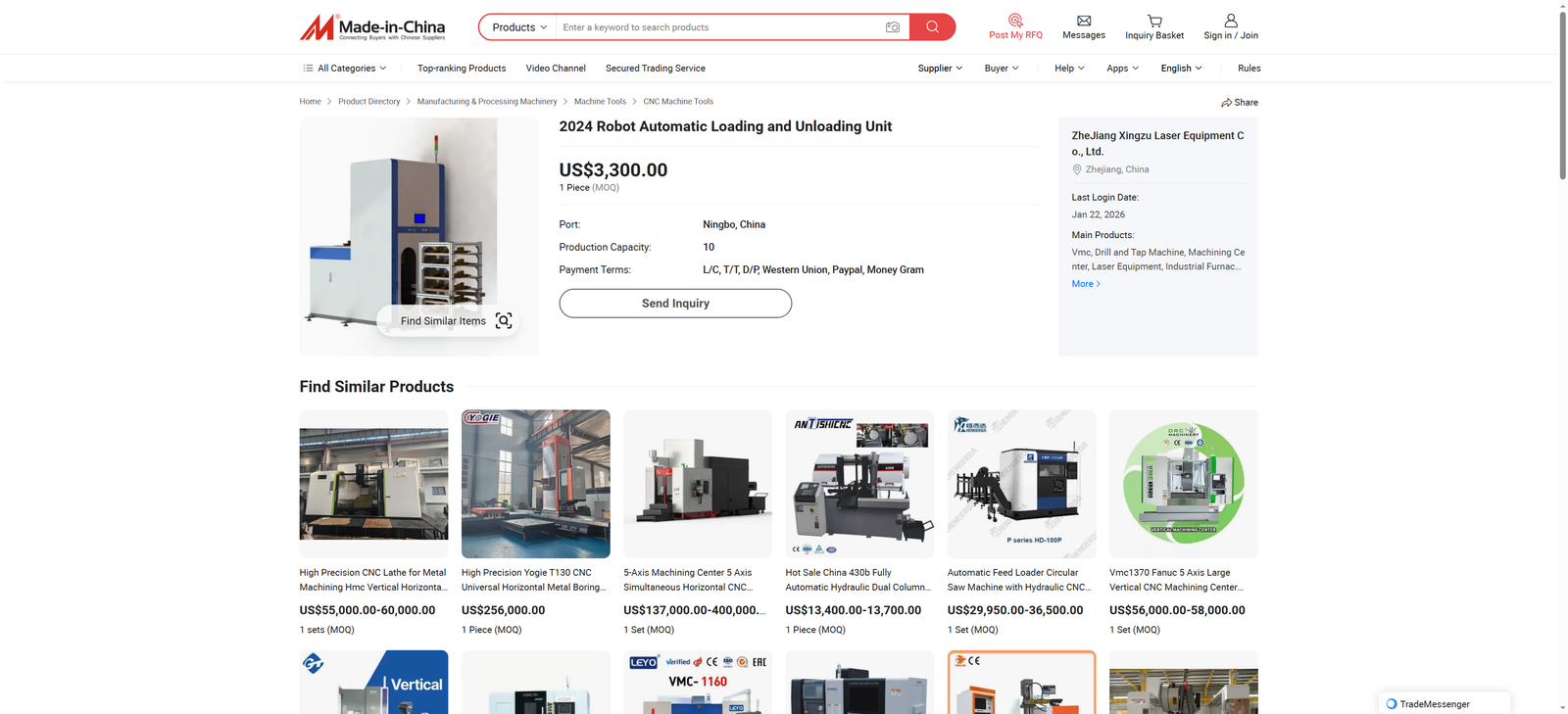
In 2024, the global industrial automation landscape is undergoing a profound transformation, driven by the urgent demand for efficiency improvement, cost reduction, and labor optimization. Among the core automation equipment that has attracted widespread attention, the Robot Automatic Loading and Unloading Unit (RALU) stands out as a key pillar, breaking through traditional operational bottlenecks and reshaping production models across multiple industries. This article explores the technological innovations, practical applications, and future prospects of the 2024 Robot Automatic Loading and Unloading Unit, revealing its pivotal role in accelerating the transition to smart manufacturing.
Technological Innovations in 2024: Making Automation More Flexible, Intelligent and Accessible
2024 marks a year of remarkable technological leaps for Robot Automatic Loading and Unloading Units, with major breakthroughs in integration, intelligence, and usability, addressing the pain points of traditional automation solutions such as high deployment costs, poor flexibility, and complex operation. These innovations have made RALUs more adaptable to diverse production scenarios and more accessible to enterprises of all sizes.
One of the most notable advancements is the widespread adoption of collaborative robot technology in RALUs. Unlike traditional industrial robots that require isolated operation zones with safety barriers, the 2024 collaborative RALUs—such as ABB’s newly launched OmniVance™ Flexible Machine Tending Workstation—feature IP67-certified collaborative robots (e.g., ABB GoFa™ 12) with advanced power and force limiting capabilities, enabling safe human-robot collaboration without additional protective measures. These robots boast a repeat accuracy of ±0.1mm within a 1.27-meter working radius and a load capacity of up to 10kg, making them ideal for precision loading and unloading tasks in harsh environments such as metal manufacturing and machine processing, where oil, water, and dust are prevalent.
Intelligent perception and adaptive control have also become standard features of 2024 RALUs. Equipped with 3D vision systems, infrared sensors, and force sensors, modern units can automatically detect the position, shape, and size of materials—even penetrating oil stains on metal workpieces or identifying irregularly stacked items—and adjust their grabbing strategies in real-time. Machine learning algorithms enable these units to continuously optimize their operation paths based on accumulated data, improving efficiency and reducing material damage. For example, Honeywell’s robotic unloading machines use advanced machine learning to handle packages of various sizes and weights, completing unloading tasks in less than half the time of manual operation while minimizing damage rates.
Usability and rapid deployment have also been significantly enhanced in 2024. Many RALUs now adopt pre-integrated solution packages, including robots, pallet systems, fixtures, and user-friendly software, allowing installation and setup in as little as one day with only basic engineering skills required. ABB’s Wizard easy programming software and WebApp application enable non-professional users to complete program creation and adjustment in minutes, eliminating the need for formal robot programming training and lowering the threshold for enterprise adoption. This democratization of automation technology has empowered small and medium-sized enterprises (SMEs) to embrace RALUs, driving widespread industrial upgrading.
Widespread Applications in 2024: Crossing Industries to Unlock Productivity Potential
In 2024, the Robot Automatic Loading and Unloading Unit has transcended industry boundaries, finding extensive applications in manufacturing, logistics, automotive, 3C electronics, and other fields. Its core value lies in solving the pain points of high labor intensity, low efficiency, high error rates, and safety risks in traditional loading and unloading processes, bringing tangible benefits to enterprises.
In the logistics and warehousing industry, 2024 RALUs have become a game-changer for dock operations and warehouse management. Slip Robotics’ SlipBot ALR, which won the Best New Innovation Award at MODEX 2024, can automatically load and unload any truck in just 5 minutes without additional infrastructure, increasing dock throughput by 300% and reducing truck idle time by 91%. Fortune 2000 companies such as John Deere, GE Appliances, and Nissan have adopted this technology to unblock dock bottlenecks, reducing labor downtime costs by 85% and freight damage by 40%. Meanwhile, LG’s new CLOi Carry Bot, launched at MODEX 2024, uses autonomous mobile robot (AMR) technology to realize intelligent point-to-point delivery in warehouses, eliminating the need for workers to physically transport packages and reducing labor strain. With a runtime of 18.5 hours and autonomous charging, this unit significantly improves warehouse efficiency and flexibility.
In the manufacturing sector, RALUs have become an indispensable part of smart production lines. In the automotive零部件 industry, for example, a major auto parts manufacturer deployed collaborative RALUs to handle 8-15kg engine casings, increasing single-shift productivity by 30%, raising product qualification rates from 92% to 99.5%, and reducing labor costs by 60%. In the 3C electronics industry, RALUs equipped with vacuum suction cups and flexible grippers handle thin and easily deformable mobile phone middle frames, reducing detection error rates from over 5% to 0.3% and increasing single-shift processing capacity from 5,000 to 8,000 pieces. For metal processing, RALUs integrated with CNC machine tools have increased equipment utilization from 60% to 90% and shortened processing cycles by 20% by replacing manual loading and unloading of steel bars. Even in niche fields such as riveting machine processing, MESH Automation’s customized RALU uses a KUKA 6-axis robot to complete loading, riveting, and unloading tasks in 40 seconds per cycle, significantly improving production efficiency.
The plastic and injection molding industry has also benefited greatly from 2024 RALUs. These units use infrared vision to identify high-temperature (60-80℃) injection-molded parts and high-temperature-resistant suction cups to complete picking tasks in less than 0.5 seconds, eliminating the risk of worker burns and improving stacking neatness by 80%. This not only ensures operational safety but also lays the foundation for efficient subsequent quality inspection.
Future Outlook: Toward Full Integration and Sustainable Development
Looking ahead, the 2024 Robot Automatic Loading and Unloading Unit is not just a standalone automation device but a key node in the smart manufacturing ecosystem, with broad prospects for integration, intelligence, and green development.
In terms of integration, future RALUs will achieve deeper connectivity with industrial Internet of Things (IIoT) platforms, manufacturing execution systems (MES), and warehouse management systems (WMS) through standard communication protocols such as Ethernet/IP and OPC UA. This will enable real-time data sharing and collaborative scheduling across the entire production chain, realizing end-to-end automation from raw material input to finished product output. For example, RALUs will automatically adjust their operation plans based on production orders from MES, and feed back operational data to the IIoT platform for predictive maintenance, reducing downtime.
Intelligence will continue to evolve, with RALUs incorporating more advanced artificial intelligence (AI) technologies such as generative AI and digital twins. Digital twin technology will allow enterprises to simulate RALU operations in a virtual environment, optimizing deployment plans and reducing trial-and-error costs before on-site installation. Generative AI will enable RALUs to autonomously generate optimal operation paths for new materials or production scenarios, further improving flexibility and adaptability.
Green development will also become a key focus for future RALUs. Manufacturers will prioritize energy-efficient components and lightweight materials to reduce energy consumption and carbon emissions. For example, lightweight aluminum end-of-arm tooling will reduce the load on robots, lowering energy usage while maintaining structural stability. Additionally, RALUs will contribute to circular economy development by optimizing material handling processes, reducing waste and improving resource utilization.
Conclusion
The 2024 Robot Automatic Loading and Unloading Unit represents a significant milestone in the evolution of industrial automation, driven by technological innovations that enhance flexibility, intelligence, and usability. Its widespread application across industries has unlocked enormous productivity potential, helping enterprises reduce costs, improve efficiency, and mitigate safety risks. As we move toward a more connected and intelligent future, RALUs will continue to play a pivotal role in promoting the digital transformation of manufacturing and logistics, paving the way for a smarter, more efficient, and more sustainable industrial era. For enterprises seeking to gain a competitive edge in the global market, embracing the 2024 Robot Automatic Loading and Unloading Unit is not just an option but a strategic necessity.