
Adjustable Speed Luggage Handling Robots: Transforming Efficiency in Airports and Hotels
In the era of intelligent transportation and hospitality services, the demand for efficient, safe and flexible luggage handling solutions is growing rapidly. Airports and hotels, as key hubs of people flow and logistics, are facing the dual challenges of increasing passenger volume and rising service quality requirements. Against this background, adjustable speed luggage handling robots have emerged as a revolutionary technological innovation, redefining the way luggage is transported in these scenarios. By integrating advanced navigation, speed regulation and load-bearing technologies, these robots not only solve the pain points of traditional manual handling but also inject new vitality into the digital transformation of airports and hotels.
The core advantage of adjustable speed luggage handling robots lies in their intelligent speed regulation capability, which enables them to adapt to diverse environments and task requirements in airports and hotels. Unlike fixed-speed handling equipment, these robots can automatically adjust their moving speed according to factors such as the surrounding crowd density, luggage weight, and path complexity. In busy airport terminals, for example, when navigating through crowded areas with a large number of passengers, the robot can slow down to 0.5-1 m/s to ensure safety and avoid collisions; while in open luggage storage areas or empty corridors, it can accelerate to 2-3 m/s to improve transportation efficiency. This flexible speed regulation mechanism not only balances safety and efficiency but also reduces the risk of luggage damage caused by sudden acceleration or deceleration.
In airport scenarios, adjustable speed luggage handling robots play a multi-faceted and critical role in optimizing the entire luggage handling chain. From the moment passengers check in their luggage to the final pickup at the baggage claim area, these robots can participate in multiple links, including luggage transfer from check-in counters to sorting centers, internal transportation in sorting facilities, and delivery from sorting centers to aircraft cargo holds. Traditional airport luggage handling relies heavily on conveyor belts and manual labor, which are not only prone to delays due to mechanical failures or human errors but also have difficulty adapting to the peak passenger flow during holidays. Adjustable speed robots, however, can form a flexible transportation network through collaborative work. Equipped with laser radar, visual sensors and GPS navigation systems, they can accurately identify paths, avoid obstacles, and adjust their speed in real-time according to the flow of luggage. For instance, when a large number of luggage items need to be transported to the aircraft quickly before takeoff, the robots can increase their speed appropriately under the premise of ensuring safety, shortening the transportation cycle and reducing the risk of flight delays caused by luggage backlogs. Additionally, these robots can handle luggage of different weights and sizes by adjusting their speed and load-bearing parameters, which is more adaptable than fixed conveyor belt systems.
In hotel scenarios, adjustable speed luggage handling robots have become a new benchmark for improving guest experience and service quality. For hotels, especially high-end hotels and large resort hotels, providing efficient and considerate luggage service is an important part of enhancing guest satisfaction. In the past, guests often needed to wait for bellboys to handle their luggage, which was time-consuming and inefficient, especially during check-in and check-out peaks. Adjustable speed luggage handling robots can solve this problem perfectly. Guests can simply place their luggage in the robot's storage compartment, input their room number through the touch screen or mobile app, and the robot will automatically navigate to the designated room. During the transportation process, the robot will adjust its speed according to the hotel's internal environment: when passing through the lobby with a large number of guests, it will move slowly and steadily to avoid disturbing others; when moving along the hotel corridor, it can maintain a moderate speed to ensure that the luggage is delivered to the room in a timely manner. Moreover, the robot's stable speed control can prevent luggage from sliding or being damaged during transportation, ensuring that guests' belongings are safe and intact. For hotel management, the application of these robots also reduces labor costs, improves work efficiency, and frees up human resources to provide more value-added services for guests, such as personalized butler service.
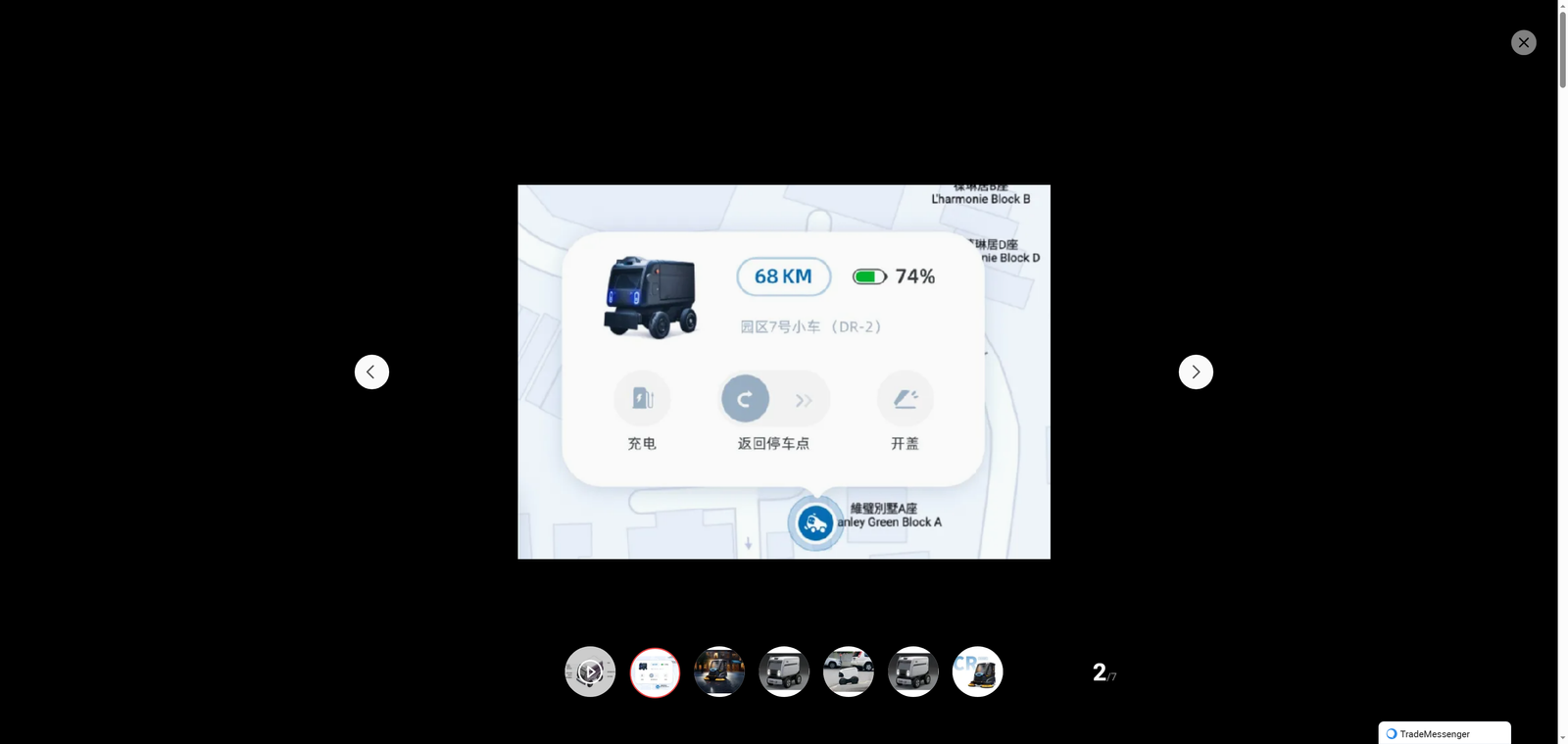
Beyond speed regulation, adjustable speed luggage handling robots also integrate a series of advanced technologies to enhance their functionality and reliability. In terms of safety, in addition to real-time speed adjustment, they are equipped with multiple safety protection mechanisms, such as emergency stop buttons, anti-collision sensors, and automatic obstacle avoidance systems. Once a pedestrian or obstacle is detected in front, the robot can immediately decelerate or stop to ensure the safety of people and luggage. In terms of intelligence, these robots can be connected to the airport's or hotel's intelligent management system, realizing data sharing and unified scheduling. The management personnel can monitor the robot's operating status, location, and task progress in real-time through the background system, and assign tasks according to the actual situation, improving the overall operational efficiency of the transportation system. In terms of energy conservation and environmental protection, most adjustable speed luggage handling robots adopt lithium-ion batteries with long battery life and fast charging functions, and can automatically return to the charging station for charging when the power is low. At the same time, the variable speed motor used in the robot can adjust energy consumption according to the running speed, reducing energy waste and achieving green and low-carbon operation.
Despite the remarkable advantages and broad application prospects of adjustable speed luggage handling robots, there are still some challenges to be solved in their popularization and application. First of all, the initial investment cost is relatively high. The research and development, production and deployment of intelligent robots require a large amount of capital input, which may bring certain economic pressure to small and medium-sized airports and hotels. Secondly, the compatibility with existing facilities needs to be improved. Some old airports and hotels have relatively backward infrastructure, which may not be fully compatible with the operation requirements of intelligent robots, requiring additional transformation and upgrading. Finally, there are still some concerns about technical stability and safety. Although the current robot technology is relatively mature, long-term operation in complex environments may still encounter technical failures, which requires a sound after-sales service and maintenance system to ensure timely solution.
With the continuous progress of artificial intelligence, Internet of Things and robotics technology, adjustable speed luggage handling robots will surely overcome the existing challenges and achieve broader development in the future. In airports, these robots may be further integrated with intelligent security inspection, automatic sorting and other systems to form a fully automated luggage handling ecosystem, realizing the whole process of luggage transportation without manual intervention. In hotels, they may be equipped with more intelligent functions, such as voice interaction, automatic luggage storage and retrieval, to provide a more personalized and convenient service experience for guests. At the same time, with the continuous reduction of production costs and the gradual improvement of technical stability, adjustable speed luggage handling robots will no longer be limited to large airports and high-end hotels, but will be gradually popularized in medium and small airports, budget hotels and other scenarios, bringing revolutionary changes to the entire transportation and hospitality industry.
In conclusion, adjustable speed luggage handling robots, with their unique intelligent speed regulation capability, have become an important force driving the digital transformation of airports and hotels. They not only improve the efficiency and safety of luggage handling but also enhance the service quality and user experience, bringing significant economic and social benefits to the industry. In the future, as technology continues to innovate and market demand continues to expand, these robots will surely play a more important role, creating a more efficient, intelligent and convenient travel and accommodation environment for people.